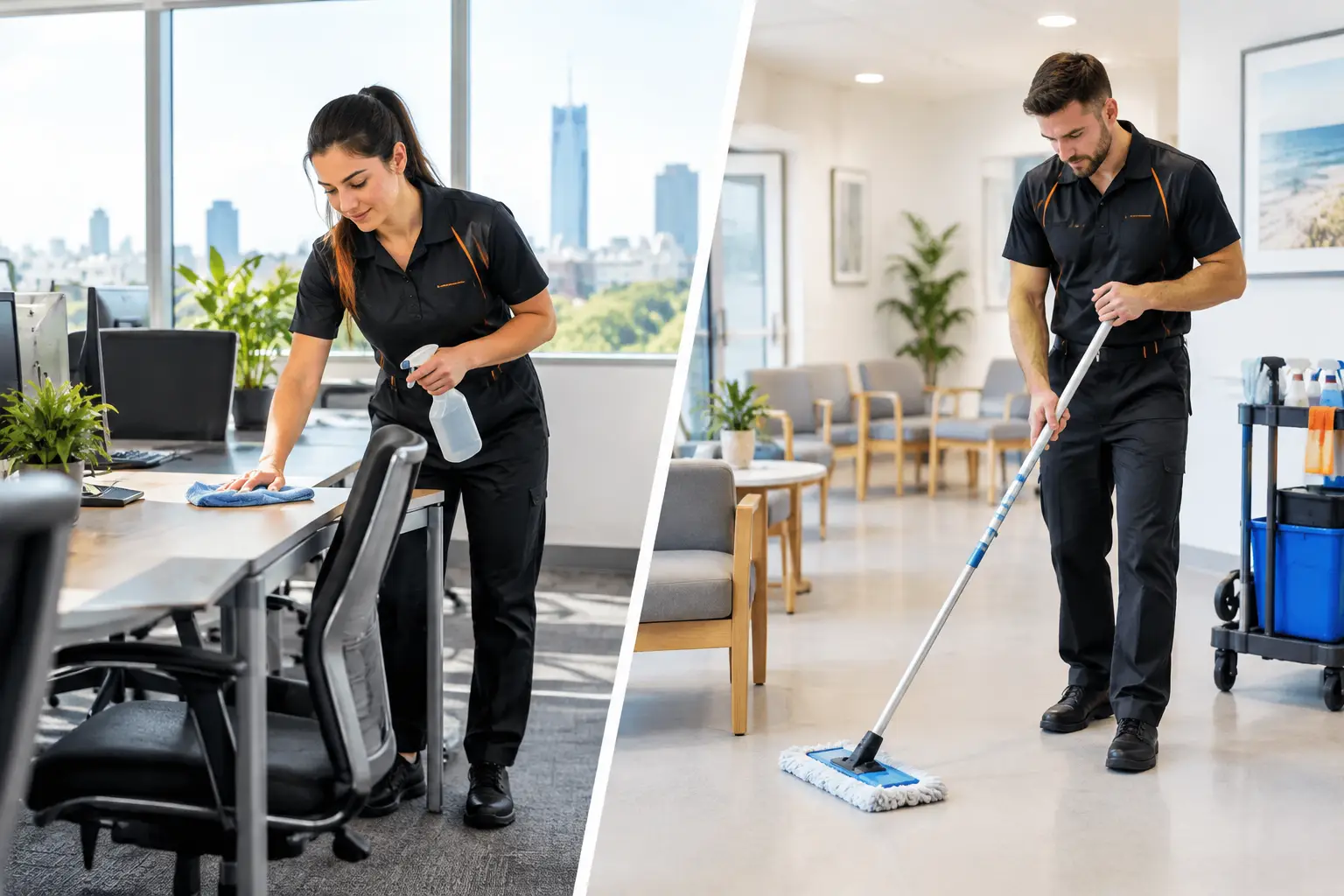
A missed bin, sticky reception counter or empty soap dispenser can make a workplace feel poorly managed long before anyone comments on it. This janitorial schedule planning guide helps Adelaide office managers and practice managers build a cleaning routine that matches how their premises are actually used – not a generic checklist that looks fine on paper but leaves key areas behind.
Start with how your workplace operates
The best cleaning schedule begins with the building’s daily rhythm. A quiet professional office with a small team has different needs from a busy medical centre where patients, staff and visitors move through the reception area all day.
Walk through the premises at the times it is busiest, not only after close. Notice where people enter, wait, eat, meet and use shared facilities. Those areas usually need the most frequent attention. Reception desks, entry glass, bathrooms, kitchenettes, touchpoints and rubbish stations can quickly affect the appearance and hygiene of the whole site.
For clinics, also consider the movement between waiting rooms, consult rooms and staff-only areas. Cleaning work needs to support the practice’s hygiene procedures while keeping disruption to patients and clinicians low. The exact plan will depend on your layout, appointment flow and internal requirements.
A useful schedule separates tasks by frequency rather than treating every job as a nightly task. That keeps the service focused and helps you use cleaning time where it has the greatest impact.
Janitorial schedule planning guide: set the right frequencies
Daily tasks should protect the parts of your premises that staff and visitors notice immediately. In most offices and clinics, this includes cleaning and restocking bathrooms, removing rubbish, wiping high-touch surfaces, tidying kitchens, vacuuming or mopping main walkways, and cleaning reception surfaces.
Weekly work can cover the jobs that still matter but do not need attention every visit. Think detailed dusting of ledges and skirting boards, spot cleaning internal glass, wiping chair bases, cleaning microwave interiors and addressing marks on doors and walls. A weekly task list stops small issues from becoming part of the scenery.
Monthly and periodic tasks are where many schedules fall short. Blinds, air vents, high dusting, internal windows, behind furniture and detailed floor care are easy to overlook because they are not always visible from the doorway. Add them to a written rotation with clear dates. If the work is not scheduled, it is often delayed until a tenant inspection, client visit or complaint forces the issue.
Frequency is not fixed forever. A wet Adelaide winter may mean more entryway mopping. A growing team may create more kitchen rubbish and bathroom use. A clinic may need extra attention during a particularly busy period. Review the plan after the first month, then every few months as the workplace changes.
Use zones instead of one long checklist
Breaking the site into zones makes responsibility clearer. Rather than writing “clean office”, list the areas that need a defined result: reception, workstations, meeting rooms, kitchen, bathrooms, corridors, storage spaces and external entry points.
For each zone, note the task, the frequency and the standard expected. “Wipe reception desk” is open to interpretation. “Remove visible marks and dust from reception counter, visitor chairs and sign-in area” gives the cleaner and manager a shared expectation.
This approach is especially helpful across larger premises or multi-room clinics. It also makes it easier to adjust one area without rewriting the entire schedule. If the staff kitchen becomes busier, you can increase its service frequency while keeping the rest of the plan unchanged.
Plan around people, not just square metres
Square metres affect cleaning time, but foot traffic usually determines cleaning pressure. A compact waiting room with constant turnover can need more attention than a large boardroom used twice a week.
Start by identifying the high-traffic and high-touch areas. These commonly include door handles, lift buttons where relevant, shared desks, EFTPOS terminals, taps, flush buttons, kitchen appliances and meeting-room tables. Decide which need attention at every visit and which may need a daytime top-up.
After-hours cleaning works well for many Adelaide offices because it allows cleaners to vacuum, empty rubbish and mop without interrupting calls or meetings. It may not be the right answer for every site. A medical practice with early appointments, for example, may prefer cleaning after the final patient leaves, while a larger building may benefit from a short daytime attendant visit for bathrooms and reception.
The practical question is simple: when can cleaners do a thorough job without creating work for your team? A good schedule reduces disruption rather than shifting it to another part of the day.
Include seasonal and occasional work
Recurring cleaning is the foundation, but it cannot cover every situation. Your schedule should include triggers for extra work, such as a move within the office, a fit-out, a spill incident, a staff event, construction dust or a change in tenancy.
Seasonal tasks are worth planning too. Entry glass may need more frequent cleaning during wet weather. Window cleaning, upholstery care and detailed carpet work may be better scheduled periodically, depending on the premises and level of use. For rental or shared commercial sites, the property manager’s inspection dates can also guide the timing of deeper cleans.
Keep these tasks separate from daily duties so they are not assumed to be included in a standard visit. Clear scope prevents the awkward situation where everyone expects a job to be done but no one has allowed time for it.
Make the schedule easy to check
A schedule only works if someone can tell whether it has been completed properly. That does not mean hovering over cleaners or asking staff to inspect every corner each morning. It means setting up a simple reporting process and checking the areas that matter most.
For a small office, a shared checklist and a brief monthly review may be enough. Larger sites may need site-specific checklists, communication books, periodic inspections or a nominated contact person. The right level of oversight depends on the size of the site, the risk level of the environment and how often the service occurs.
Focus feedback on facts. Instead of saying the clean was “not up to scratch”, identify the issue: bathroom soap dispensers were empty, marks remained on the front door, or rubbish was left under the meeting table. Clear feedback can be acted on quickly and helps prevent repeat problems.
Build in a response process
Even a well-run service can have an off night. Staff may be unwell, access may be unavailable, or an unexpected spill may require extra attention. What matters is whether there is a reliable process to report the issue and have it resolved.
Before engaging a cleaning provider, ask who your contact is, how changes are communicated, whether regular cleaners are assigned where possible, and what happens if a task is missed. For offices and clinics, security also matters. You should know who has access to the premises and whether staff have been properly screened and trained for the environment.
Spiffi Cleaning plans recurring services around each site’s hours, access requirements and cleaning priorities, with trained, police-checked staff and clear communication when the schedule needs to change.
Avoid the common scheduling mistakes
The most common mistake is setting the frequency too low because the workplace looks clean just after a visit. A better test is how it looks late in the day, when bins are full, bathrooms have had steady use and the entry has seen a full day of foot traffic.
Another mistake is trying to include deep-cleaning jobs in a short routine visit. This creates pressure to rush, and the daily essentials can suffer. Keep routine tasks realistic, then schedule detailed work separately.
Finally, avoid a schedule that depends on one person remembering everything. A documented plan protects your business when managers change, staff go on leave or cleaning arrangements are reviewed. It gives everyone a practical reference point instead of relying on assumptions.
Keep the plan useful as your business changes
A janitorial schedule should be a working document, not something filed away after the first week. Review it when headcount changes, rooms are repurposed, trading hours shift or recurring issues appear. Small adjustments made early are far easier than managing a workplace that slowly falls below standard.
The goal is not to clean every surface as often as possible. It is to keep the areas your people, patients and visitors rely on consistently clean, hygienic and presentable – with minimal interruption to the working day. When the schedule reflects the real pace of your premises, cleaning becomes one less thing your team needs to chase.