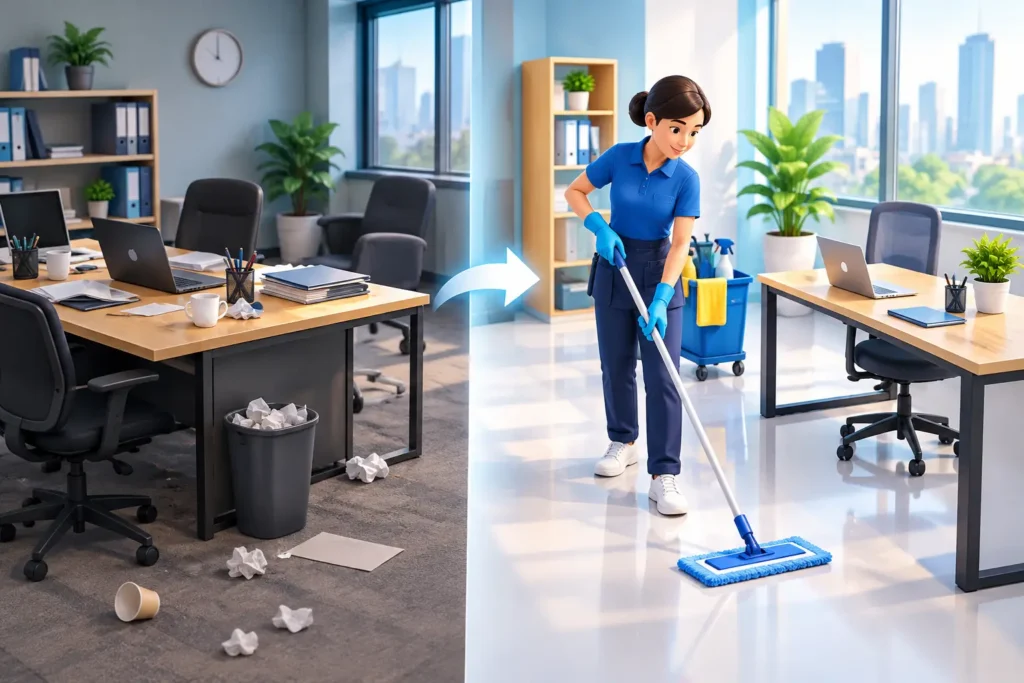
A dusty reception counter, marked glass doors and overflowing kitchen bins can change how people feel about a business before anyone says a word. Strong office cleaning outcomes are not about making a workplace look acceptable for an hour. They create a healthier, more organised environment where staff can focus, visitors feel confident and managers are not chasing avoidable issues.
For Adelaide businesses, the right result depends on more than how often a cleaner attends. It comes down to a clear scope, trained people, suitable products, quality checks and a schedule that matches the way the workplace actually operates.
What good office cleaning outcomes look like
A professionally cleaned office should feel consistently ready for work. Floors are free from visible dirt and tracked-in debris, touchpoints are hygienic, washrooms are stocked and fresh, and shared spaces do not become a source of frustration by midweek. The result is not merely visual. It supports day-to-day operations.
The best outcomes are usually noticed in small moments: a client can use the boardroom without someone wiping down the table first; staff arrive to clean desks and empty bins; the kitchen is pleasant at lunch; and washrooms maintain the standard expected by employees and visitors. Consistency is what separates a dependable cleaning service from an occasional tidy-up.
There is also a reputational benefit. A clean workplace signals care, attention and professionalism. For customer-facing businesses, that signal can influence trust before a meeting begins. For teams that rarely welcome external visitors, it still affects morale. People generally take more pride in a workplace that is properly maintained.
Cleaning results that support people and productivity
Office hygiene has practical consequences. Shared desks, door handles, lift buttons, kitchen taps, bathroom fixtures and meeting-room equipment are touched by many people every day. Regular attention to these high-contact areas helps reduce the build-up of grime and supports a cleaner environment for staff, contractors and guests.
A cleaning plan should also account for the spaces that cause the most disruption when neglected. Kitchens develop odours quickly when rubbish, spills and appliances are overlooked. Washrooms can affect the whole office’s perception of cleanliness. Entryways collect moisture, dust and debris, particularly during wetter periods, which can affect both presentation and safety.
Cleaning alone cannot prevent illness in an office, and no responsible provider should suggest otherwise. However, a disciplined routine for touchpoints, shared amenities and rubbish removal is one sensible part of maintaining a healthier workplace. The key is to focus effort where it makes a difference rather than treating every surface as though it has the same risk or usage level.
A clean space reduces small daily distractions
Productivity is often lost in minor, repeated interruptions. Someone has to replace a depleted soap dispenser, empty a bin, clear dishes from a meeting room or report a spill near the entry. Individually, these jobs are small. Across a busy team, they add up and pull people away from their actual responsibilities.
Reliable commercial cleaning removes that background noise. Staff should not need to wonder whether the bathrooms will be presentable for a client visit or whether the kitchen will be usable after a busy day. A well-managed service makes cleanliness predictable, which is often more valuable than a one-off deep clean that looks impressive but is difficult to maintain.
Why office cleaning outcomes vary between providers
Not all cleaning scopes produce the same result, even when two quotes appear similar. A low price may cover only basic visible tasks, while excluding detail work, consumables, periodic cleaning or adequate time to complete the premises properly. It may also rely on a rotating workforce with limited site knowledge.
The right choice depends on your office. A small, low-traffic workplace may only need a straightforward weekly service. A larger office with client meetings, shared kitchens and high washroom use may need several visits a week, or cleaning outside business hours. Medical, education and aged care settings need more specific processes again.
Before comparing prices, clarify what is included. Ask how frequently floors, desks, touchpoints, kitchen surfaces, washrooms, bins, glass and high-traffic areas will be cleaned. Confirm whether the service includes periodic tasks such as internal window cleaning, detailed skirting boards, upholstery care or floor treatment. A transparent scope prevents the common problem of expecting premium results from a basic service allowance.
The value of trained, accountable cleaners
Cleaning quality depends heavily on people. Cleaners need to understand safe product use, cross-contamination controls, surface requirements and the site’s security procedures. They also need enough time and the right equipment to complete the agreed work without rushing through essential areas.
For business owners and office managers, trust matters just as much. Vetted, police-checked staff, clear communication and a consistent point of accountability give you confidence when cleaners are working after hours or around sensitive documents, equipment and private offices.
Quality assurance should be practical, not a vague promise. It can include a documented scope, regular inspections, an easy way to raise issues and a genuine commitment to return and fix missed work. A satisfaction guarantee has value when the provider is responsive enough to honour it.
Building a cleaning schedule that works
The ideal schedule follows the office’s traffic patterns, not a generic template. Start by looking at how the premises are used across a normal week. Consider staff numbers, customer visits, kitchen activity, washroom use, open-plan desk sharing and whether the office is busiest on particular days.
Daily or near-daily attention is often worthwhile for washrooms, rubbish, kitchens and entry areas in busy workplaces. Less-used meeting rooms or private offices may need a lighter routine, with regular detailed cleaning rather than the same level of service every visit. This approach keeps standards high while directing the budget where it has the greatest impact.
After-hours cleaning is a good fit for many offices because it avoids disruption and allows the team to arrive to a finished result. Daytime cleaning can be more suitable where washrooms receive heavy use, spills need quick attention or the site has long operating hours. Some workplaces benefit from a mix: scheduled evening cleaning plus a short daytime service for amenities and high-touch areas.
Measuring office cleaning outcomes properly
A clean office can feel subjective, so it helps to agree on practical measures. Rather than asking only whether the office looks clean, assess whether the expected standard is being maintained in the areas that matter most.
Useful signs of success include consistently clean washrooms, no lingering kitchen odours, bins emptied as scheduled, floors that remain presentable between visits, tidy reception areas and prompt resolution of any concerns. Recurring complaints about the same issue are a sign that the scope, schedule or quality checks need adjustment.
It is also worth reviewing the service after the first few weeks. A cleaning plan should be able to adapt when headcount changes, a new tenancy moves in, client traffic increases or seasons affect dirt brought in from outside. Flexibility is not about changing standards constantly. It is about keeping the service aligned with real conditions.
Consider environmentally responsible choices
Eco-friendly products and methods can be a sensible part of an office cleaning program, particularly where staff are sensitive to strong fragrances or where organisations have sustainability commitments. However, product choice must still suit the surface, hygiene requirement and task at hand.
The goal is not to use a single product for every job. It is to use suitable products carefully, with correct dilution, appropriate equipment and trained application. This supports effective cleaning while reducing unnecessary chemical use and harsh residues in shared workspaces.
Choosing a dependable office cleaning partner
A good provider will make the process straightforward. They should take time to understand your premises, provide a clear quote, explain the schedule and communicate what happens if something is missed or needs extra attention. Same or next-day availability can be particularly useful when an office needs a reset before an inspection, event or important meeting.
Spiffi Cleaning supports Adelaide workplaces with trained, police-checked cleaners, premium equipment and clear service standards designed around each site. Whether you need a regular office clean, a detailed refresh or support after a fit-out, the focus should remain on consistent results rather than a quick visual fix.
The cleanest offices are rarely the ones that receive the most attention in a single visit. They are the ones where the right work happens reliably, at the right frequency, so every person walking through the door can get on with their day.