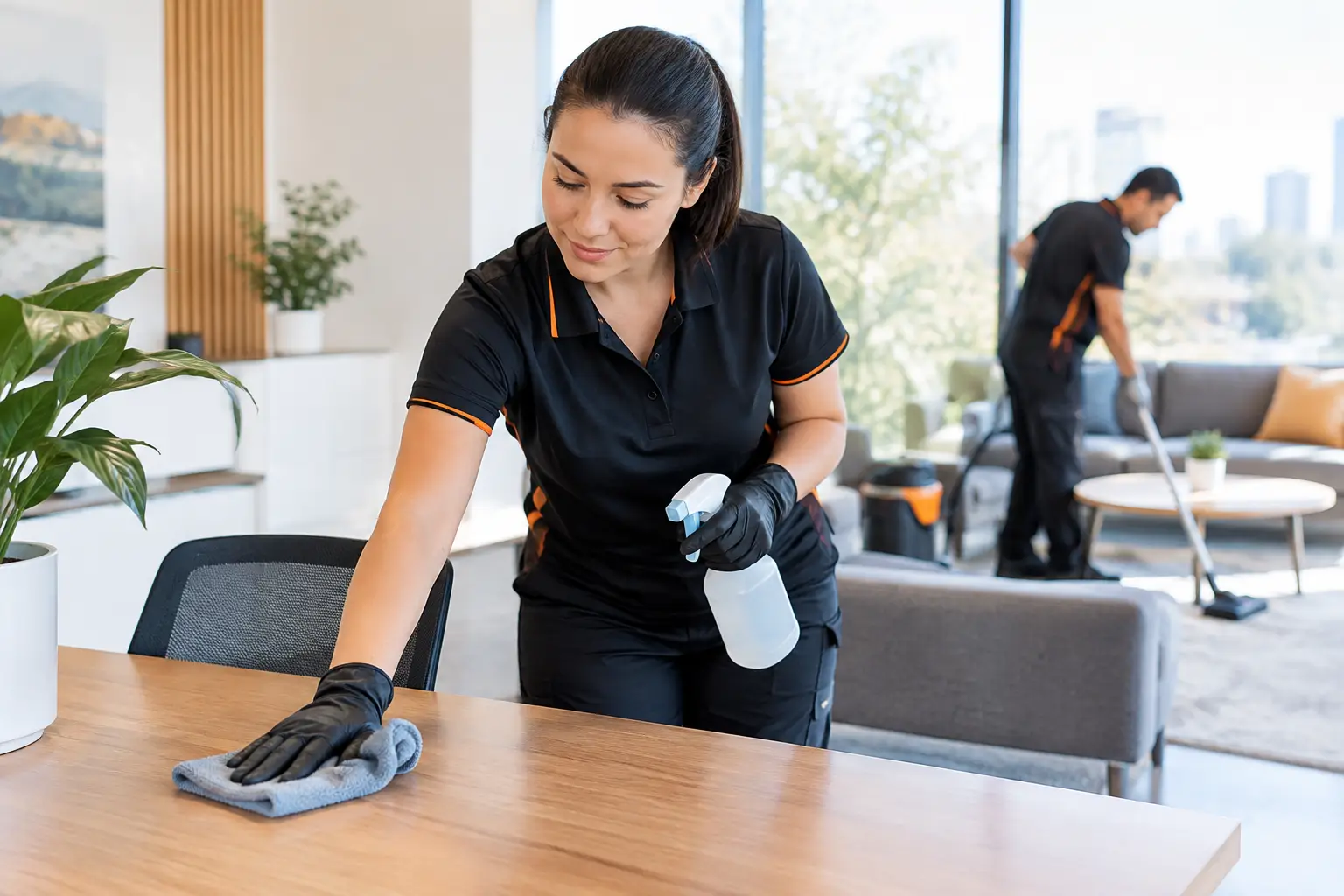
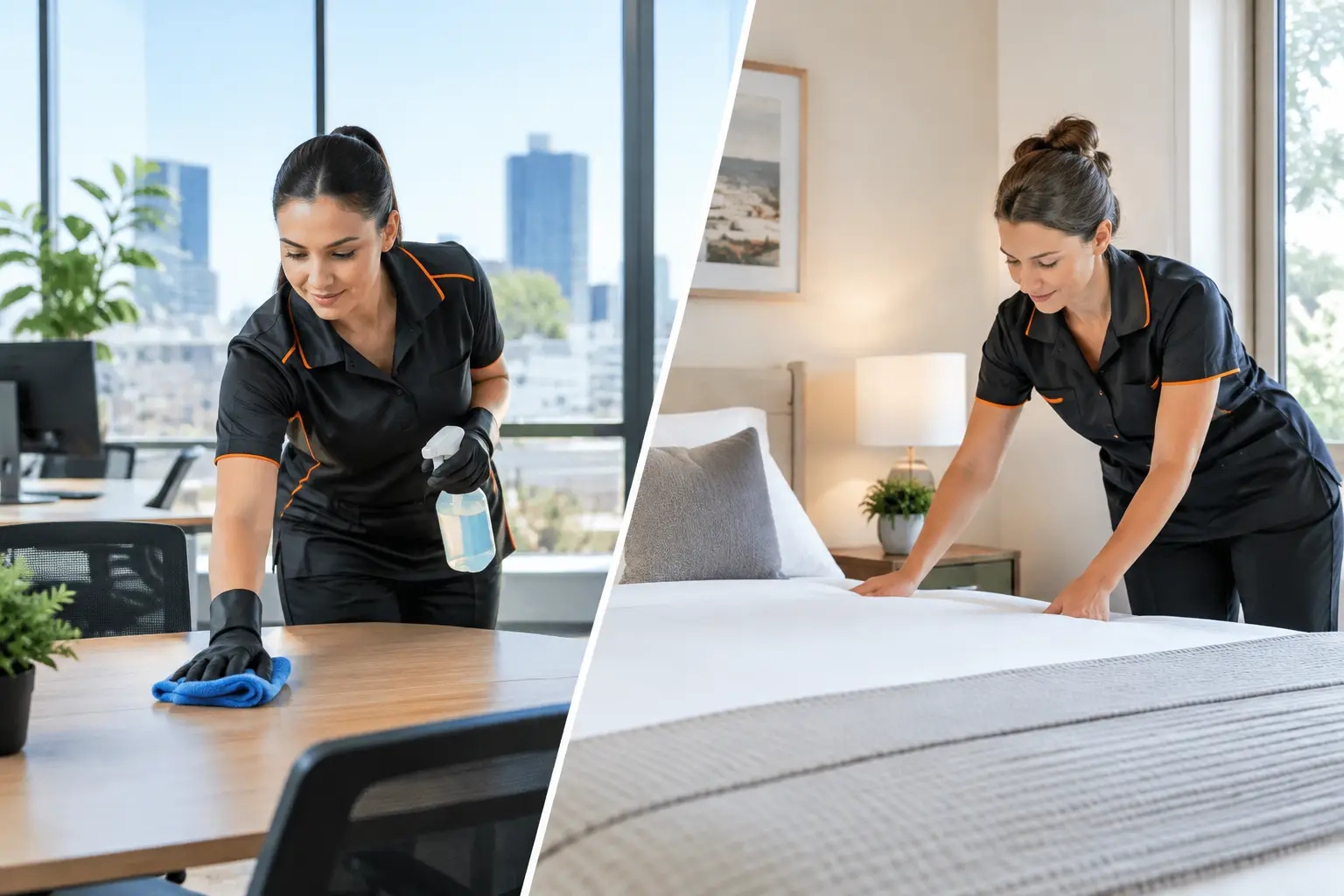
A missed spill in a reception area, full bathroom bins before a client meeting, or dusty floors after a busy week can quickly change how people see your business. Scheduled versus reactive facility cleaning is not simply a choice between two booking methods. It affects hygiene, staff confidence, visitor experience, operating costs and the amount of time your team spends chasing preventable problems.
For many facilities, the strongest approach is not choosing one method exclusively. It is building a reliable scheduled service around the work your site needs every week, then having responsive support available when the unexpected happens.
Scheduled versus reactive facility cleaning: what is the difference?
Scheduled cleaning is planned, recurring work completed at agreed intervals. That may mean daily office cleaning, bathroom servicing several times a week, weekly floor care, fortnightly window cleaning, or periodic deep cleaning. The tasks, areas, access arrangements and quality expectations are set in advance, creating a repeatable standard.
Reactive cleaning is arranged in response to an immediate need. A spill, sickness incident, post-event mess, construction dust, an inspection, a tenant departure or a sudden increase in foot traffic can all call for urgent cleaning. It is valuable because facilities do not always operate to plan.
The key difference is timing. Scheduled cleaning protects the condition of your workplace before issues become visible. Reactive cleaning restores order after an issue has already emerged. Both have a place, but relying on reactive work alone often means the facility is being cleaned at its most inconvenient point: when the mess is already affecting people.
Why a planned service usually delivers better value
A regular cleaning schedule gives facility managers and business owners something highly practical: predictability. Staff know when cleaners will attend, consumables can be monitored, access can be organised, and high-use areas receive attention before they deteriorate.
It also helps maintain a consistent presentation. In an office, that could mean clean desks in shared spaces, sanitised touchpoints, tidy kitchens and fresh bathrooms every morning. In a medical clinic, it means a structured approach to waiting rooms, consultation spaces and frequently touched surfaces. For gyms, retail sites, schools and hospitality venues, routine cleaning supports the standard customers and visitors expect every time they walk through the door.
There is a cost benefit as well. Dirt, grime and spills are generally easier to remove when addressed regularly. Neglected hard floors may need more intensive restoration. Built-up bathroom scale takes longer to treat. Kitchen areas that receive only occasional attention can become unpleasant quickly, particularly during busy periods. Planned cleaning reduces the likelihood that normal maintenance turns into an urgent deep-cleaning job.
A scheduled arrangement also creates accountability. Rather than asking a staff member to notice every issue and organise a cleaner at short notice, the service follows an agreed scope. This is particularly helpful for multi-area sites, busy offices and properties managed by people who cannot be on-site all day.
The limits of scheduled cleaning
A schedule should not be mistaken for a rigid checklist that ignores the reality of the site. A quiet professional office may not need the same frequency as a clinic with heavy daily foot traffic. A warehouse may require focused amenities and office cleaning, while a childcare or aged care environment needs more frequent attention to hygiene-critical areas.
Seasonality matters too. Wet Adelaide winters can bring more dirt and moisture through entryways, while summer events or peak trading periods can place extra pressure on bathrooms, kitchens and common areas. A schedule that worked six months ago may no longer reflect current occupancy, opening hours or visitor numbers.
This is where a good cleaning provider asks useful questions rather than selling a one-size-fits-all frequency. How many people use the site? Which spaces create the most complaints? Are there customer-facing areas that must look presentable at opening time? Are there security, compliance or access requirements? The answers shape a service plan that is realistic, not excessive.
When reactive cleaning is the right call
Reactive cleaning is not a failure of planning. It is the sensible response when an unforeseen event creates a health, safety, operational or presentation issue that cannot wait until the next scheduled visit.
For example, an urgent clean may be needed after a burst pipe, a workplace incident, a function, renovation works or a last-minute inspection. A property manager may need a rental property refreshed between tenancies. An Airbnb host may need fast turnaround support following an unexpected early check-in. A retailer might require immediate attention after muddy weather or a high-volume promotion.
Speed matters in these moments, but so does capability. The cleaner needs suitable equipment, appropriate products and clear instructions about what has happened. In sensitive settings such as clinics, aged care facilities or schools, the response must also align with the hygiene practices required for that environment.
Reactive work can be more expensive or more difficult to arrange at peak times because it requires a team to adjust existing commitments. That does not make it poor value. It simply means it is best reserved for genuine exceptions, rather than becoming the default way the facility is maintained.
The hidden cost of waiting until there is a problem
A reactive-only approach can appear economical because you are not committing to a regular visit. In practice, the cost is often transferred elsewhere. Staff may spend time wiping down kitchens, restocking bathrooms, taking rubbish out or responding to complaints. Those small interruptions add up, particularly when cleaning is not part of their role.
There is also the reputational cost. Clients and visitors may not mention an unclean bathroom, dusty entry or overflowing bin, but they notice it. In a professional setting, cleanliness is often read as a signal of care, safety and attention to detail. For medical, hospitality and customer-facing sites, that judgement can be immediate.
Waiting can also increase risk. Wet floors, cluttered walkways, unpleasant odours and poorly maintained amenities create avoidable problems for employees and visitors. Regular cleaning cannot remove every risk, but it supports a safer, more orderly environment.
How to set the right cleaning frequency
The right frequency is based on use, not square metres alone. A small, busy bathroom can need more attention than a large boardroom used twice a week. Start by looking at the areas that receive the most traffic, create the most waste or carry the highest hygiene expectations.
Consider the number of staff, customers or residents using the site each day, along with opening hours and the nature of the work. Then identify which tasks need daily, weekly, monthly or occasional attention. Daily servicing may suit bathrooms, kitchens, reception areas and shared touchpoints. Less frequently used rooms may only need a regular weekly clean, while carpets, windows and detailed floor care can be planned on a separate cycle.
It is also worth reviewing the service after the first few weeks. If bins are consistently full before the next visit or entry floors lose their presentation too quickly, the schedule needs adjustment. If some areas are rarely used, resources may be better directed to higher-priority spaces. The best plan is efficient because it responds to actual conditions.
A practical hybrid approach for most facilities
For many Adelaide workplaces and commercial properties, a hybrid model offers the best balance. Regular scheduled cleaning maintains the expected day-to-day standard, while a trusted provider remains available for urgent requests, seasonal deep cleans, event support or post-construction work.
This approach protects operational continuity without paying for unnecessary visits. It also means the cleaner already understands your site, priorities and access arrangements when an urgent need arises. That familiarity can make a significant difference when time is limited.
Clear communication is essential. Agree on the recurring scope, define what counts as an additional request, nominate a site contact and make sure concerns can be raised promptly. A transparent quote and a clear quality process help prevent surprises, whether the job is routine cleaning or an urgent call-out.
Choose consistency, then plan for the unexpected
Scheduled cleaning should carry the everyday load: clean amenities, orderly shared spaces and a workplace that is ready for staff and visitors. Reactive support should be there for the moments a routine cannot anticipate. Together, they give facility managers greater control over presentation, hygiene and cost.
A dependable cleaning partner does more than arrive when something looks untidy. They help you set a practical standard, maintain it consistently and respond when your premises need extra attention. That is the peace of mind Spiffi Cleaning aims to provide, with trained, police-checked teams and service plans shaped around how your facility actually operates.