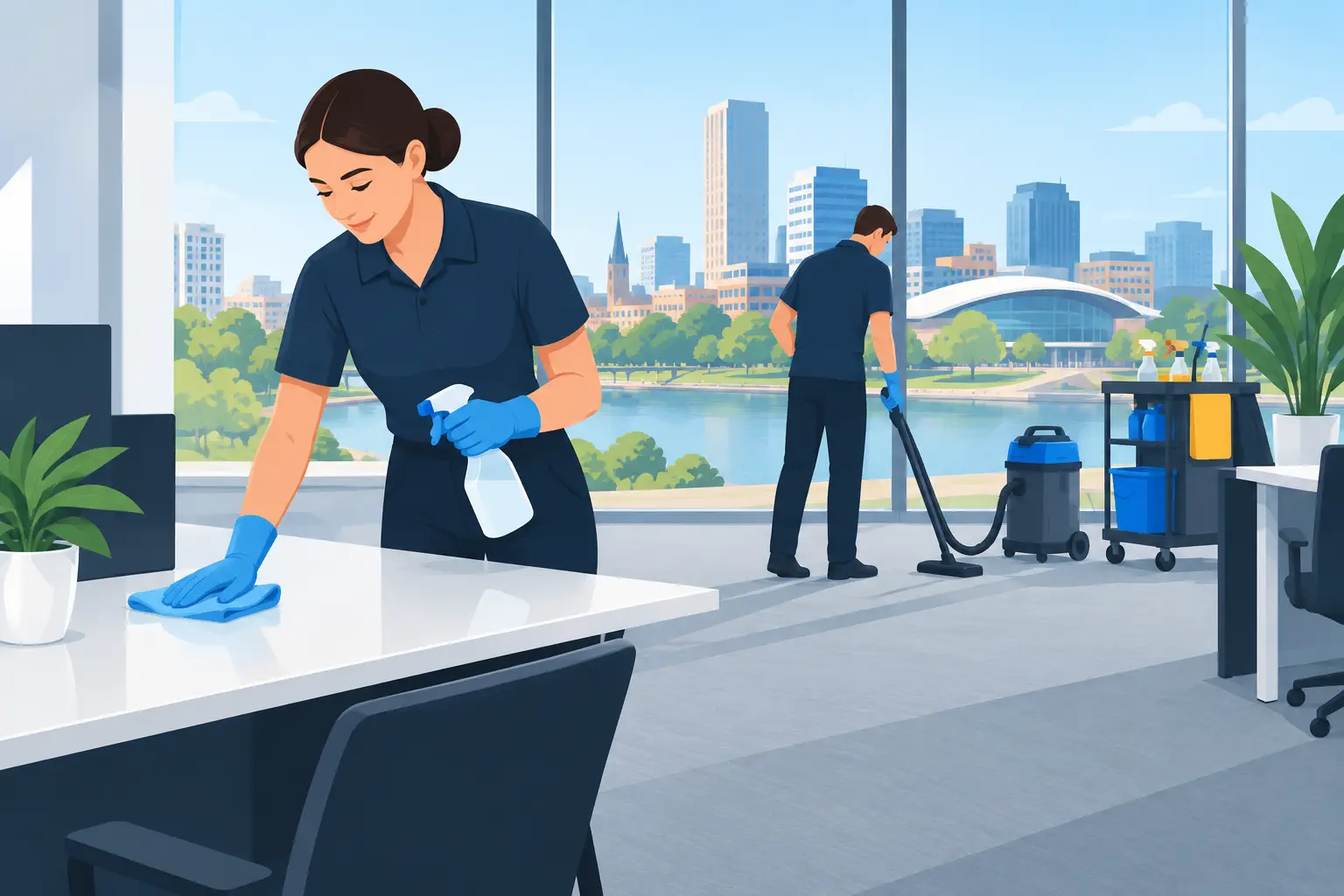
Walk into an office on Monday morning and you can usually tell, within seconds, whether the cleaning schedule is working. Smudged glass, full bins, stale kitchen smells and marked toilets send a message before anyone says a word. If you are wondering how often should an office be cleaned, the honest answer is not simply daily or weekly. It depends on how many people use the space, what areas they share, and how much hygiene matters to your operations.
For most workplaces, the right schedule is a mix of daily attention, weekly detail work and periodic deep cleaning. The goal is not to clean everything all the time. It is to keep the office presentable, hygienic and consistent without overpaying for tasks that do not need constant repetition.
How often should an office be cleaned in practice?
A small office with five staff, no client traffic and limited shared facilities can cope with a lighter schedule than a busy workplace with meeting rooms, a staffed reception area and constant foot traffic. That is why a blanket answer rarely works.
In practical terms, most offices need some level of cleaning at least once a day on business days, especially for toilets, kitchens, bins and high-touch points. General vacuuming, mopping, dusting and surface wiping are usually part of that same routine. If your team is in the office full-time, clients visit regularly, or shared spaces get heavy use, daily cleaning is often the baseline rather than the upgrade.
Less-used offices may only need full cleaning two or three times a week, but even then, bathrooms and kitchen areas can still need more frequent attention. A space can look tidy while still falling short on hygiene.
The areas that usually need daily cleaning
Some parts of an office do not give you much flexibility. Toilets should be cleaned and sanitised daily in almost every workplace. They affect staff wellbeing, visitor impressions and basic compliance expectations. If the office has moderate to heavy use, they may need checking more than once per day.
Kitchens and break rooms also sit in the daily category. Sinks, benches, taps, cupboard handles, microwave doors and fridge handles collect bacteria quickly. Add coffee spills, food crumbs and overflowing rubbish, and these spaces can go from acceptable to unpleasant in a single afternoon.
Bins are another daily job, especially in kitchen zones, bathrooms and shared work areas. Leaving rubbish overnight can create odours and attract pests, which is a small problem that becomes a larger one very quickly.
High-touch surfaces deserve the same attention. Door handles, lift buttons, light switches, shared desks, reception counters and meeting room tables are touched by multiple people all day. In a standard office, these should be disinfected daily. In higher-risk environments, they may need more frequent cleaning throughout the day.
What can be cleaned weekly instead?
Not every task belongs on a nightly checklist. Weekly cleaning is usually where the detail work sits. This often includes more thorough dusting of skirting boards, ledges and low-traffic surfaces, spot cleaning internal glass, wiping down partitions, and giving floors a more intensive treatment.
Meeting rooms that are not used constantly may only need a deeper reset once or twice a week, provided touchpoints are still handled daily. Individual desks can also be treated differently depending on whether they are permanently assigned, hot desks, or part of a client-facing space.
If your office has carpet, a weekly vacuum may not be enough in busy zones, but lower-traffic rooms can often be managed on a lighter cycle. Hard floors may need daily attention near entries and kitchens, while quieter sections can be maintained less frequently.
Monthly and periodic cleaning still matters
A common mistake is focusing only on what is obvious. Offices also need less frequent tasks that stop the whole space from gradually looking tired. This includes deep carpet cleaning, internal window cleaning, detailed upholstery cleaning, high dusting, wall spot cleaning and sanitising overlooked surfaces such as vents and behind furniture.
These tasks might be monthly, quarterly or half-yearly depending on the fit-out and level of use. They are not cosmetic extras. They help extend the life of flooring, improve air quality and maintain a professional standard over time.
If your office welcomes clients, job candidates or external stakeholders, these periodic cleans can make a bigger difference than people realise. A workplace does not need to be spotless to feel well run, but it does need to feel cared for.
The biggest factors that affect cleaning frequency
Number of staff and visitors
The more people moving through the office, the faster surfaces get dirty and shared amenities wear down. A twenty-person office with frequent visitors creates far more mess than a small back-office team working quietly with minimal traffic.
Type of work being done
A standard administrative office has different needs to a medical practice, warehouse office or sales floor. If staff eat at desks, move between indoor and outdoor areas, handle stock, or interact with the public all day, cleaning demands rise quickly.
Layout and shared spaces
Open-plan offices, hot-desking setups and shared kitchens generally need more frequent cleaning than offices with private rooms and limited common areas. Shared spaces concentrate both mess and germs.
Industry expectations
Some industries are held to a higher standard by staff, clients or regulators. Healthcare, childcare, fitness and hospitality-adjacent workplaces usually require tighter cleaning routines than a standard corporate office.
Seasonal issues
Winter flu season, wet weather and busy periods can all change what your office needs. Rain means dirt tracked onto floors. Cold and flu season means more focus on disinfection. End-of-year traffic or event periods may justify extra service visits.
Signs your office is not being cleaned often enough
You do not need an audit to spot an under-serviced office. The warning signs are usually obvious. Bins are regularly overflowing. Toilets look acceptable in the morning but rough by midday. Kitchen benches stay sticky. Fingerprints build up on glass and doors. Dust collects on vents, ledges and monitors. Staff start making casual complaints about cleanliness, smells or supplies.
There is also a business cost to stretching the schedule too far. A poorly maintained office can affect team morale, create a worse impression for clients and increase wear on carpets, flooring and furniture. Saving money on cleaning can lead to higher costs elsewhere.
Signs you may be over-cleaning
It is possible to go too far, particularly in smaller offices with low attendance. If cleaners are attending daily but there is barely any rubbish, no meaningful kitchen use and very little foot traffic, the schedule may be heavier than necessary.
The answer is not to reduce standards. It is to match the service properly. For example, a quieter office may shift from full daily cleaning to targeted daily touchpoint and bathroom cleaning, with broader general cleaning on alternate days. A good schedule should feel efficient, not excessive.
A realistic office cleaning schedule for most businesses
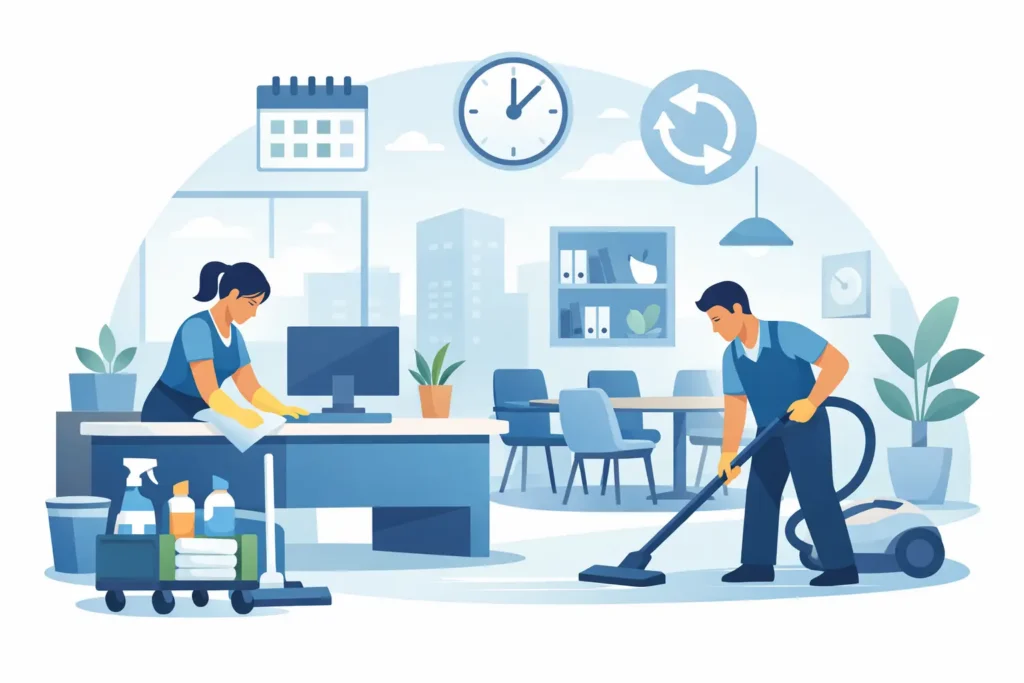
For many offices, the most effective approach looks like this: daily cleaning for toilets, kitchens, bins, floors in busy areas and high-touch surfaces; weekly detail cleaning for glass, workstations, skirting boards and less-used rooms; and periodic deep cleaning for carpets, windows, upholstery and hard-to-reach areas.
That balance gives you hygiene where it matters most and detail where it helps maintain a consistently professional environment. It also gives flexibility. A law office, medical consulting suite and creative studio may all need different versions of that framework.
If your office is in Adelaide, local conditions can also play a part. Dust, foot traffic from outdoor areas and changing weather can all affect how quickly floors and surfaces lose their clean appearance.
When to bring in a professional cleaning service
Office managers and business owners often know the space needs cleaning more often, but the internal workaround becomes the problem. Staff empty bins inconsistently, bathrooms get basic attention at best, and nobody owns the standard from week to week.
A professional service brings structure, accountability and consistency. That matters when you need reliable outcomes, not just occasional tidying. It also means the schedule can be built around your office rather than copied from another site.
For example, Spiffi Cleaning works with businesses that need cleaning plans matched to actual use, whether that means after-hours office cleaning, regular janitorial support or more specialised hygiene-focused work. The value is not just a cleaner office. It is one less operational issue to chase.
The best cleaning frequency is the one that keeps your workplace healthy, presentable and ready for the people using it every day. If your office only feels clean for a few hours after service, the schedule is too light. If it stays consistently fresh without wasted visits, you have probably got it right. Start with how the space is used, not what sounds standard, and build from there.