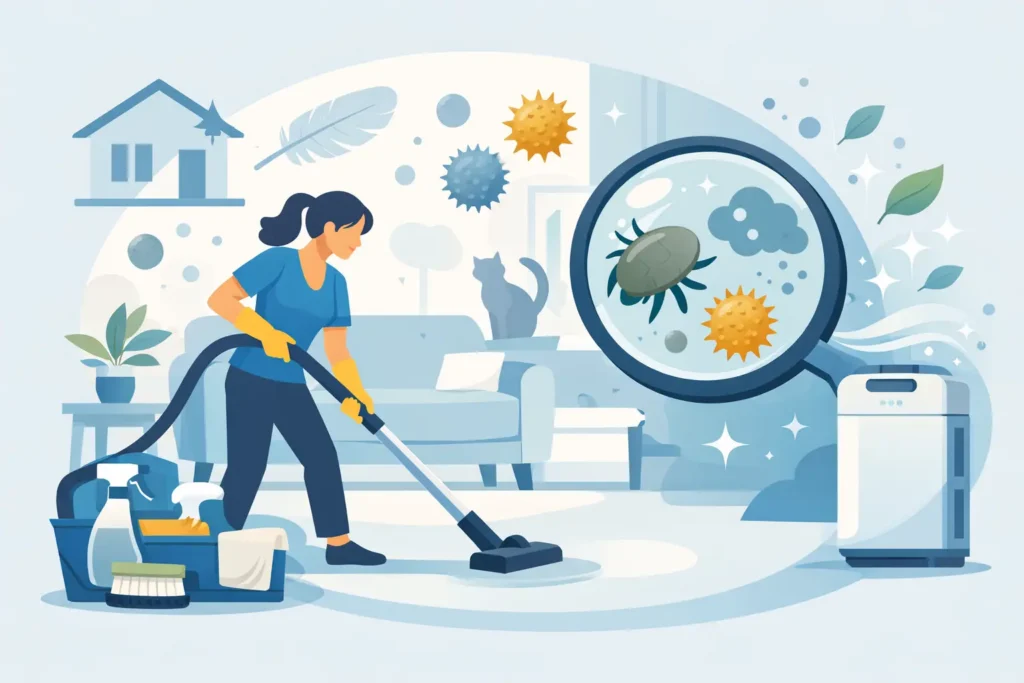
A spotless-looking room can still hold the particles that trigger sneezing, itchy eyes and a blocked nose. Dust settles inside soft furnishings, pet hair gathers beneath furniture, and moisture-prone areas can support mould growth long before it is obvious. Deep cleaning for allergies focuses on these overlooked areas, reducing the allergen load rather than simply making surfaces look tidy.
For households managing hay fever, asthma or dust sensitivity, the difference is often felt in the bedroom first. In offices, clinics and shared commercial spaces, it can also mean a fresher, more comfortable environment for staff, clients and visitors. Cleaning cannot cure allergies, and severe symptoms should always be discussed with a health professional, but a considered cleaning routine can remove common indoor triggers and make day-to-day living easier.
Why everyday cleaning may not be enough
Regular vacuuming, wiping benches and taking out the rubbish are essential, but they tend to address visible mess. Allergens are often concentrated where routine cleaning does not reach: under beds and lounges, along skirting boards, within upholstery, on ceiling fans, around window tracks and in the fibres of rugs and curtains.
Dust is not just dirt. It can contain dust mite debris, pollen brought in from outdoors, pet dander, textile fibres and other fine particles. When these are disturbed by dry dusting, a poor-quality vacuum or heavy foot traffic, they can become airborne again. The goal is not to create a completely sterile space. It is to remove buildup effectively without spreading it through the room.
Humidity adds another consideration. Bathrooms, laundries, kitchens and poorly ventilated rooms can develop mould or mildew, which may aggravate respiratory symptoms for some people. A deep clean should address the surface growth, but recurring mould also points to an underlying moisture or ventilation issue that needs attention.
Deep cleaning for allergies starts in the bedroom
People spend hours each night in bed, making bedrooms the highest-value place to begin. Mattresses, pillows, doonas, carpets and fabric bedheads can all collect dust and skin flakes that feed dust mites. Even a neatly made bed can be a reservoir if linen and surrounding surfaces are not cleaned consistently.
Wash sheets, pillowcases and washable bedding regularly according to the care label, using the warmest suitable setting. Vacuum the mattress slowly with an appropriate upholstery attachment, paying attention to seams and edges, then clean underneath and behind the bed frame. If the room has carpet, move lightweight furniture where practical so the vacuum can reach the areas that receive little attention.
Keep bedside tables and open shelving uncluttered. Every decorative item creates another surface for dust to settle, so the aim is not sparse living but easier-to-clean living. Where possible, store spare linen and seasonal clothing in closed cupboards or sealed containers rather than leaving fabrics exposed.
Treat soft furnishings with care
Curtains, rugs, cushions and upholstered chairs trap fine particles particularly well. Their cleaning method depends on the material. Some curtains can be laundered, while others need professional dry cleaning; some rugs tolerate thorough vacuuming, while delicate fibres require specialist care. Check manufacturer instructions before applying steam, water or cleaning products.
For allergy-focused cleaning, vacuum upholstery using a suitable attachment and work methodically from top to bottom. Avoid beating cushions or shaking rugs indoors, as this simply sends dust into the air. If pets use the lounge, pay particular attention to creases, beneath removable cushions and the floor immediately around the furniture.
Use cleaning methods that capture, not scatter
The equipment and technique matter as much as effort. A vacuum with effective filtration, ideally HEPA filtration, is designed to capture very fine particles rather than blowing them back into the room. Empty or replace vacuum bags and filters as instructed, preferably outdoors or in a well-ventilated area, because a full bin can reduce performance and expose the person emptying it to dust.
Dry feather dusters are not the best choice for allergy-prone spaces. Use a slightly damp microfibre cloth on hard surfaces instead. It holds dust rather than flicking it into the air, and it can be rinsed or washed between tasks. Clean high surfaces first – ceiling fans, vents, ledges and the tops of cupboards – then work down to benches, furniture and floors.
Choose low-fragrance, low-residue products where possible. Strong scents do not prove that a space is cleaner, and fragranced sprays can be unpleasant for people with sensitivities. The right product varies by surface and soil type, particularly in bathrooms and kitchens, so avoid using harsh chemicals where a mild, suitable cleaner will do the job.
For hard floors, vacuum first and then mop with clean water and an appropriate solution. A dirty mop head can redistribute grime, so wash or replace it regularly. In commercial settings, separate equipment for bathrooms, kitchens and general areas helps maintain hygiene standards and prevents cross-contamination.
Focus on the places allergens collect
A thorough service follows the path of dust and airflow, not just the obvious areas. Start with high-touch and high-settling points, then move towards floors and soft surfaces. The following areas deserve extra attention during a deep clean:
- Skirting boards, door frames, window sills and window tracks
- Air-conditioning vents, ceiling fans and accessible exhaust covers
- Under and behind beds, desks, lounges, appliances and storage units
- Blinds, curtain rails, lampshades and fabric-covered furniture
- Pet beds, feeding areas and the floors surrounding them
- Bathrooms, laundry corners and silicone seals where moisture can linger
Air-conditioning filters also need regular maintenance. A dusty filter can affect airflow and recirculate particles through a home or workplace. Follow the manufacturer’s instructions, and use a qualified technician where servicing is required. Cleaning the visible vent cover is helpful, but it is not a replacement for proper system maintenance.
Set a realistic cleaning schedule
The best schedule depends on who uses the space, whether there are pets, the amount of foot traffic and the season. Adelaide’s dry, windy days can bring more dust and pollen indoors, while damp areas may need closer attention after wet weather. A once-off deep clean gives the space a reset, but ongoing habits are what keep allergens from building back up.
For many homes, vacuuming high-use floors and wiping hard surfaces weekly is sensible, with bedding washed regularly and a more detailed clean every few months. Homes with pets, young children or significant allergy concerns may benefit from more frequent attention to upholstery, rugs and bedrooms. In an office or clinic, cleaning frequency should reflect visitor numbers, operating hours, flooring, food areas and the hygiene expectations of the site.
There is a trade-off between cleaning more often and cleaning more thoroughly. A quick weekly service maintains presentation, but it may not reach the hidden buildup behind furniture or within fabrics. Scheduling periodic deep cleaning alongside regular cleaning is usually the most practical approach.
When professional help is worth considering
Some tasks are time-consuming, physically demanding or difficult to complete properly with household equipment. This is especially true after renovations, at the end of a tenancy, before moving into a new property, or when dust has accumulated during a busy period. Professional cleaners can work through a structured checklist, use commercial-grade equipment and focus on the areas most likely to be missed.
For allergy-conscious clients, clear communication matters. Mention pets, known mould concerns, fragrance sensitivities, asthma triggers and any rooms that need priority. A professional team can then select appropriate methods, work in a logical order and avoid unnecessary disruption. If mould is extensive or linked to water damage, specialist assessment may be needed before cleaning alone can resolve the issue.
Spiffi Cleaning provides detail-focused deep cleaning for Adelaide homes and workplaces, with trained, police-checked staff and flexible booking options. A clear scope before the job starts helps ensure bedrooms, soft furnishings, high-dust areas and moisture-prone spaces receive the attention they need.
A cleaner space is not about chasing perfection. It is about removing the buildup that makes a room harder to live or work in, then keeping it under control with a routine that fits your space, your schedule and the people who use it.