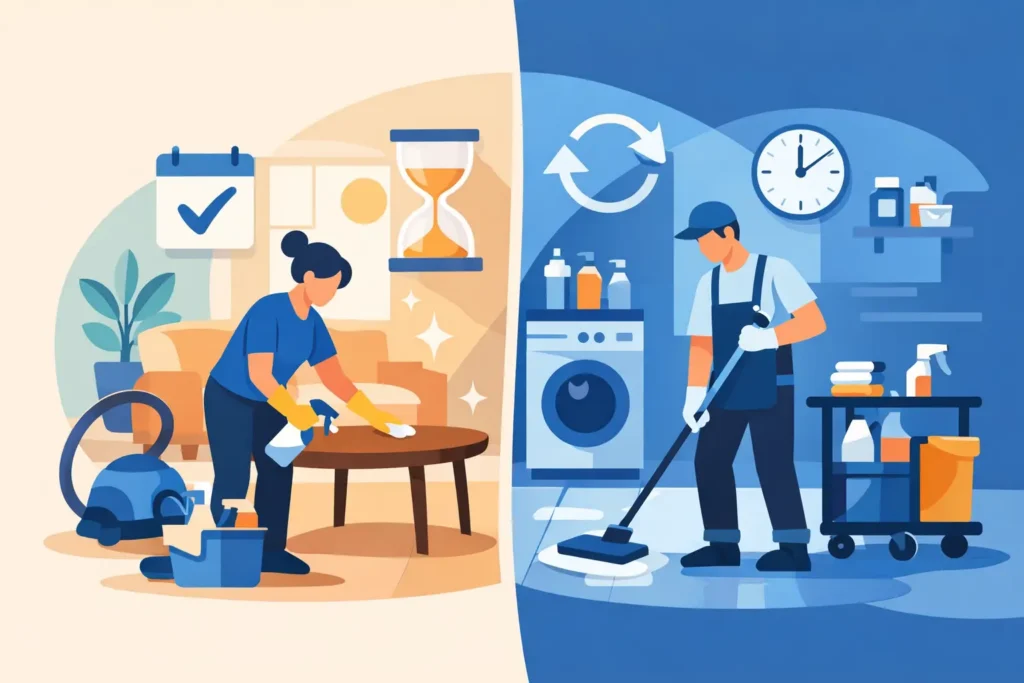
A kitchen can look presentable on Sunday night and feel completely different by Thursday morning. The same is true for office kitchens, clinic waiting rooms and short-stay properties. When weighing up one off vs recurring cleaning, the right choice is not simply about how often you want someone to clean. It is about the condition of the space, the people using it, the standard you need to maintain and how much time you can realistically put towards cleaning yourself.
A one-off service is ideal when there is a clear cleaning event or a backlog to tackle. Recurring cleaning suits spaces where cleanliness needs to stay dependable week after week. Both can deliver excellent results, but they solve different problems.
One off vs recurring cleaning: the practical difference
One-off cleaning is a single booked service, tailored to what the property needs at that point in time. It may be a detailed deep clean before guests arrive, an end-of-lease clean, an after-renovation clean or a reset for a home that has fallen behind during a busy period. The scope is usually broader or more intensive than a standard maintenance visit.
Recurring cleaning is scheduled at an agreed frequency, such as weekly, fortnightly or monthly. It focuses on keeping a space consistently clean rather than waiting until dirt, clutter, dust and grime build up. The cleaner becomes familiar with the site, your priorities and the areas that need particular attention.
Neither option is automatically better. A family preparing for a rental inspection has different needs from an office manager responsible for a busy workplace. The most useful question is: do you need a major reset, or a reliable system for preventing the next one?
When a one-off clean makes the most sense
A one-off clean is the sensible choice when there is a specific deadline, changeover or cleaning challenge. It gives you the flexibility to book help when it matters most, without committing to an ongoing schedule.
For residential customers, this is often useful before or after moving house, before a sale campaign, after building work, ahead of a family event or when a home needs a serious refresh. Tenants may need a detailed end-of-lease clean to help present the property properly at handover. Landlords and property managers may arrange a one-off clean between tenancies to get a property ready for new occupants.
For commercial sites, one-off cleaning can be valuable after renovations, an office relocation, a function, a seasonal rush or a period of reduced maintenance. It is also a practical way to bring carpets, windows, high-touch surfaces and neglected areas back to standard before regular cleaning begins.
The main advantage is intensity. A properly scoped one-off service can target built-up soap scum, oven grease, dusty skirting boards, interior windows, detailed bathrooms and other jobs that are easy to postpone. It can save a full weekend of labour and deliver a noticeably cleaner starting point.
There are trade-offs. Because the work is often more detailed and may take longer, a one-off clean can cost more than a single recurring visit. It also does not stop daily use from creating the same cleaning pressures again. A deep clean is highly effective, but it is a reset rather than a maintenance plan.
A one-off clean is usually right if you have a deadline
Choose this approach when the property has a clear purpose or event attached to it. Think rental handovers, inspection preparation, post-construction dust, a move, a special occasion or an overdue clean that requires extra time and equipment. Be clear about the result you need, especially where a bond, guest review, workplace presentation or hygiene requirement is involved.
When recurring cleaning is the better investment
Recurring cleaning is designed for consistency. Instead of allowing cleaning tasks to accumulate, you set a schedule that keeps important areas under control. This works particularly well in homes with children or pets, shared households, offices with regular staff and visitors, Airbnb properties, retail spaces, gyms and healthcare environments.
The immediate benefit is time. A recurring service removes a task from the weekly mental load and gives households more time for work, family and rest. For business owners and facility managers, it means staff are not distracted by cleaning duties that should be handled professionally.
The longer-term benefit is that regular attention makes cleanliness easier to maintain. Bathrooms receive ongoing care before grime becomes stubborn. Floors are cleaned before dirt is walked through the building. Kitchens stay more hygienic, and high-contact areas can be addressed at a frequency that suits the number of people using the space.
For a workplace, consistency also affects perception. Clients, patients, guests and employees notice a tidy reception area, clean amenities and a well-kept kitchen. In medical clinics, aged care settings and other hygiene-sensitive environments, regular cleaning supports a safer, more professional environment. The required frequency will depend on foot traffic, service type, opening hours and the surfaces involved.
Recurring cleaning does require a commitment to a schedule and access arrangements. It also works best when the starting condition is reasonably manageable. If the property has been neglected, a deep clean first can make each regular visit more effective and predictable.
Frequency should follow use, not habit
Weekly cleaning often suits busy family homes, high-traffic offices, hospitality venues and properties with frequent guest turnover. Fortnightly cleaning is a common choice for households that keep on top of day-to-day tidying but want dependable help with bathrooms, floors, kitchens and dusting. Monthly cleaning may work for low-traffic spaces or as supplementary support, but it may not be enough for sites with strict hygiene expectations.
The schedule should reflect what happens between visits. A quiet professional office may need a different plan from a medical practice with daily appointments. An Airbnb may need cleaning linked to checkout times rather than a fixed calendar day. A good cleaning plan follows the operational reality of the property.
Start with the condition of the space
If you are uncertain, assess the property honestly. Look beyond the visible surfaces and consider the areas people often avoid: behind taps, inside appliances, around toilet bases, under furniture, window tracks, entry points and high-touch fixtures. If these areas need attention, a one-off deep clean may be the strongest first step.
Then consider what you want the property to look and feel like three months from now. If you know cleaning will repeatedly compete with work, family commitments or business operations, recurring support is likely to offer better value than repeated last-minute bookings.
This is why a staged approach often works well. Start with a detailed one-off clean to establish a high standard, then move to weekly or fortnightly cleaning to protect it. For a commercial property, the initial service can also identify practical needs, such as more frequent amenity cleaning, periodic window cleaning or focused attention on reception and customer-facing areas.
Budgeting for results, not just visits
Comparing prices only by the number of hours can be misleading. The right service should be based on the work required, the size and condition of the property, the cleaning frequency, any specialised requirements and the standard expected at completion.
One-off cleaning can be more economical when you only need help for a defined event. It prevents you from paying for regular visits that do not match your lifestyle or operations. However, if you are repeatedly booking one-off cleans because the same tasks keep becoming unmanageable, a recurring plan may be the more efficient option.
Regular cleaning can offer better ongoing value because cleaners learn the layout, priorities and routine of the site. There is less time spent rediscovering what needs to be done at every visit, and small issues can be addressed before they become labour-intensive. For businesses, predictable cleaning arrangements also make budgeting and site management simpler.
The lowest quote is not always the lowest risk. For homes, workplaces and regulated settings, consider whether staff are trained and police-checked, whether appropriate products and equipment are used, how concerns are handled and whether the provider stands behind the result. Clear scope and transparent communication matter as much as the booking frequency.
What to ask before booking a cleaner
A useful conversation with a cleaning provider should cover the condition of the property, your preferred outcomes and any non-negotiables. Mention access requirements, pets, parking, security procedures, operating hours, areas that need extra care and whether there are sensitive surfaces or products to avoid.
For recurring services, ask how the schedule can change if your needs change. A family may need more support during school holidays or before hosting visitors. A business may need additional service after an event, during flu season or when staffing levels increase. Flexibility matters, but so does having a documented routine that protects consistency.
At Spiffi Cleaning, the aim is to make that decision straightforward with clear quoting, trained staff and a satisfaction guarantee. The service should fit the property, rather than forcing the property into a generic checklist.
A clean space should not rely on a last-minute scramble. Choose a one-off clean when you need a meaningful reset, and choose recurring cleaning when peace of mind comes from knowing the standard will be there again next week.