A client notices the coffee rings on the meeting table, the overflowing bathroom bin and the fingerprints on the glass door before they notice the quality of your proposal. For a small team, office cleaning for small businesses is not simply a back-of-house task. It helps protect your reputation, gives employees a healthier place to work and makes the office feel ready for the next customer, supplier or candidate who walks in.
Small workplaces have different cleaning needs from large corporate floors. There may be fewer people, but there is often less spare time, less storage and no facilities manager to monitor standards. The right approach is practical, consistent and tailored to how your team actually uses the space.
Why a clean office matters more in a small business
In a larger organisation, one untidy kitchenette or a dusty reception desk can disappear into the background. In a small office, it is often front and centre. Shared desks, one bathroom, a compact lunch area and a busy entrance receive a surprising amount of use. When cleaning slips, the entire workplace can look neglected quickly.
A well-maintained office supports the people who use it every day. Clean high-touch points such as door handles, light switches, taps, keyboards and shared equipment can help reduce the spread of everyday germs. Fresh bathrooms and kitchens also make staff more comfortable, particularly when there is nowhere else in the building to go.
There is a commercial benefit too. Clients form opinions fast, especially in professional services, real estate, consulting, trades, health-adjacent businesses and customer-facing offices. A clean reception area signals care, organisation and reliability. It will not replace good service, but it reinforces the standard you want your business to represent.
What office cleaning for small businesses should cover
The best scope is based on your premises, foot traffic and working habits rather than a one-size-fits-all checklist. A five-person office that sees clients daily needs different attention from a team of ten that works mostly off-site and only uses the office a few days a week.
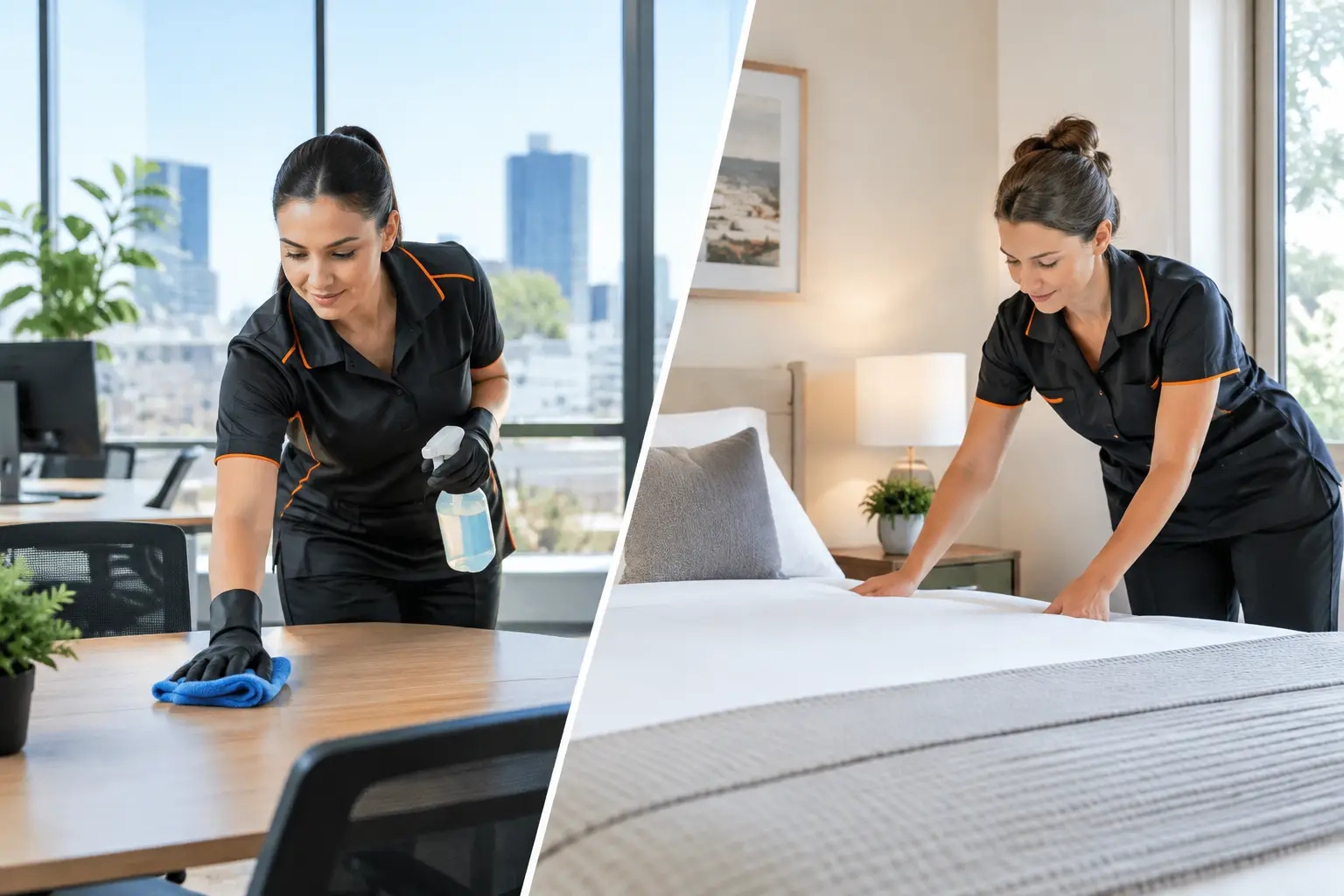
For most small businesses, regular cleaning should cover the essentials: vacuuming and mopping floors, emptying rubbish and recycling, wiping desks and shared surfaces, cleaning bathrooms, sanitising kitchen touchpoints and leaving the entry and reception area presentable. Glass doors, internal windows and meeting rooms may need more frequent attention if visitors are part of the normal workday.
Kitchens and bathrooms need priority
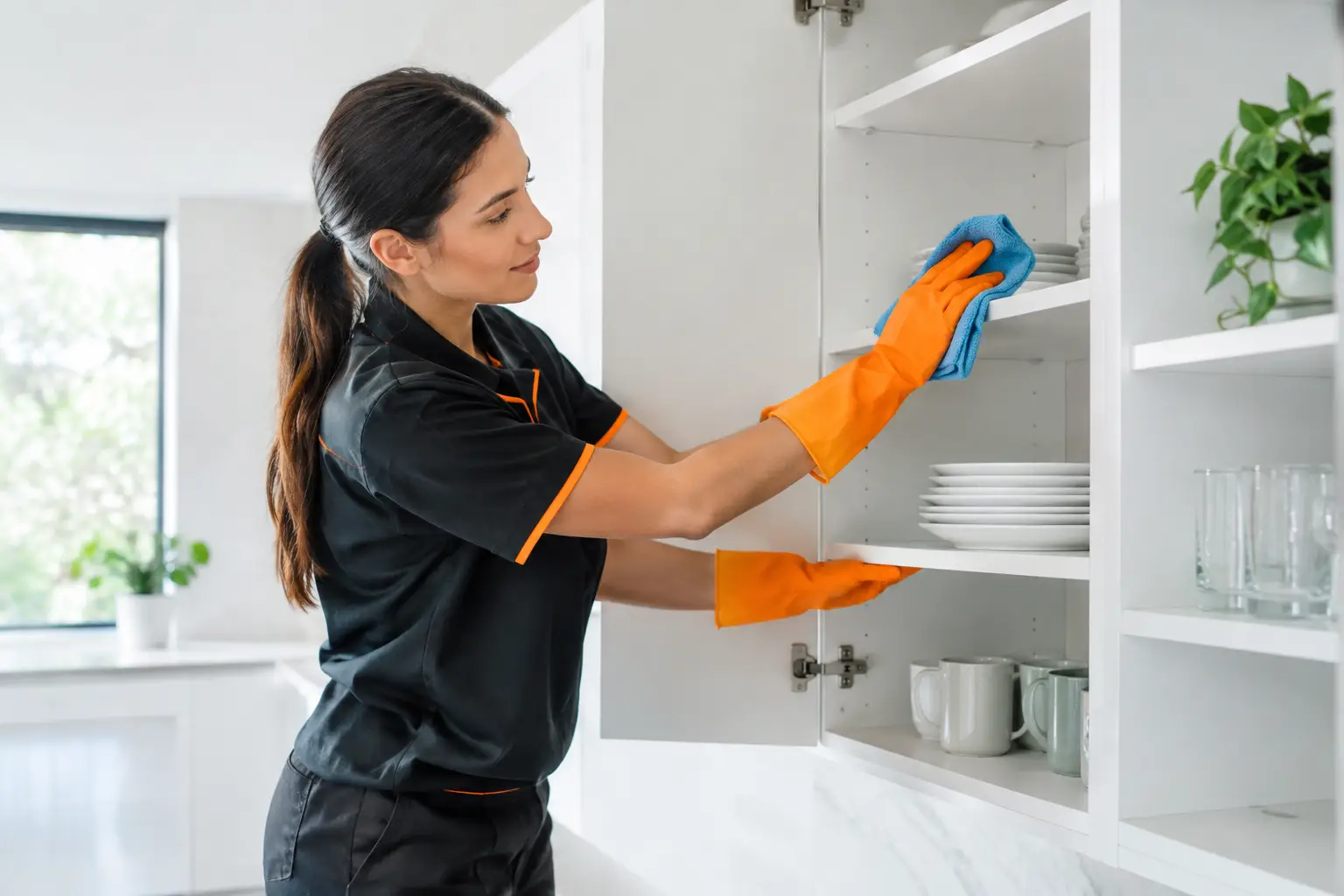
These are the areas where standards are most obvious to staff and visitors. In the kitchen, crumbs, spills, food residue and a full bin can create odours quickly. In bathrooms, clean toilets, basins, mirrors, floors and stocked consumables make a direct difference to comfort and hygiene.
A professional cleaner should work methodically through these spaces, using suitable products and equipment for the surfaces involved. Simply spraying a fragrance over an untidy or poorly cleaned room does not solve the problem.
High-touch surfaces deserve regular attention
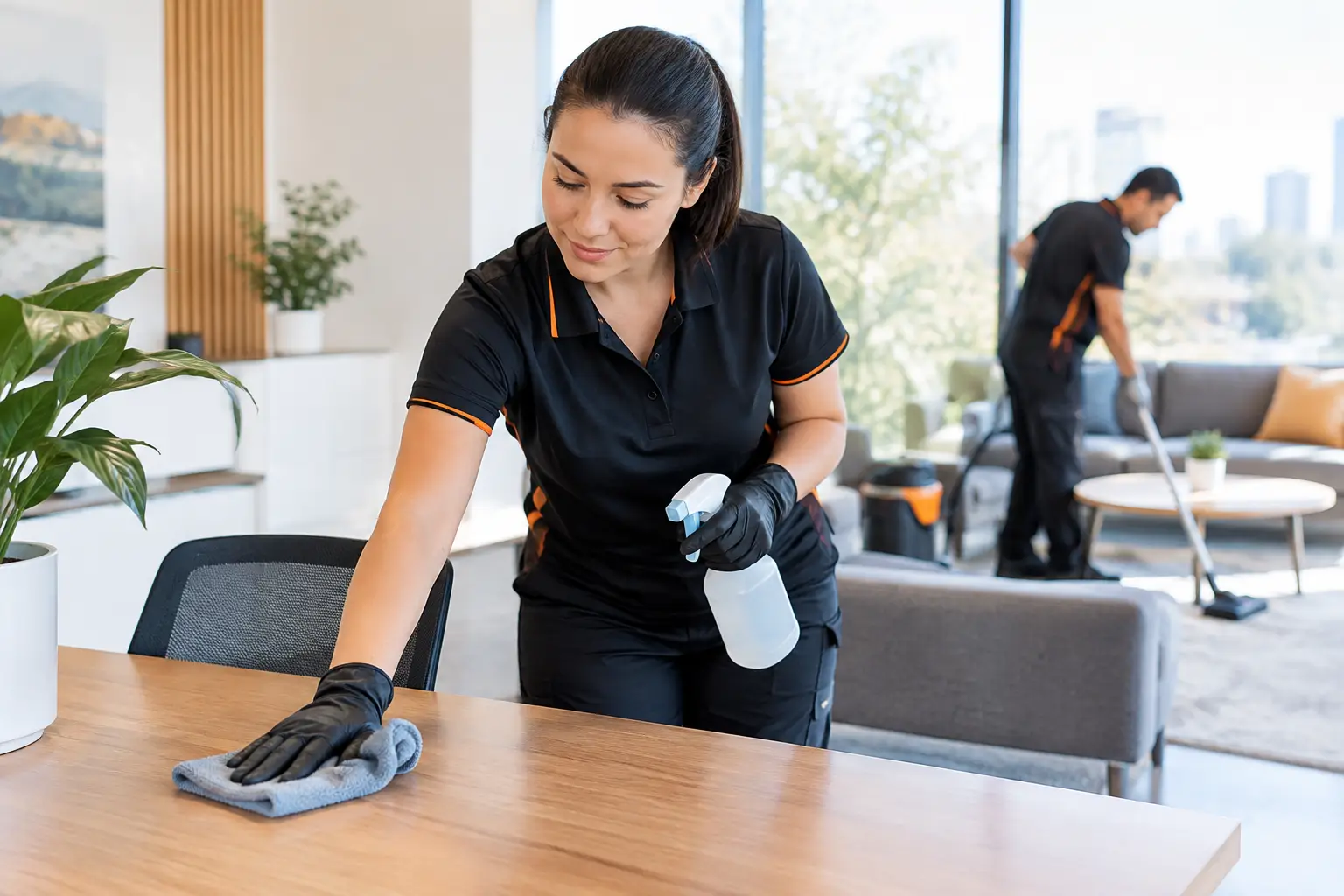
Desks are personal workspaces, but common points are shared by everyone. Think printer controls, fridge handles, microwave buttons, meeting-room tables, cabinet pulls and front-door glass. These details are easy to overlook when staff clean around their workload, yet they are exactly where a regular cleaning routine adds value.
If your office has hot-desking, frequent visitors or staff who share devices and workstations, increase the focus on these points. The right frequency depends on how busy the workplace is, not just how large it looks on paper.
Floors shape the overall impression
Dust and debris collect along skirting boards, under desks and near entranceways. Carpeted offices may need regular vacuuming and occasional deep cleaning, while hard floors benefit from proper mopping rather than a quick pass with a damp cloth. Entry mats also need attention, particularly during wet Adelaide weather when dirt can be tracked indoors.
Choosing the right cleaning frequency
There is no single schedule that suits every business. Cleaning too infrequently can lead to a gradual decline that staff stop noticing but customers do. Cleaning more often than required can stretch a small business budget without delivering meaningful extra value.
A small office with daily customer traffic, shared bathrooms and a busy kitchen may need cleaning two to five times a week. A quiet professional office with a handful of staff may be well served by a weekly visit, paired with clear expectations for staff to manage personal dishes and desk clutter between services.
Fortnightly cleaning can work for very low-traffic premises, but it is rarely enough when bathrooms, kitchens or client areas are used regularly. Seasonal deep cleans are also worthwhile for carpet, upholstery, internal glass, high dusting and areas behind furniture that routine visits cannot always reach.
A reliable provider will help you set a schedule around your usage patterns, then adjust it if your team grows, office attendance changes or client traffic increases.
What to look for in a cleaning provider
Price matters, but the lowest quote does not always represent the best value. Missed visits, unclear inclusions, poorly trained staff and inconsistent results can cost more in disruption and frustration than a transparent professional service.
Look for a provider that can clearly explain what is included, how often each task is completed and who to contact if something needs attention. For small businesses, communication is especially valuable. You need a cleaner who can work around trading hours, meetings, security arrangements and the occasional urgent request without creating more admin for your team.
Trust is equally important. Cleaners may work after hours or have access to sensitive spaces, documents and equipment. Trained, police-checked staff, appropriate insurance and clear site procedures give business owners and office managers greater peace of mind.
It is also sensible to ask how quality is managed. A satisfaction guarantee and a straightforward re-clean process show that the provider stands behind the work. The goal is not perfection through complicated paperwork. It is knowing that if a detail is missed, it will be put right promptly.
Make the cleaner’s time count
Professional cleaning is most effective when the office is reasonably ready for it. That does not mean staff need to clean before the cleaner arrives. It means creating a few simple habits that allow the service to focus on hygiene and presentation rather than moving piles of personal items.
Ask staff to clear food from desks, place confidential paperwork away and keep walkways accessible. Decide who manages consumables such as toilet paper, hand soap and bin liners, or confirm whether your cleaning service supplies and restocks them. If there are areas that should not be entered, sensitive equipment that requires care or alarm procedures to follow, document these clearly from the start.
A short site brief is usually enough. It should cover access instructions, preferred cleaning times, priority areas, any surface-specific requirements and a contact person for feedback. This creates consistency even when your workplace or staffing arrangements change.
Eco-friendly products and practical hygiene
Many small businesses want a cleaner office without harsh chemical smells or unnecessary product use. Eco-friendly cleaning products can be a good option, particularly in compact offices where ventilation is limited or where staff have sensitivities. They should still be selected for the task at hand. A gentle all-purpose product may be suitable for daily surfaces, while bathrooms and higher-risk areas need effective hygiene-focused products used correctly.
The key is not a label alone. Proper dilution, correct contact time, clean equipment and trained staff all affect the result. A quality clean is built on method as much as product choice.
A cleaner office without another job on your list
For Adelaide businesses, a dependable office cleaning partner can remove one of the quiet but persistent pressures of running a workplace. Spiffi Cleaning provides flexible office cleaning with trained, police-checked staff, clear communication and a satisfaction guarantee, so you can arrange service around your business rather than the other way around.
The right routine should leave your office looking cared for without demanding your attention every week. When staff arrive to clean floors, fresh bathrooms and a tidy shared space, they can get on with the work that keeps your business moving.