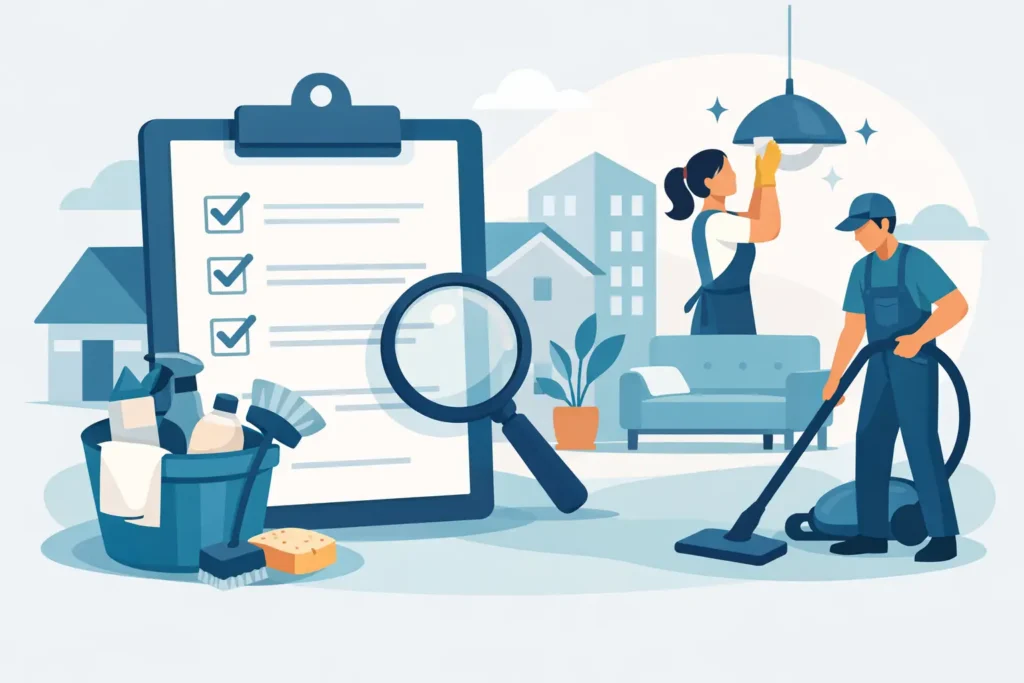
A property inspection can feel stressful when you are trying to work, manage a household and remember every small detail an agent may notice. This pre inspection cleaning checklist helps you focus on the areas that affect how clean, cared-for and well-maintained your rental appears – without spending hours cleaning things that are unlikely to matter.
For a routine inspection, the goal is a tidy home in good condition, not necessarily the same standard required for an end-of-lease handover. For a final inspection, however, you will need to go further and check your entry condition report, lease requirements and any special cleaning obligations. Knowing the difference saves time and helps you put your effort where it counts.
Start with the inspection standard
Before reaching for the cleaning products, establish what type of inspection is taking place. A routine inspection allows a property manager to check that the home is being reasonably maintained and that there are no repairs or safety issues to address. Cleanliness still matters, but everyday signs of living are generally different from damage or neglect.
A vacate or final inspection is more detailed. The expectation is usually that the property is returned to the condition documented at the start of the tenancy, allowing for fair wear and tear. Marks, built-up grease, mould, dirty windows and neglected outdoor areas can all become discussion points.
If your property manager has sent an inspection notice or checklist, use it as your first reference. Take dated photos after cleaning, particularly if there is an existing issue you have reported or an area that was worn when you moved in. Good records make conversations clearer if questions arise later.
Pre inspection cleaning checklist: the priority areas
Work from the front door through the home, rather than moving randomly between rooms. This makes it easier to see progress and reduces the chance of overlooking a room. Finish one space before starting the next.
Entry, living areas and bedrooms
First impressions count. Clear shoes, bags, paperwork and other personal items from the entry, hallway and main living areas. You do not need to make the home look empty, but clear surfaces make a property feel larger, cleaner and easier to inspect.
Vacuum carpets thoroughly, including along skirting boards and beneath furniture where practical. Mop hard floors with a product suited to the surface, paying attention to corners and sticky marks. Dust furniture, window sills, light fittings, ceiling fans and blinds. Remove cobwebs from ceiling corners, behind doors and around external lights.
In bedrooms, make the beds, put away laundry and clear bedside tables and drawers that may be left open. Check wardrobes for dust, loose rubbish and scuff marks. If walls have visible fingerprints or light marks, spot-clean carefully. Avoid aggressive scrubbing, which can remove paint and create a bigger issue than the original mark.
Windows are worth attention because streaks and fingerprints are highly visible in daylight. Clean the inside glass, wipe tracks and sills, and remove dust from flyscreens if accessible. Exterior window cleaning may be needed for a final inspection, depending on access, safety and the condition noted at the beginning of the tenancy.
Kitchen
The kitchen is one of the most closely examined rooms because grease and food residue build up quickly. Start by clearing the benches, then wipe all surfaces, splashbacks, cupboard fronts, handles and switches. Clean inside the microwave, including the turntable, and wipe the kettle, toaster and other appliances you own before putting them away.
The oven deserves more than a quick wipe if it has visible grease or burnt-on residue. Remove trays and racks, clean the door glass, wipe the cooktop and degrease the rangehood filters where required. A heavily soiled oven can take significant time, so plan this task early or arrange professional support if needed.
Do not overlook the sink and drain. Remove food scraps, clean the bowl and tapware, and polish away water spots. Empty the dishwasher filter if your appliance has one, wipe the door seals and run a cleaning cycle if there is an odour. Finish by checking the fridge area for crumbs, spills and dust around the sides or underneath.
Bathrooms, laundry and toilets
Bathrooms need to look hygienic, not merely tidy. Apply cleaner to the shower, basin, bath and toilet first, allowing it time to work while you wipe mirrors, cupboards and tiles. Then rinse and dry surfaces to prevent streaks.
Pay close attention to shower screens, grout lines, drains, soap holders and tapware. Soap scum and mineral deposits can make an otherwise clean bathroom look neglected. If mould is present, treat it promptly with an appropriate product and ensure the room is ventilated. Persistent mould should also be reported, particularly if it appears to be caused by a leak, poor ventilation or a building issue.
In the laundry, wipe the tub, taps, bench and machine exteriors. Remove lint from the dryer filter, check behind appliances for dust and clean any detergent spills from shelves. Empty rubbish bins throughout the home and fit clean liners before the inspection.
Outdoor areas and shared spaces
If your tenancy includes a balcony, courtyard, verandah or garden, it is part of the presentation. Sweep leaves and dirt, remove cobwebs, wipe outdoor furniture and dispose of rubbish. Keep paths and access points clear.
Garden expectations depend on your lease and the type of property. In most cases, mowing, weeding, trimming and watering are reasonable tenant responsibilities when the garden has been maintained during the tenancy. Do not attempt major pruning or repairs without checking first. For apartments, focus on your private balcony or courtyard rather than common areas managed by the strata or building owner.
Check wheelie bins as well. Empty bins if collection day allows, rinse them if they have leaked, and avoid leaving overflowing rubbish near the property. A clean outdoor area signals that the whole home has been looked after.
Address maintenance issues before they become inspection notes
Cleaning cannot solve a repair problem. As you work through the property, look for leaking taps, damaged flyscreens, loose door handles, faulty lights, dripping air conditioners or signs of pests. Report issues in writing to the property manager as soon as possible.
Small accidental damage should not be hidden behind furniture or temporary fixes. A clear, early conversation is usually better than having an issue discovered during an inspection. Similarly, do not repaint walls, replace fittings or use strong chemicals on delicate surfaces without approval. The wrong repair can affect the property and complicate responsibility.
A useful final check is to walk through the home as though you are seeing it for the first time. Look at each room from the doorway. Are floors clear? Are benches clean? Is there a noticeable odour? Are curtains open enough to let in natural light? This simple view often reveals the details that disappear when you have been cleaning for hours.
When a professional clean is the practical option
A routine inspection can usually be managed with a focused clean and a few hours of preparation. A professional service may be the better choice when work schedules are tight, the property is large, there has been a renovation, or problem areas such as the oven, shower glass and windows need detailed attention.
For a final inspection, professional cleaning can also provide reassurance where bond outcomes are at stake. It does not remove the need to attend to personal belongings, repairs or garden obligations, but it can ensure the cleaning work is completed methodically. Spiffi Cleaning supports Adelaide tenants and property managers with detail-focused rental and move-out cleaning, including the high-use areas that are often missed when time is short.
The day before the inspection, vacuum once more, empty the rubbish, air out the home and put cleaning products away. A clean, orderly property gives your agent a clear view of the home’s condition – and gives you one less thing to worry about.