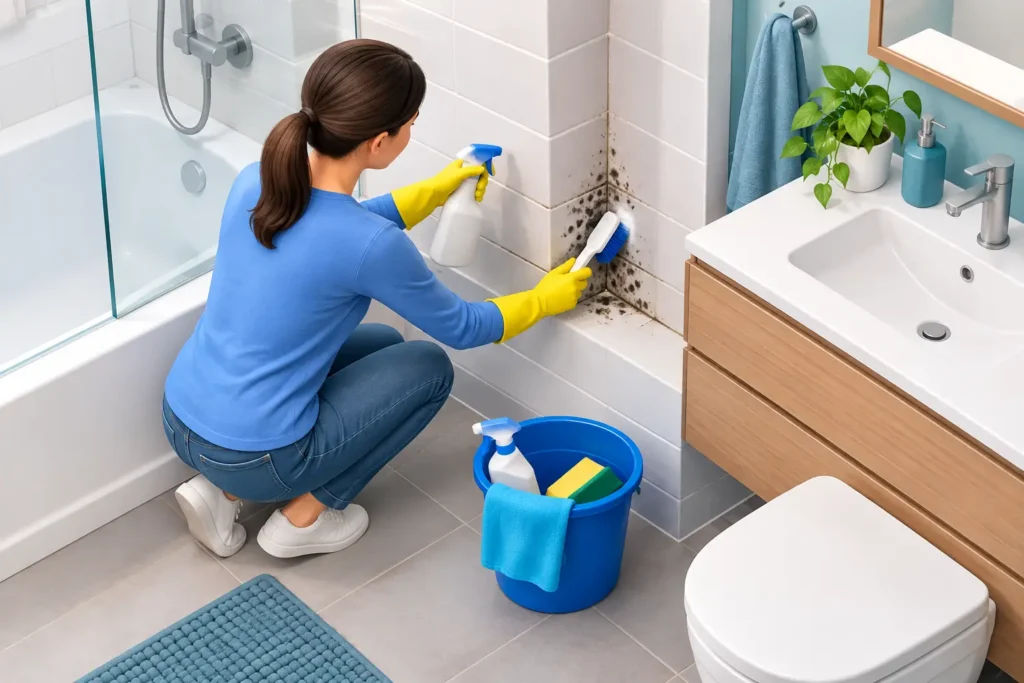
That black spotting around the shower screen or ceiling is more than an appearance issue. Bathrooms give mould exactly what it needs: warmth, moisture and limited airflow. To remove bathroom mould safely, the aim is not to simply bleach the visible marks and hope for the best. It is to protect yourself, clean the affected surface properly and deal with the moisture source so it is less likely to return.
For a small, contained patch, careful home cleaning is usually appropriate. Extensive growth, recurring ceiling mould, water damage or mould in a rental or commercial bathroom may need a more considered response. The right approach depends on the size of the problem, the surface involved and what is causing it.
Assess the Mould Before You Start
First, look beyond the obvious patch. Check silicone seals, grout, the exhaust fan cover, window frames, the underside of bath mats and the ceiling above the shower. Mould can look black, grey, green or brown, while persistent condensation may leave a musty smell before marks become visible.
Small areas on hard, non-porous surfaces such as tiles, glass and sealed shower screens can generally be cleaned at home. Be more cautious if mould covers a large area, returns shortly after cleaning, follows a leak, or has spread into plasterboard, timber, carpet, insulation or soft furnishings. Porous materials can hold mould below the surface, so wiping alone may not solve the issue.
People with asthma, allergies, respiratory conditions, weakened immunity, or sensitivity to mould should avoid doing the cleaning themselves where possible. The same applies if the bathroom has poor ventilation and you cannot keep the space well aired during and after cleaning.
Prepare to Remove Bathroom Mould Safely
Before applying any product, open windows and doors. Run the exhaust fan if it vents outside, but do not rely on a recirculating fan to clear fumes. Keep children, pets and anyone not involved out of the bathroom until surfaces are clean, dry and the room has aired out.
Wear suitable protection for the job:
- Rubber or nitrile gloves
- Safety glasses to protect against splashes
- A P2 mask, particularly when cleaning ceiling mould or a larger affected patch
- Long sleeves and clothes that can be washed straight away
Remove towels, bath mats, toiletries and loose items from the area. Wash washable fabrics according to their care instructions and dry them completely before returning them to the bathroom. This keeps spores from transferring onto items you use every day.
Choose one cleaning product and follow its label directions. A purpose-made mould cleaner can be effective on bathroom tiles and sealed surfaces. Some households use diluted white vinegar, while others use a bleach-based mould product. The key safety rule is simple: never mix cleaning chemicals. Bleach must never be mixed with vinegar, ammonia, toilet cleaner or any other product, as dangerous fumes can result.
Bleach may lighten staining on hard surfaces, but it is not automatically the best choice for every material. It can discolour fabrics, damage some finishes and produce strong fumes. Test any cleaner in a small, inconspicuous spot first, especially on coloured grout, natural stone, painted surfaces or older silicone.
A Safe Method for Cleaning Tiles, Grout and Screens
Start by applying your selected cleaner to the affected area without dry-scrubbing first. Dry brushing can disturb mould particles and spread them through the air. Let the product sit for the contact time stated on its label, or as recommended for the cleaning solution you are using.
Use a non-abrasive brush or cleaning cloth to work over grout lines, tiles and shower screen edges. Use controlled pressure rather than aggressive scouring. Harsh abrasives can scratch a surface, creating tiny areas where moisture and grime collect more easily.
Wipe away the residue with a clean, damp cloth. If the product label calls for rinsing, rinse thoroughly. Then dry the surface with a separate clean cloth or towel. Leaving the bathroom wet after cleaning gives any remaining spores a better chance of growing again.
For ceiling mould, avoid soaking the plasterboard. Apply cleaner sparingly to a cloth rather than spraying freely overhead, then wipe gently. If the paint is bubbling, stained through, soft to touch or the mould quickly reappears, there may be a ventilation, roof or plumbing issue behind it. Cleaning the surface without fixing that cause is only a short-term result.
Dispose of disposable cloths, paper towel and gloves in a sealed bag. Wash reusable cloths separately in a hot wash where the care label permits, and clean brushes before storing them. Finish by washing your hands thoroughly.
What About Mouldy Silicone?
Mould that has penetrated shower silicone often cannot be fully removed by surface cleaning. You may see the dark marks remain even after a careful treatment because the staining is inside the sealant itself. Repeatedly applying stronger chemicals can damage the silicone and surrounding finishes without restoring a clean appearance.
If silicone is cracked, lifting, brittle or permanently discoloured, replacement is usually the more reliable option. Old sealant can allow water behind the wall or shower frame, where a larger moisture problem may develop. Allow the area to dry properly before resealing, and consider professional help if you suspect water is getting behind tiles.
When DIY Cleaning Is Not the Right Option
A professional cleaner can assist with routine bathroom mould on accessible hard surfaces, particularly before a rental inspection, property handover or guest stay. However, cleaning is not a substitute for repairing a leak, failed waterproofing or inadequate extraction. Those issues need the right trade or property manager involved.
Arrange further assessment when mould is widespread, has returned multiple times despite cleaning and drying, or is linked to visible water damage. The same applies when there is a strong ongoing musty odour, staining across a ceiling or wall, or a suspected leak from plumbing, roofing or an adjoining room.
For Adelaide rental properties, take dated photos before cleaning if the issue appears to be caused by a building fault or failed exhaust fan. Notify the property manager or landlord promptly and keep communication clear. Tenants should still keep the bathroom reasonably ventilated and dry, but they should not be expected to solve a structural moisture problem themselves.
Stop Bathroom Mould From Coming Back
Mould prevention is mostly moisture management. After each shower, run the exhaust fan and leave it on for a while afterwards. If your fan is noisy, weak or does not appear to draw steam out of the room, it may need cleaning, repair or replacement. An exhaust fan that vents outdoors is generally more effective than one that simply moves air within the roof space.
Use a shower squeegee on glass, tiles and screens after showering. It takes less than a minute and removes a surprising amount of water that would otherwise evaporate into the room. Hang towels fully open to dry, avoid leaving wet clothes on the floor, and wash bath mats regularly.
Open a window where practical, particularly after bathing, but balance ventilation with weather and household security. In a bathroom without a window, consistent fan use and drying surfaces become even more important. A moisture absorber may help in a small space, but it will not overcome a leak or ineffective extraction.
Give high-risk areas a weekly clean: shower corners, grout lines, drain surrounds, window sills and silicone edges. Wiping early signs of soap scum and moisture away is faster, safer and easier than tackling a heavily moulded bathroom later.
A clean bathroom should feel dry, fresh and comfortable, not like another job waiting at the end of a busy week. If recurring mould is making that difficult, a thorough professional clean can restore the presentation while you address the moisture issue behind it. Spiffi Cleaning helps Adelaide homes and properties maintain dependable cleaning standards, with careful attention to the details that make a bathroom feel genuinely clean.