Apartment cleaning has a way of becoming urgent all at once. A few dishes turn into a crowded sink, dust gathers around the skirting boards, and the bathroom starts looking tired just as guests, an inspection or a new tenant is due. This Adelaide apartment cleaning guide gives renters, owners, landlords and Airbnb hosts a practical way to stay ahead of the mess without giving up every weekend.
The aim is not to make an apartment look like nobody lives there. It is to keep the spaces that affect hygiene, presentation and comfort under control, while catching the small details before they become a harder job.
Start with the areas people notice first
In a compact apartment, kitchens and bathrooms carry most of the cleaning workload. They are used every day, hold moisture and food residue, and can make an otherwise tidy home feel unclean quickly.
Start in the kitchen by clearing benches, putting away dry dishes and wiping the splashback, cooktop and handles. Crumbs and grease build up around the toaster, kettle and microwave, so move these items occasionally rather than only cleaning around them. Empty the rubbish before it smells and wipe the bin lid, especially in warm weather.
In the bathroom, focus on the vanity, tapware, toilet, shower screen and floor edges. A quick wipe after use makes a real difference to soap scum and water marks. Ventilation matters too. Run the exhaust fan during and after showers where possible, and leave the bathroom door open once the room has aired. This reduces lingering moisture that can lead to mould on grout, silicone and ceiling corners.
For renters, this regular attention also makes routine inspections less stressful. For hosts and property managers, it helps protect the standard expected between stays or tenancies.
A realistic Adelaide apartment cleaning routine
The best cleaning routine is one that fits your schedule. A weekly reset works well for most apartments, with a few small tasks done during the week. If you live alone in a newer apartment, you may need less frequent deep cleaning. A family apartment, shared rental or short-stay property usually needs more attention.
The 15-minute midweek reset
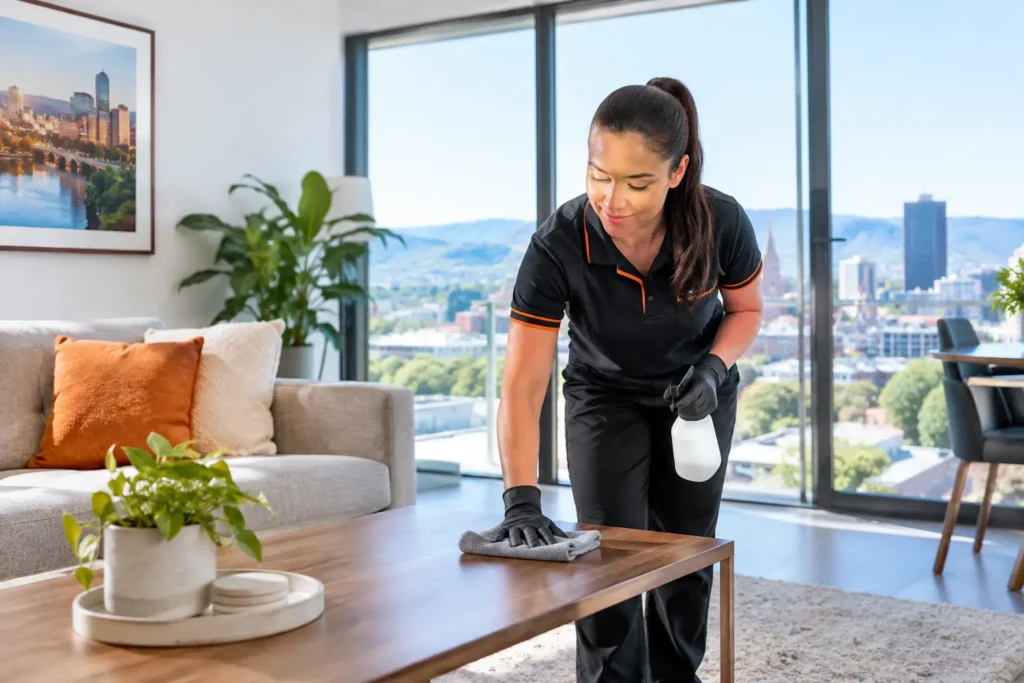
Choose one evening to deal with the visible clutter and high-touch areas. Put items back where they belong, wipe kitchen benches, clean the bathroom vanity and toilet, sweep or vacuum obvious dirt, and take out the rubbish. This short reset stops cleaning from becoming an exhausting catch-up job.
It is also worth wiping frequently touched points such as light switches, door handles, remote controls and fridge handles. In a shared apartment, these are easy to overlook because no one person feels responsible for them.
The weekly clean
Once a week, vacuum or mop floors, dust furniture and window ledges, clean the kitchen properly and refresh the bathroom. Change bed linen and towels, then check the balcony or entry area if you have one. Wind can carry dust, leaves and grit onto balconies, particularly in exposed buildings and higher apartments.
Do not forget under furniture where practical. You do not need to move every heavy item each week, but a quick pass under the couch, bed edge and dining chairs keeps dust from spreading through the apartment.
The monthly detail clean
A monthly clean is the time for jobs that protect the condition of the property. Wipe inside the microwave and fridge shelves, clean oven splatters before they bake on, dust vents, wipe skirting boards, and check for marks on walls and doors.
Wash shower mats and clean the washing machine drawer and seal if you have an internal laundry. These areas often hold moisture and detergent residue. In apartments with limited airflow, small maintenance tasks like these can prevent odours and mould from taking hold.
The right order saves time
Cleaning in the wrong order creates extra work. If you vacuum before dusting, or mop before cleaning the kitchen, you may need to do the floors twice.
Work from dry areas to wet areas, and from high surfaces down to the floor. Begin by decluttering and putting items away. Dust shelves, ledges and furniture, then wipe benches and other surfaces. Clean bathrooms and the kitchen after that. Vacuum last, then mop hard floors once all other work is finished.
Letting products sit briefly can help, but only when used as directed on the label. Apply bathroom cleaner to the shower or toilet, then clean another part of the room while it works. This is more effective than immediately scrubbing, and it avoids using more product than necessary.
Use products that suit apartment surfaces
Apartments often have a mix of laminate, engineered stone, glass, stainless steel, tiles and painted walls. One strong cleaner is not always the answer. Harsh or abrasive products can dull tapware, mark benchtops or damage glass.
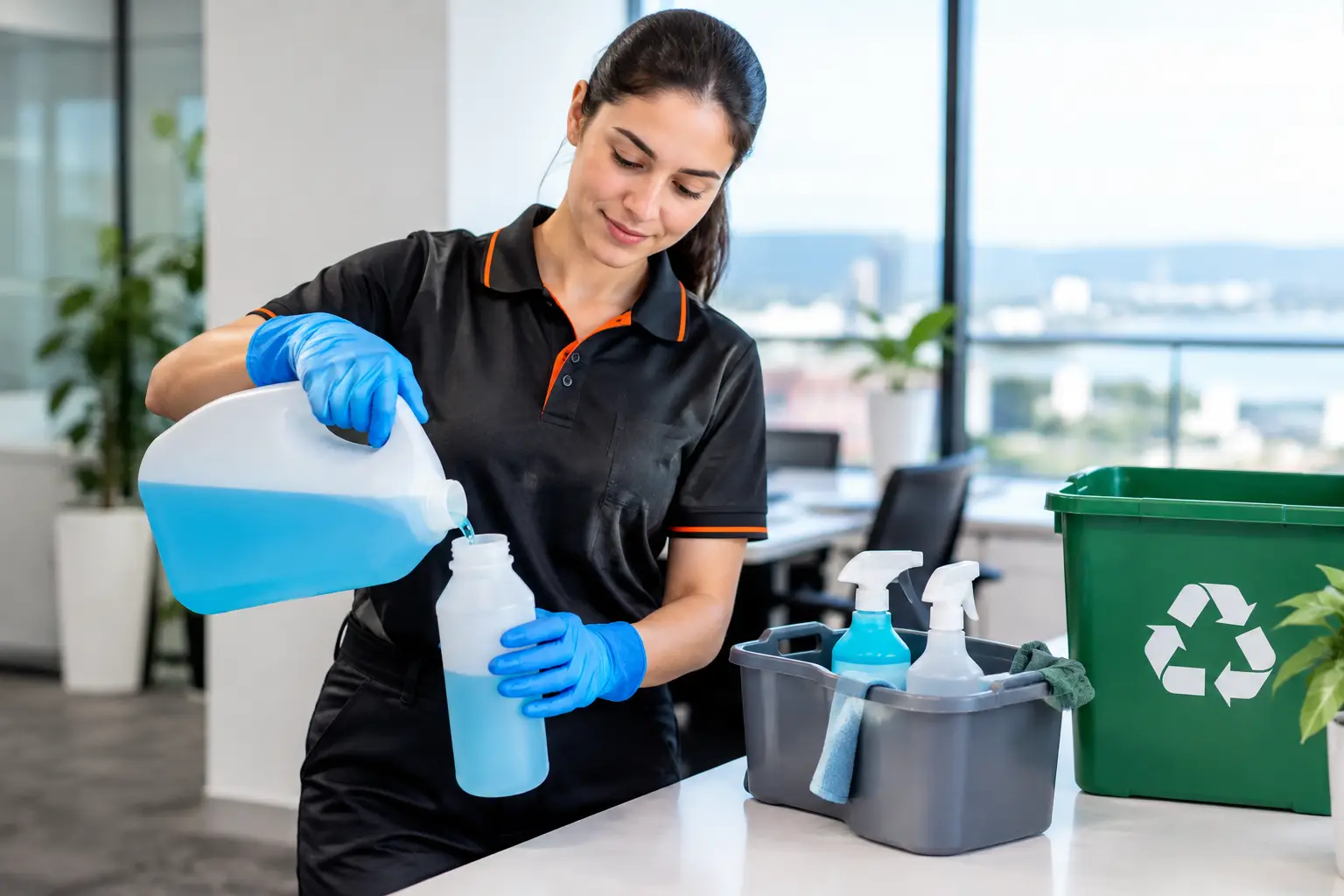
Use a microfibre cloth for most everyday wiping, a separate cloth for bathrooms, and a clean mop head for floors. Colour-coding cloths is a simple way to avoid using a bathroom cloth in the kitchen. For stubborn shower build-up, choose a product suitable for the screen and tiles, and rinse surfaces well afterwards.
Be careful with fragranced sprays and aerosol products in small, enclosed spaces. Good ventilation is especially important in apartment bathrooms, internal laundries and kitchens without much natural airflow. Eco-friendly products can be a sensible choice when they still suit the surface and the cleaning task.
Handle common apartment trouble spots early
Some cleaning problems are easier to prevent than remove. Grease, soap scum, dust and mould are the usual trouble spots in Adelaide apartments.
Kitchen grease tends to settle on rangehood filters, cabinet fronts and nearby walls. Wipe the cooktop after cooking and clean rangehood filters regularly according to the manufacturer’s instructions. If you leave grease for months, it becomes sticky, attracts dust and takes much more effort to remove.
Shower glass needs attention before water marks become etched-looking stains. A squeegee after showers is useful, but a dry microfibre cloth works too. Pay close attention to the bottom edge of the shower screen, tracks and corners where water sits.
Dust is often more noticeable near windows, sliding doors and air-conditioning vents. Wipe tracks with a small brush or vacuum attachment, then finish with a damp cloth. Clean tracks also help doors slide properly and improve the overall look of the room.
If you notice mould, deal with it promptly and safely. Small surface patches may be manageable with an appropriate cleaner and good ventilation. Repeated mould, strong musty smells, water leaks or peeling paint may point to a building or maintenance issue. Tenants should document the concern and notify their property manager rather than repeatedly cleaning around a problem that needs repair.
Preparing for inspections, move-outs and guest arrivals
A standard weekly clean is different from a handover clean. Before a rental inspection, take a slower pass through the apartment in daylight. Look at the property from the entry, then check wall marks, fingerprints around switches, shower screen edges, inside cupboards, window tracks and skirting boards.
For a move-out, allow more time than you think. The property needs to be empty or nearly empty before a proper clean can happen. This is when ovens, inside cupboards, blinds, walls, windows and balcony areas become more important. Keep receipts and condition reports where required, and check your lease obligations before arranging the work.
Airbnb hosts need a repeatable turnover checklist. Fresh linen, sanitised bathroom surfaces, clear kitchen benches, emptied bins and clean floors set the baseline. Then check the details guests notice immediately: hair in the bathroom, fingerprints on glass doors, crumbs in drawers and streaks on mirrors. A fast turnaround only works when the process is consistent.
When a professional clean is the sensible option
There is no prize for spending an entire weekend cleaning a property that needs specialist attention. A professional clean can make sense before an end-of-lease handover, after renovations, following a long vacancy, or when a busy household has fallen behind.
It can also help property managers and hosts who need reliable presentation between tenants or guests. Trained cleaners bring the equipment, products and method needed for more detailed work, while a clear scope helps avoid missed areas and confusion on the day.
Spiffi Cleaning supports Adelaide households, landlords and rental properties with practical cleaning services that can be scheduled around access times and property deadlines. The focus should always be clear communication, careful work and a result that makes the next step easier.
A clean apartment is less about perfection than rhythm. Put a small routine in place, deal with moisture and grease early, and save the detailed work for when it will make the biggest difference. Your home, tenant or next guest will feel the benefit the moment they walk through the door.