A late checkout, a same-day arrival and one overlooked hair in the bathroom can be enough to turn an otherwise excellent stay into a disappointing review. For hosts, a reliable Airbnb turnover cleaning checklist example is not simply a cleaning list. It is the operating standard that ensures every guest walks into a property that feels fresh, cared for and ready for them.
A good turnover clean sits between a standard house clean and a deep clean. The aim is to reset the property quickly without cutting corners on hygiene, presentation or supplies. It should also make it easy for a host, property manager or cleaning team to confirm that the work is complete before the next guest arrives.
Why turnover cleaning needs its own checklist
Guests do not judge a short-stay property by how clean it was last week. They judge it from the moment they open the door. Floors, bathrooms, linen, rubbish bins and kitchen surfaces all influence their first impression, while small details such as a sticky remote or an empty soap dispenser can suggest that the property has not been properly prepared.
The challenge is consistency. Different guests leave different levels of mess, and short booking windows can create pressure. A structured checklist gives every clean a clear sequence, prevents missed tasks and creates accountability when more than one person is involved. It is especially useful for hosts managing several properties or coordinating cleaners remotely.
Not every turnover requires the same amount of work. A one-night stay by two guests may need a straightforward reset, while a week-long family booking can require extra attention to ovens, upholstery, bins and outdoor areas. The checklist provides the baseline. The cleaner should then allow time for the condition of the property.
Airbnb turnover cleaning checklist example
Use this example as a practical room-by-room standard. It is designed for a typical short-stay home or apartment and can be adjusted for property features such as balconies, pet-friendly areas, multiple bathrooms or a shared laundry.
Before cleaning begins
Start with a brief inspection before moving items or stripping beds. Check for guest belongings, damage, excessive stains, missing items and maintenance issues. Photograph anything that needs to be documented, then notify the host or property manager promptly. This protects everyone and avoids an unpleasant surprise after the next guest has checked in.
Open windows where appropriate for ventilation, turn on lights and collect rubbish from every room. Wash hands, use clean cloths for each area and work from cleaner spaces towards dirtier ones. Bathrooms and kitchens should always have separate cleaning equipment to reduce cross-contamination.
Entry, living areas and bedrooms
The entry should feel orderly and welcoming. Wipe the front door handle, clean fingerprints from glass, remove cobwebs and sweep or vacuum the immediate entrance. Check that keys, lockboxes or smart entry instructions are in place as arranged by the host.
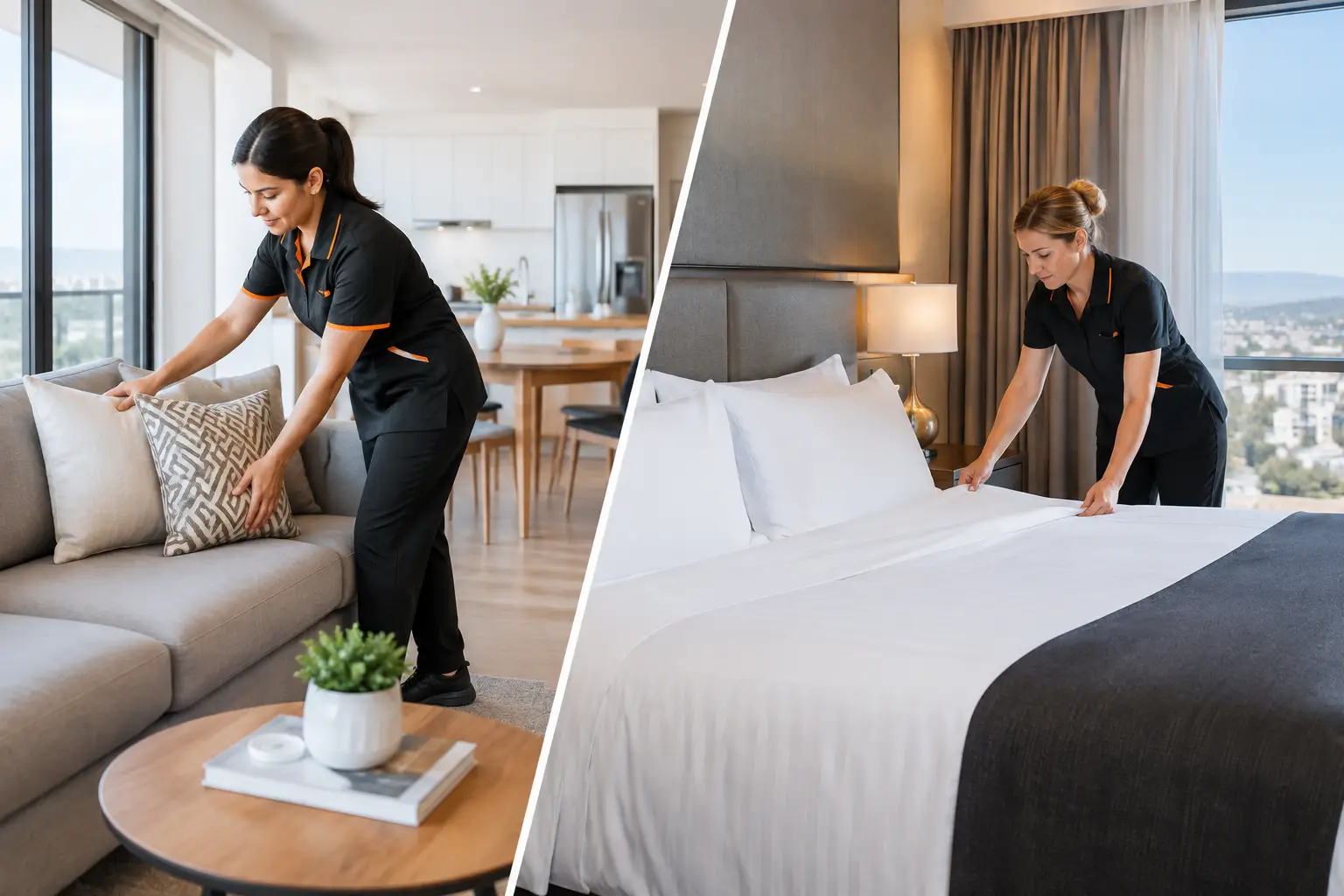
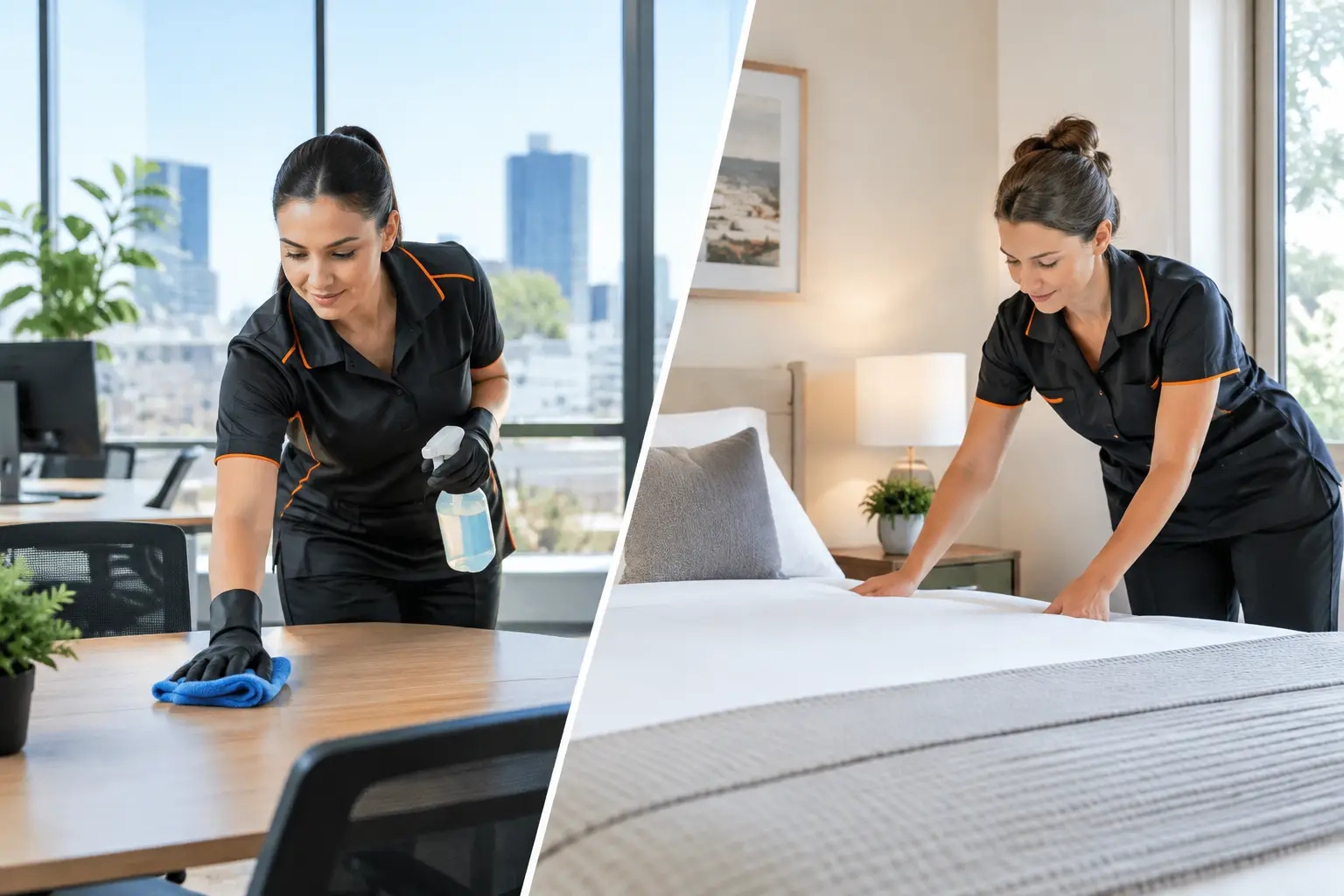
In living spaces, remove rubbish and forgotten food, then dust accessible surfaces, picture frames, shelves, lamps and skirting boards where needed. Wipe coffee tables, dining tables, switches, remotes and door handles with an appropriate disinfectant. Vacuum upholstery and look between cushions for crumbs or guest items. Straighten cushions, arrange furniture neatly and check that lamps, television remotes and Wi-Fi equipment are present and working.
For each bedroom, strip used linen and inspect the mattress protector, pillows and quilt for marks or damage. Replace all linen with clean, fresh sets and make the bed neatly, with pillowcases aligned and blankets folded consistently. Dust bedside tables and lamps, wipe handles and switches, empty drawers if required, and vacuum under the bed where accessible. Wardrobes should be empty, organised and stocked only with the items guests are meant to use.
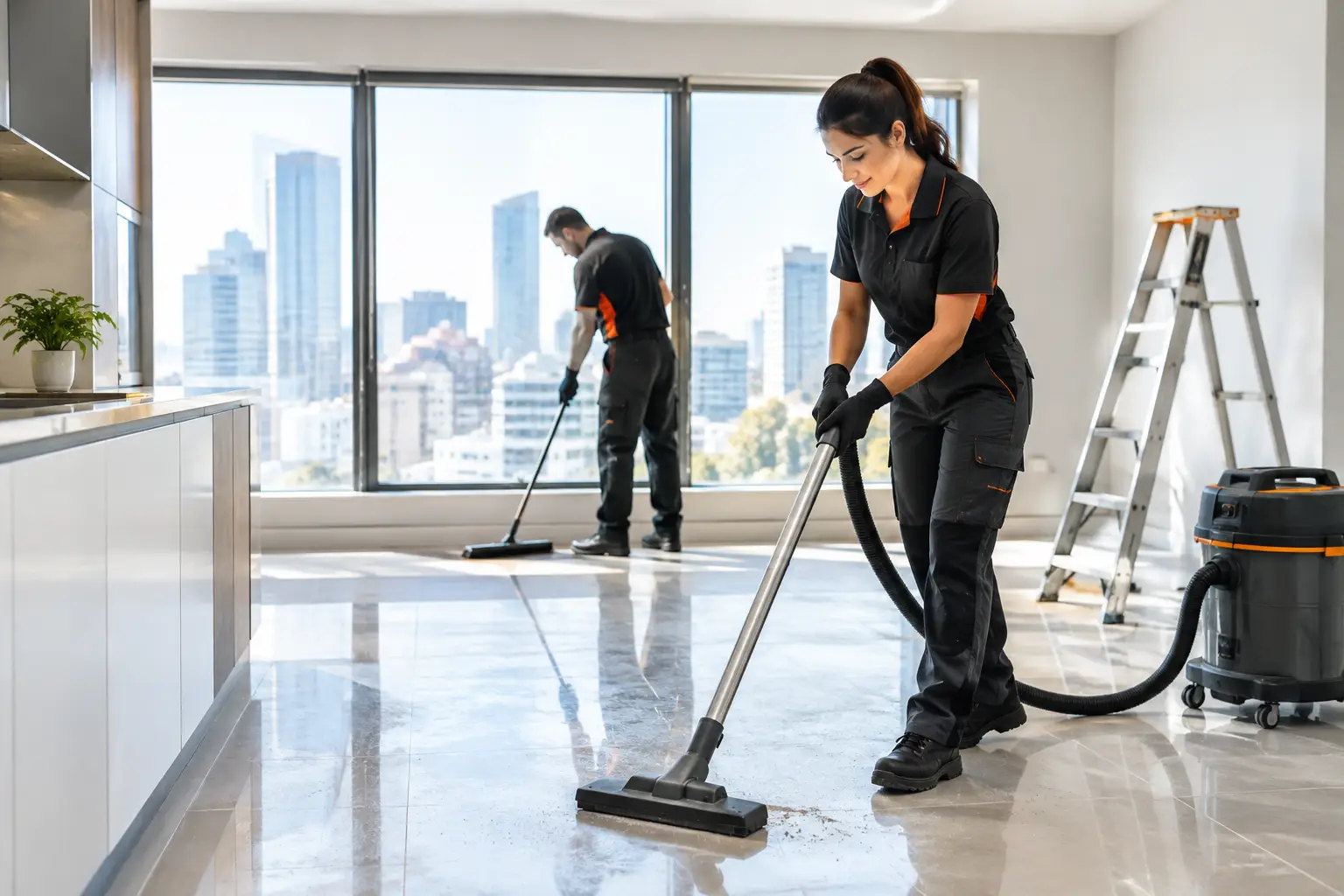
The key tasks for floors throughout the property are to vacuum carefully along edges and under accessible furniture, then mop hard floors with a suitable product. Check corners, behind doors and high-traffic paths rather than only cleaning the open areas.
Kitchen and dining areas
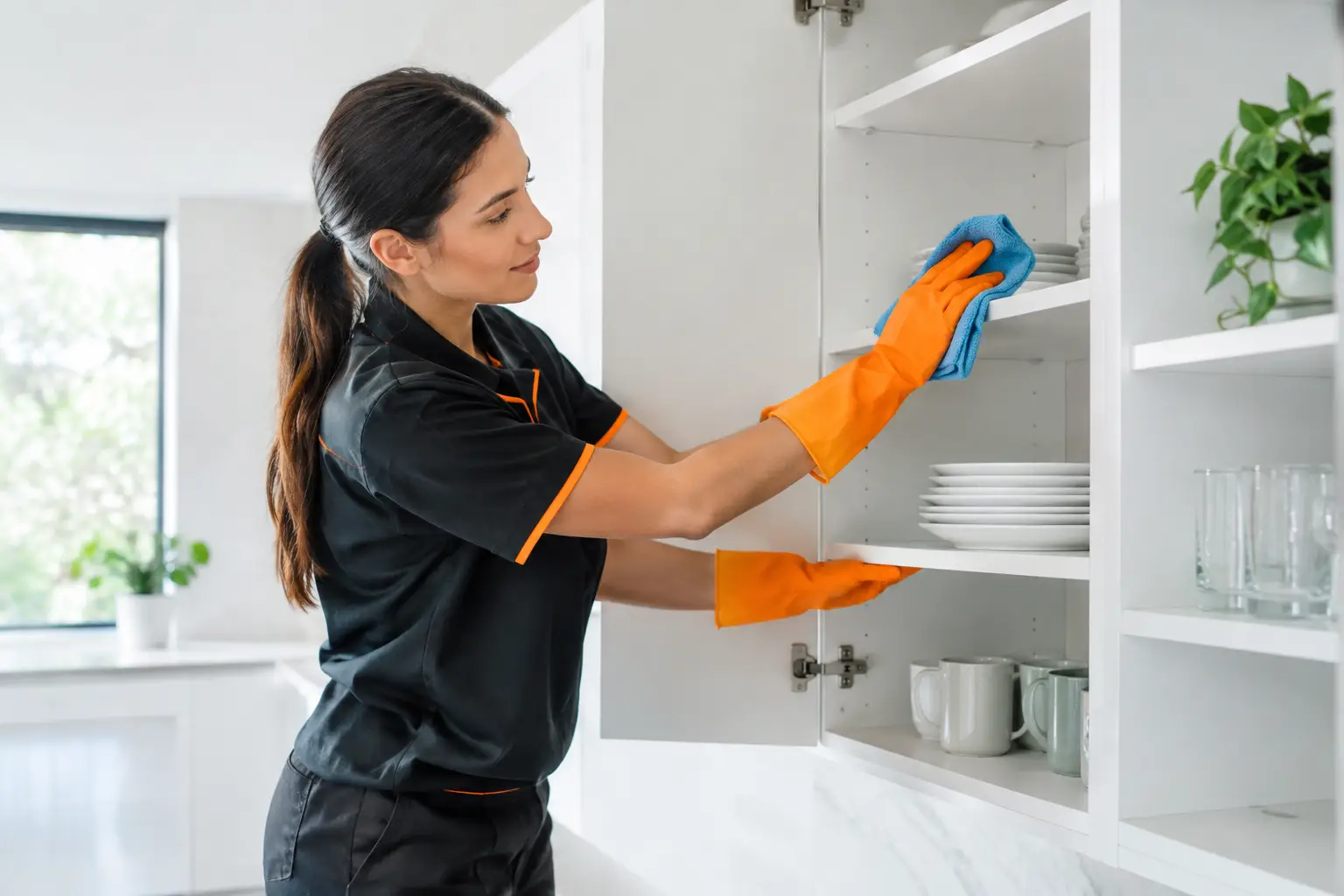
The kitchen often receives the closest inspection from guests. Empty the fridge of all perishable food unless the host has approved welcome items. Wipe shelves, drawers, handles and door seals, and check for spills or odours. Clean the microwave inside and out, wipe the cooktop, splashback, benchtops and appliance fronts, and remove crumbs from the toaster and cupboards.
Wash, dry and put away all dishes, glassware, cookware and utensils. Do not assume the dishwasher has completed its cycle or that its contents are clean. Empty and wipe the dishwasher filter where required, then leave it according to the property’s preferred procedure. Clean the sink, taps and drain area until free of food residue and water marks.
Finish by checking supplies. Guests should have the agreed quantity of clean tea towels, dishwashing liquid, dishwasher tablets, bin liners, paper towel, coffee, tea and basic cooking essentials. Inventory varies by property, so a host-specific supply sheet is useful. Restocking too much can waste money; restocking too little can lead to complaints.
Bathrooms and laundry
Bathrooms need a visibly high standard as well as thorough sanitation. Remove used towels and bath mats, then clean and disinfect the toilet, including the seat hinges, flush button, base and surrounding floor. Scrub the shower, screen, bath, basin, taps, mirrors and drains. Remove hair from drains, walls and floors, as this is one of the most common details guests notice immediately.
Dry and polish taps and shower screens where practical to minimise water spots. Replace towels, bath mats, toilet paper and toiletries according to the property standard. Check that soap dispensers are filled, the exhaust fan is functioning and there are no obvious leaks, mould concerns or drainage issues to report.
If the property has a laundry, empty the washing machine and dryer, clean lint from the dryer filter, wipe appliance surfaces and ensure laundry products are stocked. Do not leave damp linen or cleaning cloths in the machine, dryer or laundry basket.
Final presentation and quality check
Once every room is clean, return through the property as a guest would. Close windows, set the temperature or air conditioning as instructed, turn off unnecessary lights and check that all rubbish has been removed. Replace bin liners, including bathroom bins, and make sure outdoor bins are managed in line with collection schedules.
Complete a final check of the details that affect guest confidence:
- No visible hair, dust, crumbs or marks on floors and surfaces.
- Fresh linen and towels are correctly placed in each room.
- Bathroom, kitchen and laundry supplies are topped up to the agreed level.
- Appliances, remotes, lights, locks and Wi-Fi equipment are present and operational.
- The property smells clean and neutral, without heavy fragrance masking an odour.
- Maintenance, damage or lost-property issues have been recorded and reported.
Take completion photos if the host’s process requires them. They can provide useful evidence of the property’s condition and help maintain standards across recurring bookings.
Set clear standards for linen and supplies
Linen is one area where turnover cleaning can become complicated. Hosts need enough complete sets to cover back-to-back bookings, unexpected stains and laundry delays. A practical approach is to keep at least two full changes of linen per bed, with a third set for high-occupancy properties or frequent same-day turnovers.
Quality matters as much as quantity. Towels should be clean, dry, free of lingering odours and folded consistently. Stained linen should be treated or removed from service rather than used because it is technically clean. Guests may forgive a minor scuff on a wall, but they rarely overlook a marked pillowcase or worn bath towel.
Supply levels should be agreed before cleaning begins. Some hosts provide a starter pack only, while others offer enough consumables for the full stay. The cleaning team needs to know which standard applies so guests receive what was promised without unnecessary stock being used.
When a professional turnover clean makes sense
Self-managing can work for a single property with generous gaps between bookings. It becomes harder when check-out and check-in times are tight, properties are spread across Adelaide or the host needs dependable cover during holidays, illness or busy periods. In those cases, a professional service offers a repeatable process, trained staff and a clear quality standard.
Spiffi Cleaning can tailor Airbnb and rental cleaning around your property’s requirements, including linen changes, restocking and documented checks. The goal is straightforward: a clean that helps each guest arrive with confidence and helps each host stay on schedule.
Keep the checklist visible, update it after recurring guest feedback and treat every turnover as the next guest’s first impression. That small discipline is often what turns a good property into one guests are happy to recommend.