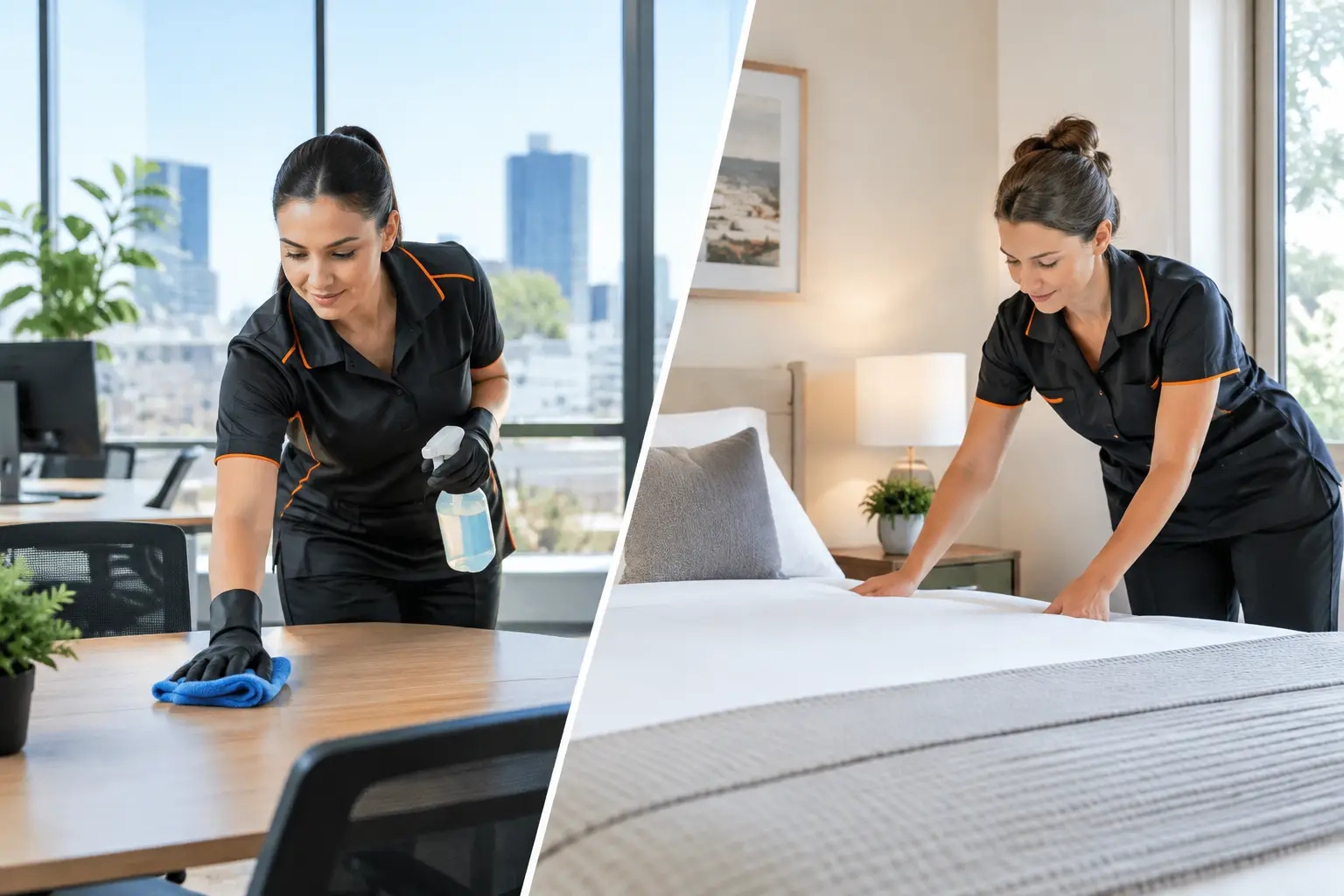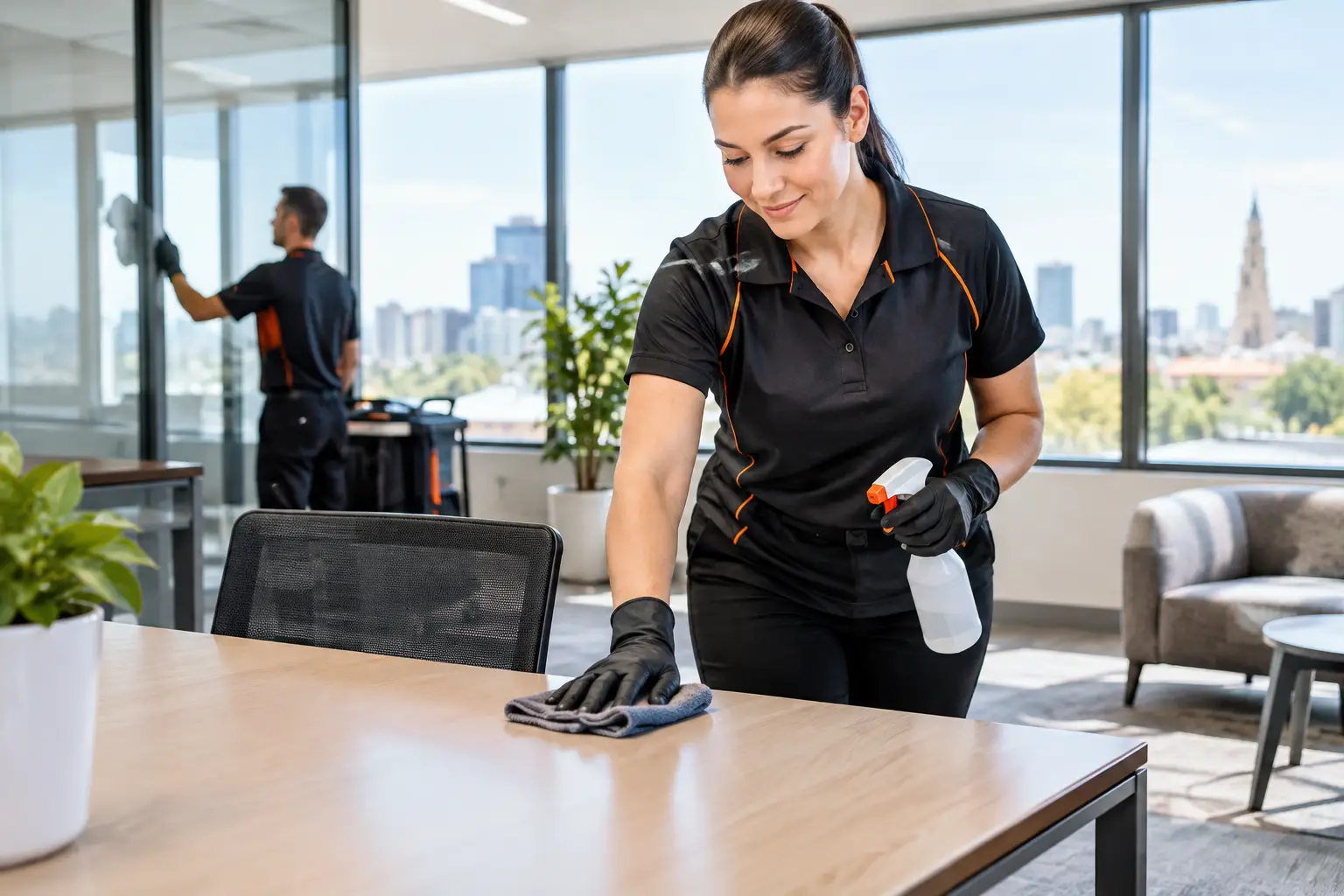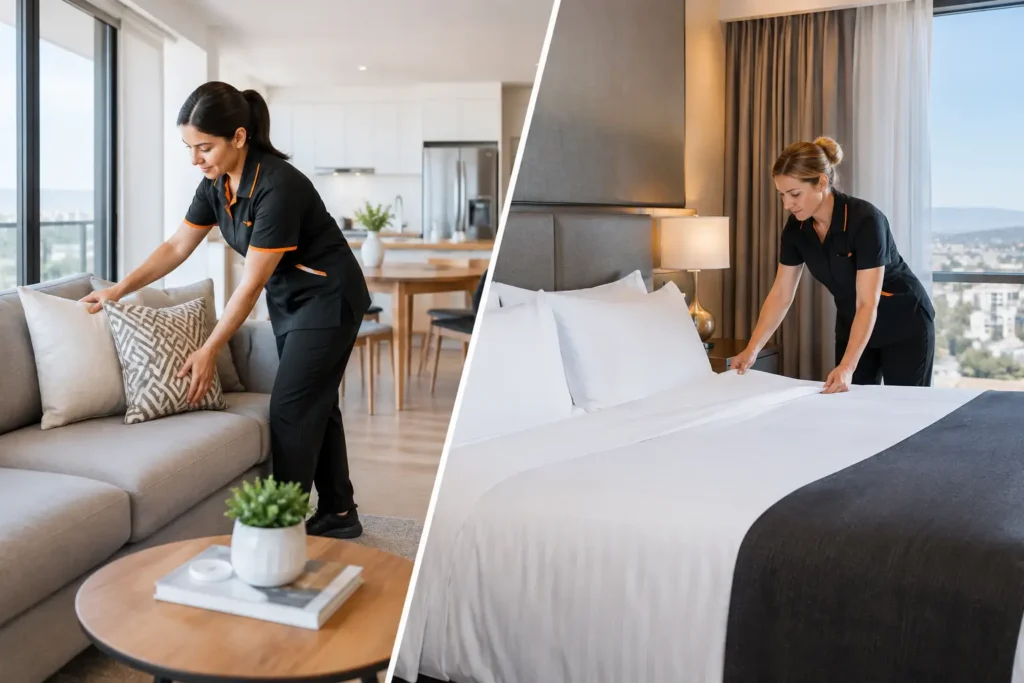
A guest checks into a hotel expecting the room to be ready. An Airbnb guest expects that too, but they are often walking into someone’s home. That difference changes the job. Airbnb cleaning versus hotel housekeeping is not simply a question of which property is bigger or which has more beds. It is about turnaround pressure, presentation, supplies, communication and the standard expected at the door.
For Adelaide hosts, landlords and property managers, getting this right can mean fewer complaints, better reviews and less last-minute chasing. For cleaning teams, it means following a clear system while still noticing the small details that make a stay feel cared for.
Airbnb cleaning versus hotel housekeeping: the core difference
Hotel housekeeping is usually part of a large, established operation. Rooms may have a similar layout, linen is often centrally managed, and staff work within a daily schedule set by the hotel. There are procedures for guest requests, maintenance issues and lost property. The work is demanding, but the environment is controlled.
Airbnb cleaning is more varied. One property may be a compact city apartment, while the next is a family home near the coast with outdoor areas, several bathrooms and a full kitchen. Hosts may set different rules for linen, consumables, rubbish collection, key access and styling. A cleaner needs to adapt without losing consistency.
The biggest practical difference is ownership of the experience. In a hotel, a guest usually sees a brand and a front desk. In a short-stay rental, they see the host’s property. A dusty shelf, empty hand soap dispenser or poorly made bed can feel personal. It can also appear in a review within hours.
Turnaround time is important, but readiness matters more
Both hotels and Airbnb properties work to tight check-in times. Hotel staff may clean rooms throughout the day as guests leave. Airbnb cleaners often work in a narrower window between check-out and check-in, particularly when the property is booked back-to-back.
That does not mean rushing through the basics. A fast turnover that leaves crumbs in a drawer or hair in the shower is not efficient. It creates follow-up messages, poor guest confidence and possibly a call-out to fix what should have been completed the first time.
A reliable Airbnb turnover starts with a practical arrival routine. The cleaner checks the property for damage, missing items, unusual mess and maintenance concerns before cleaning begins. This gives the host or manager time to act if there is a problem. It also prevents a cleaner from being blamed later for something left by the previous guest.
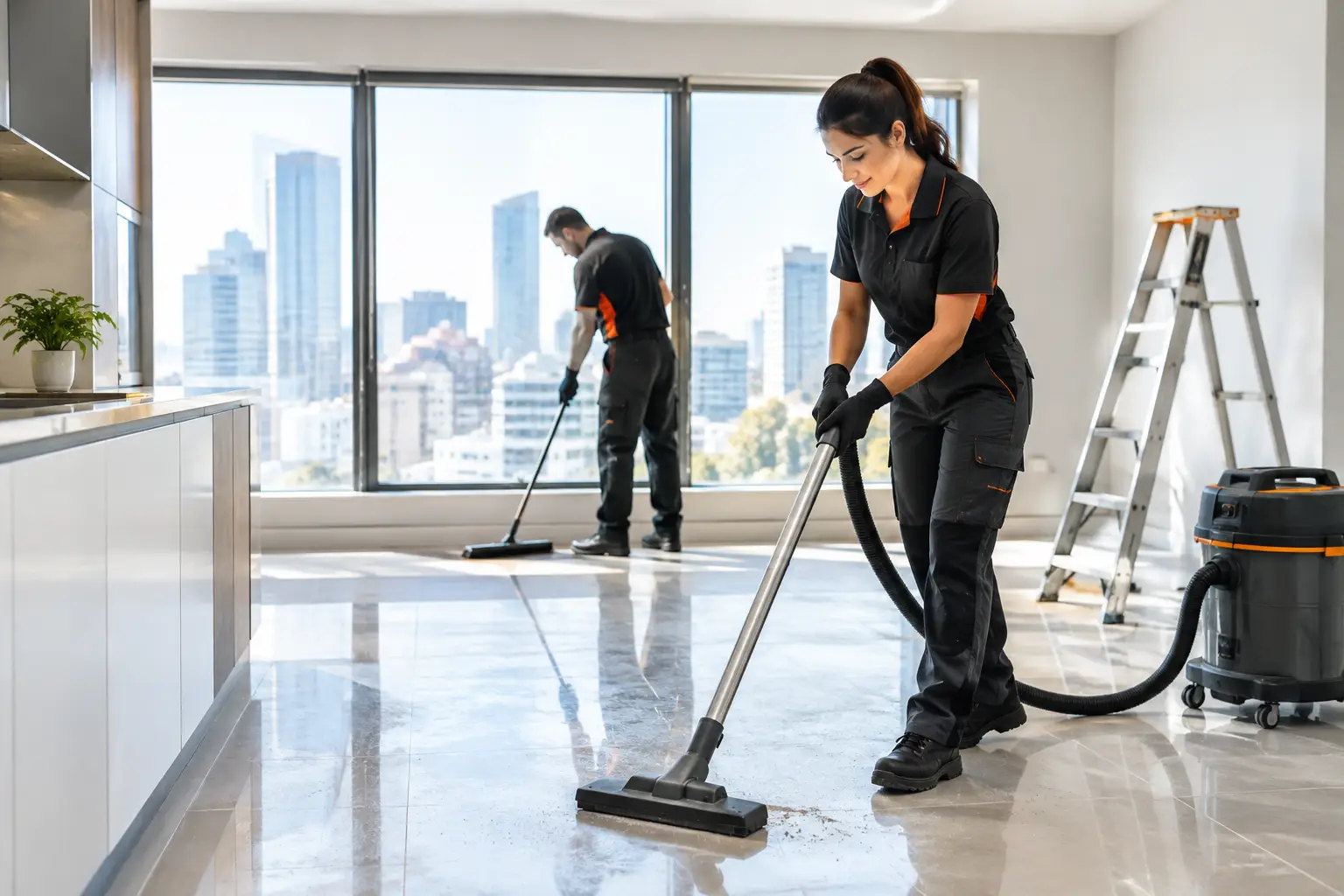
Once the clean is complete, the final check should focus on the guest’s first impression. Entry areas, bathrooms, kitchen benches, beds, mirrors and floors all matter. So do small operational details such as working lights, clear access, fresh rubbish bins and enough toilet paper for arrival.
The kitchen and laundry carry more responsibility in an Airbnb
A hotel room may have a kettle, cups and a small bar fridge. An Airbnb kitchen is usually expected to be functional enough for a family to prepare meals. That means cleaning is not limited to visible surfaces.
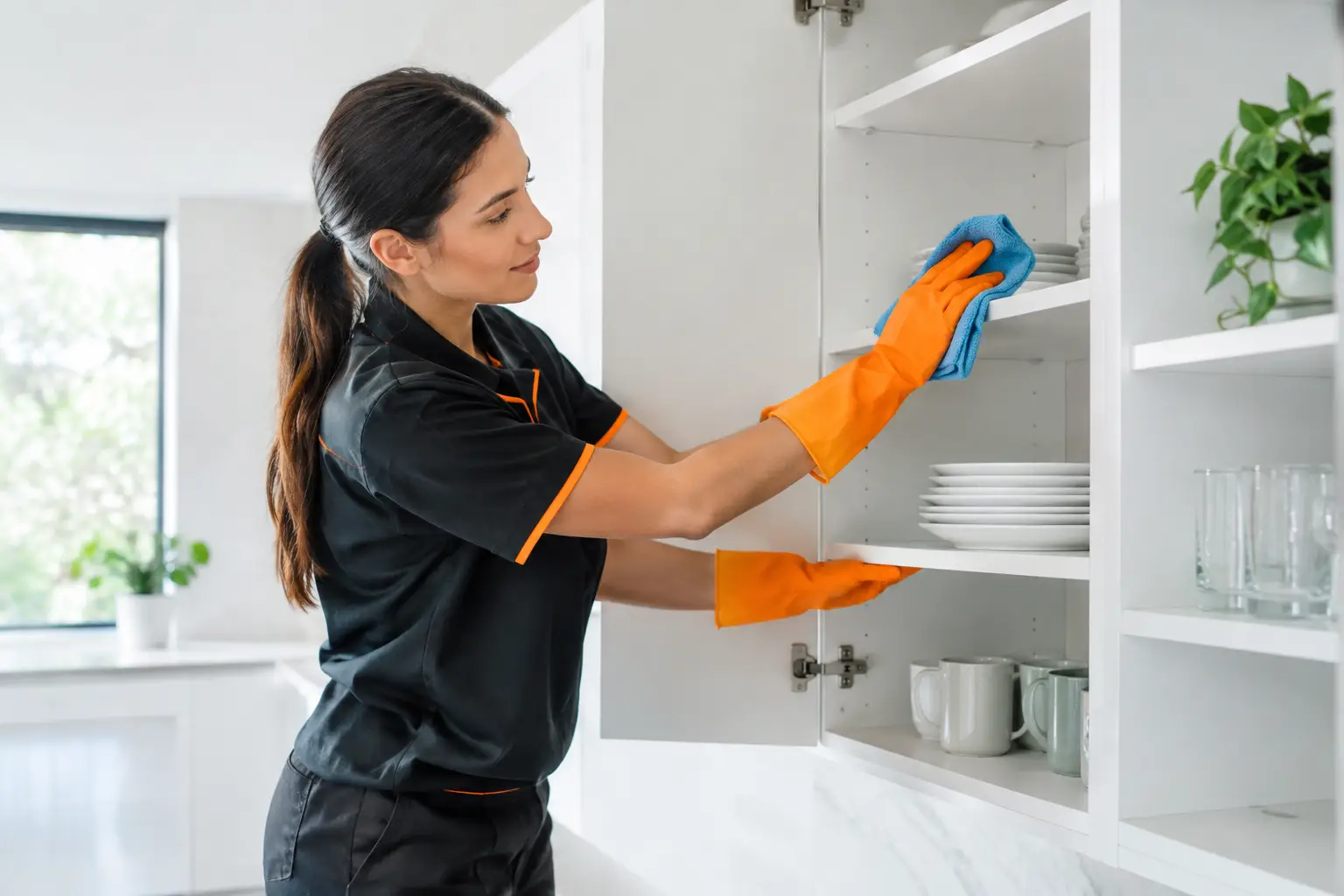
Cleaners may need to check inside the microwave, wipe appliance handles, clean the sink and drain area, inspect cupboards for leftover food, and ensure dishes are properly washed and put away. If a dishwasher is used, it needs to be emptied and checked rather than assumed to be clean.
Laundry is another major difference. Hotel linen can be handled through an in-house laundry or commercial supplier. Airbnb properties may use the host’s own linen, a linen service or a combination of both. Every system can work, but it must be organised.
Clean, dry linen needs to be available before the turnover starts. Used linen must be bagged or managed hygienically. Towels should be counted, beds should be made neatly and any stained or damaged items should be reported. A missing sheet set can quickly become a check-in problem when there is no spare room attendant down the hall.
Hotels are standardised. Airbnb properties need property-specific checklists
Consistency does not mean treating every property exactly the same. Hotel rooms are designed for repeatable processes. Airbnb homes need a base cleaning standard plus a checklist tailored to each address.
A good property checklist records what is supplied, where spare linen is stored, how rubbish is handled, which areas guests use and any details that should not be missed. It may include instructions for a coffee machine, outdoor furniture, bins, blinds, air conditioning controls or key safes.
This is particularly useful when more than one cleaner services a property. Without clear notes, a new team member may not know that the spare towels are in a hallway cupboard or that guests expect a particular arrangement of pillows. Inconsistent presentation is often a communication issue, not a lack of effort.
For property managers handling several listings, standardising the handover process helps. The cleaning team should know who to contact, how to report damage, what photos are required and when the property is ready for the next guest. That removes guesswork on busy changeover days.
Hygiene standards should be visible as well as thorough
Hotel housekeeping and Airbnb cleaning both need proper hygiene practices. Bathrooms, high-touch points, kitchen areas and rubbish zones require close attention. The difference is that Airbnb guests often use more of the property and may stay longer, so they notice more.
Bathroom cleaning should include the toilet, shower, taps, mirrors, vanity, floor and touchpoints such as handles and switches. In kitchens, benches alone are not enough. The fridge, dining table, bin area and commonly handled appliance controls all need attention.
Eco-friendly products can be a sensible choice when they are suitable for the surface and the task. The aim is not a strong chemical smell. It is a property that looks clean, feels fresh and has been properly sanitised where needed. Products should also be used safely, particularly around natural stone, timber finishes and delicate fixtures.
Presentation is part of the clean
A hotel room generally follows a fixed visual standard. Airbnb presentation can be more personal, but it still needs order. Cushions should be straight, beds evenly made, furniture returned to its place and obvious clutter removed where appropriate.
This does not mean turning every rental into a display home. Guests want a comfortable place that matches the listing photos and feels ready to use. A clean dining table, folded towels and a tidy entry make a stronger impression than unnecessary styling.
Hosts should be realistic about what cleaning can achieve. If furnishings are worn, grout is permanently stained or the property is overcrowded with personal belongings, a cleaner can improve presentation but cannot make underlying maintenance disappear. Regular deep cleaning and timely repairs protect the standard between stays.
Choosing the right cleaning approach for your property
Hotel-style systems are helpful for Airbnb cleaning because they bring structure, efficiency and quality checks. But a short-stay rental should not be treated like a row of identical hotel rooms. The best approach combines repeatable cleaning standards with property-specific instructions and clear communication.
For a single host, that may mean a simple checklist, reliable linen supply and a cleaner who reports issues promptly. For a property manager, it may mean a documented process across multiple homes, scheduled quality checks and one dependable contact point.
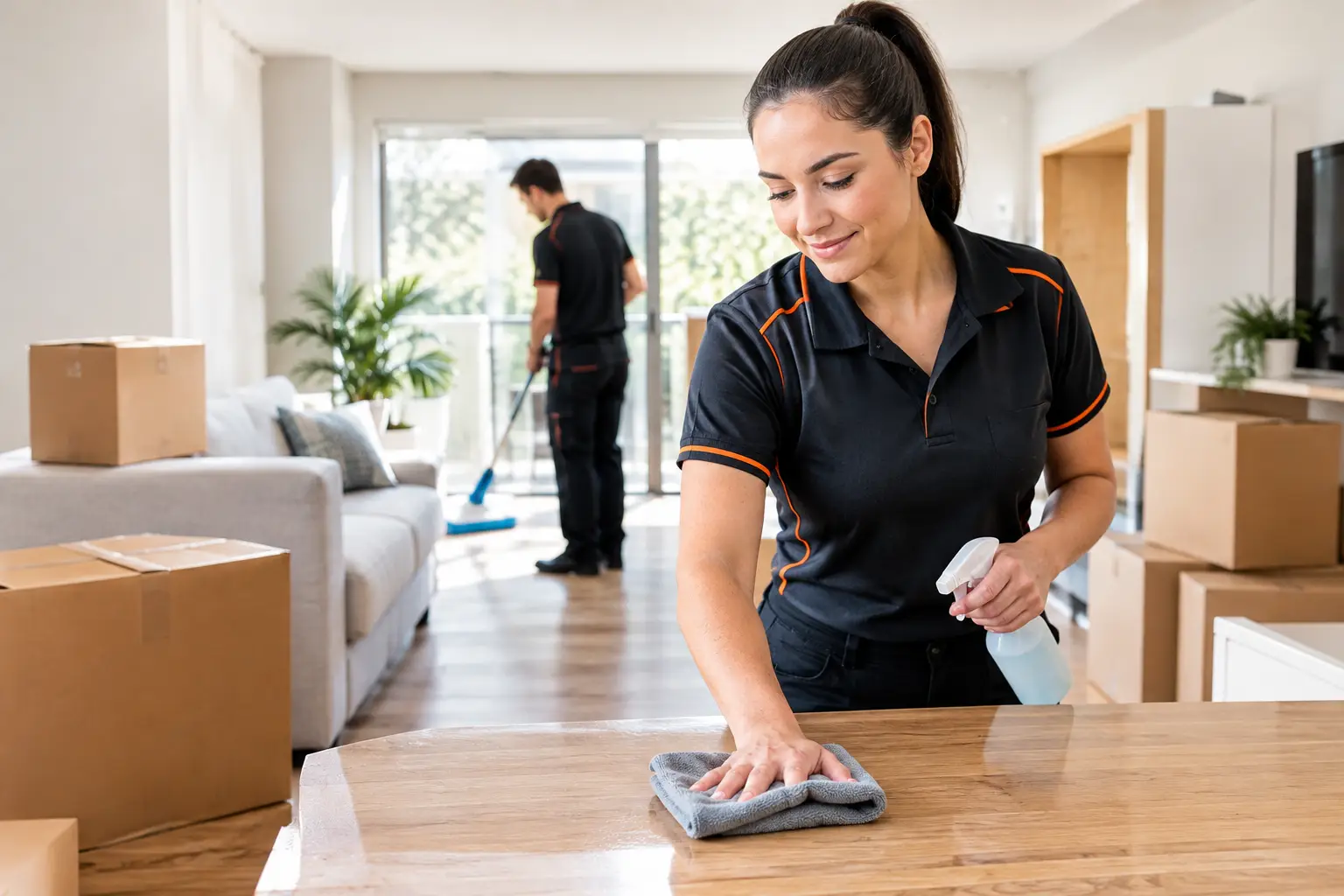
At Spiffi Cleaning, short-stay and rental cleans are handled with the same practical focus we bring to commercial spaces: clear expectations, trained staff, professional equipment and attention to the details people notice. The goal is straightforward – a property ready for the next person to walk through the door.
A well-managed turnover gives guests one less reason to complain and gives hosts one less thing to manage. When the beds are fresh, the bathroom is spotless and the keys are where they should be, the next stay starts on the right foot.