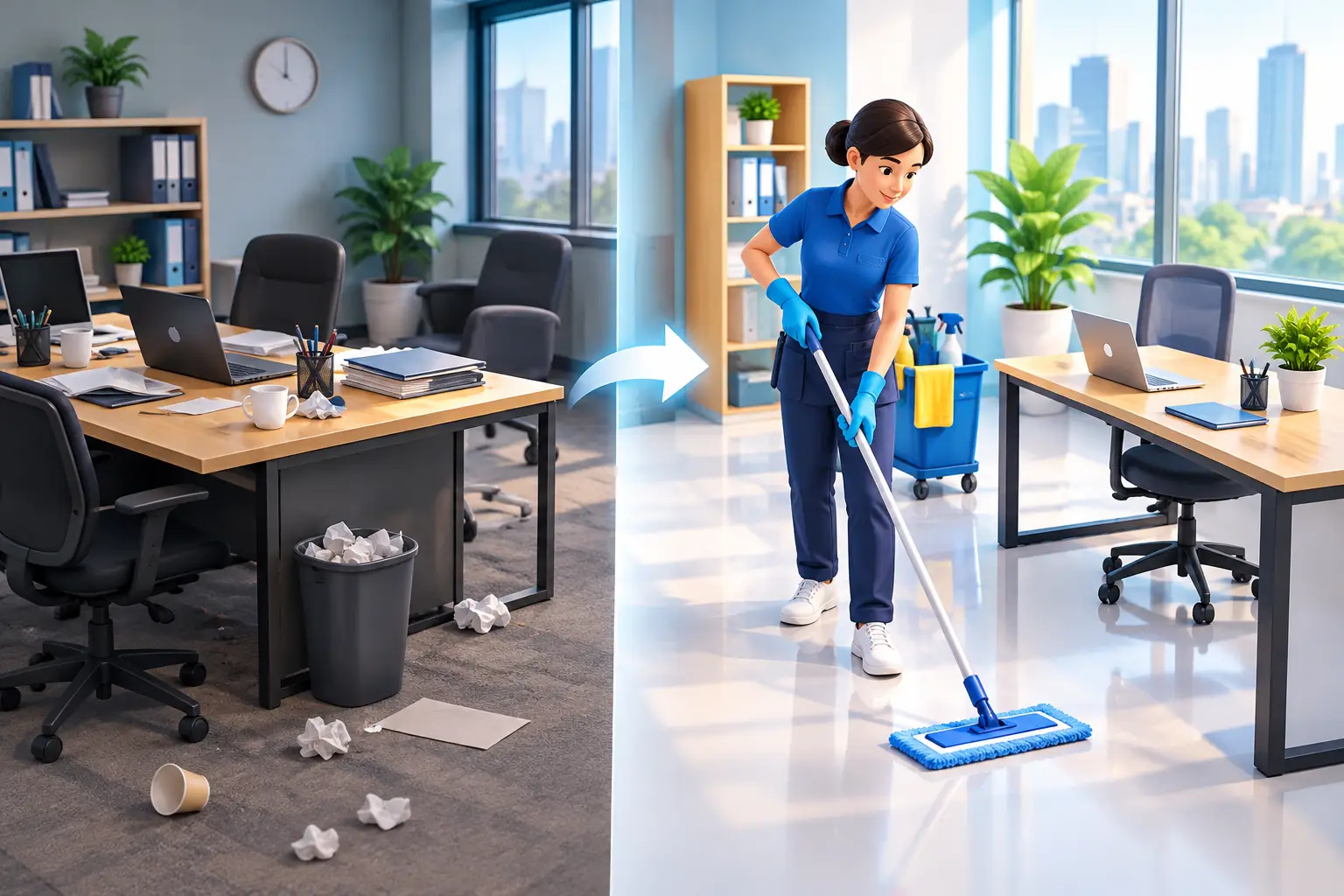
The best cleaning schedule is rarely the one that looks most convenient on paper. It is the one that keeps your workplace presentable, hygienic and ready for work without interrupting the people who use it. When weighing up daytime versus evening office cleaning, the right choice depends on your operating hours, site layout, security requirements and the standard you need to maintain each day.
For a small office with staggered hours, daytime cleaning may be a practical way to keep kitchens, bathrooms and reception areas under control. For a busy open-plan workplace where focus and client meetings matter, an after-hours service may protect productivity and provide cleaners with clearer access. Both options can deliver excellent results when the scope, timing and communication are properly managed.
Daytime versus evening office cleaning: the real difference
The main difference is not simply whether cleaners arrive before or after 5 pm. It is whether cleaning happens around your workplace activity or in its quieter periods. That changes how work is planned, what can be completed and how visible the service is to staff, visitors and clients.
Daytime cleaning is carried out while the office is operating, often in scheduled windows such as early morning, mid-morning, lunch periods or late afternoon. It is particularly useful for high-touch and high-use areas that need attention more than once a day. Evening cleaning generally takes place after staff have left, allowing a team to complete a fuller routine with fewer interruptions.
A reliable provider will not apply the same timetable to every site. A medical administration office, a professional services firm, a retail back office and a warehouse administration area all have different traffic patterns and hygiene priorities.
When daytime cleaning is the better fit
Daytime cleaning works best when cleanliness needs to be visible and maintained throughout the day. Reception areas, staff kitchens, bathrooms and meeting rooms can quickly lose their presentation after a busy morning. A daytime cleaner can respond before untidiness becomes the first thing a visitor notices.
It is also a sensible option for offices with long operating hours. If staff work early starts, late finishes or rotating shifts, there may be no meaningful “after-hours” window. Cleaning during a quieter section of the day can be more realistic than trying to work around a constantly occupied site.
Faster response to daily mess
Spills, overflowing bins and bathroom supplies do not always wait until closing time. With a daytime service, issues can be dealt with promptly. This supports hygiene, reduces slip hazards and helps staff feel that their workplace is being cared for.
For client-facing businesses, this can make a measurable difference. A clean reception desk, fresh amenities and tidy meeting room reinforce professional standards throughout the day, not just at the beginning of it.
Better communication on site
Having cleaners present can make it easier for an office manager or facilities contact to point out changing needs. Perhaps a boardroom needs resetting after a workshop, a delivery has left packaging in a common area, or a bathroom requires additional attention. Direct communication can prevent small problems from carrying over to the next day.
This visibility also helps some workplaces build trust with their cleaning team. Staff become familiar with who is on site, while cleaners gain a better understanding of how the space is used.
The trade-off: disruption and access
The downside is that cleaning activity can interrupt normal work. Vacuuming, emptying rubbish bins and cleaning desks near staff can create noise or distraction, even with professional equipment and considerate cleaners. Cleaners may also need to return to certain areas later because they were occupied at the scheduled time.
Daytime cleaning suits workplaces that can tolerate this activity, or that have enough space to separate cleaning zones from active work areas. Clear signs, safe work practices and agreed cleaning windows are essential, especially around wet floors and busy walkways.
When evening office cleaning makes more sense
Evening cleaning is often the preferred choice for traditional offices, particularly where teams are focused on calls, concentrated work or client appointments. Once the workplace is quiet, cleaners can move efficiently through the full scope without needing to work around people at desks.
This is the time to complete tasks that benefit from open access: vacuuming all work areas, mopping hard floors, wiping desk surfaces where approved, cleaning kitchens thoroughly and resetting bathrooms for the next morning.
A more complete clean in one visit
With fewer people on site, an evening cleaning team can follow a consistent sequence and reach more of the workplace. Desks, floors, bins, break areas and amenities can be serviced without pauses caused by meetings or occupied offices.
That does not mean every task must be saved for the evening. But for periodic detail work, such as cleaning skirting boards, spot-cleaning glass or attending to build-up in kitchens, after-hours access usually makes the job more efficient.
Less impact on staff and clients
An office can open each morning looking orderly without employees seeing the work required to get it there. This is particularly valuable for legal, financial, consulting and other client-facing businesses where privacy, quiet and presentation are priorities.
Evening schedules can also reduce safety concerns in crowded spaces. Floors can be mopped and left to dry with minimal foot traffic, while cleaning equipment is less likely to obstruct corridors or shared areas.
The trade-off: access and security
After-hours cleaning requires a higher level of trust and a clear security process. The provider may need alarm instructions, secure key or access-card arrangements, building entry procedures and a nominated contact for emergencies. Sensitive documents, devices and restricted rooms should be addressed in the site plan rather than left to assumption.
Choose a provider with trained, police-checked staff and clear accountability. A professional team should follow agreed access procedures, secure the premises when leaving and communicate quickly if there is an issue. For many Adelaide businesses, this reassurance is the deciding factor between an adequate service and a dependable one.
Cost is only one part of the decision
It is tempting to select a schedule based on the lowest quoted price, but the true cost includes disruption, missed tasks and avoidable complaints. Evening work may attract different labour costs depending on the service arrangement and timing. Daytime work can sometimes be more economical, but it may take longer if cleaners must work around occupied spaces.
The most useful quote is transparent about the cleaning frequency, time allowed, team size and included tasks. It should also identify what happens when your needs change, such as additional cleaning after an event, a deep kitchen clean or an urgent response to a spill.
A cheap service that rushes bathrooms, skips edges or cannot provide consistent staff is unlikely to protect your workplace standards. A well-planned service creates value by preventing presentation and hygiene problems before they affect staff or visitors.
A hybrid schedule often gives offices the best result
For many workplaces, the strongest approach is not daytime or evening cleaning. It is a combination of both. An evening team can complete the full routine several times a week, while a short daytime visit keeps high-traffic areas under control.
For example, a busy office may use after-hours cleaning for floors, workstations, kitchens and bathrooms, then schedule a daytime attendant to restock consumables, check amenities, remove rubbish and clean touchpoints. This model is especially effective in larger offices, shared workspaces and sites with frequent visitors.
The schedule should reflect actual use, not assumptions. A workplace with 15 staff who are mostly off site needs a different plan from one with 60 people using a shared kitchen every day. Reviewing traffic patterns for a week or two can reveal where cleaning time has the greatest impact.
How to choose the right office cleaning schedule
Start by looking at when people are in the building, which areas receive the most traffic and when clients visit. Then consider privacy, noise tolerance, access restrictions and whether your office needs immediate daytime support for bathrooms, kitchens or reception.
Ask prospective cleaners how they manage occupied work areas, protect confidential spaces, handle keys and alarms, and report completed work. You should also confirm who to contact if an issue is missed. A satisfaction guarantee and clear re-clean process provide practical peace of mind, not just a marketing promise.
Spiffi Cleaning can tailor office cleaning around your hours, workplace priorities and required standard, whether that means a discreet evening service, daytime upkeep or a structured combination of both.
The most effective cleaning schedule is the one your team barely has to think about: the amenities are fresh, the floors are cared for, the rubbish is gone and your office is ready to represent your business every day.