A reception desk with fingerprints, an overflowing bathroom bin or a sticky break-room floor can change how people judge a business within seconds. Adelaide commercial cleaning standards are not simply about making a workplace look tidy. They are about controlling hygiene risks, protecting people, supporting daily operations and presenting a site that staff, customers and visitors can trust.
For business owners and facility managers, the challenge is that standards are not identical for every premises. A small office, medical clinic, gym, warehouse and hospitality venue have different risks, traffic patterns and cleaning priorities. The right standard is one that is documented, practical for the site and consistently delivered – not a generic checklist completed in a hurry.
What commercial cleaning standards should cover
Commercial cleaning standards bring together legal responsibilities, industry expectations and the specific needs of a workplace. There is no single cleaning rulebook that applies to every Adelaide business, but a professional cleaning program should support workplace health and safety duties, infection-control requirements where relevant, and the condition of the premises.
At a basic level, a standard should state what is cleaned, how often it is cleaned, which products and equipment are used, and how quality is checked. It should also make responsibilities clear. If a cleaner notices a leaking tap, damaged floor surface or depleted soap dispenser, there should be a clear process for reporting it rather than leaving the issue for the next shift.
This matters because a clean-looking site is not automatically a hygienic one. Dusting a desk and emptying bins may improve presentation, but high-touch points such as door handles, lift buttons, taps, shared keyboards and kitchenette appliances need appropriate attention to reduce the spread of germs.
Adelaide commercial cleaning standards by environment
The cleaning standard should match the way people use the space. Applying the same routine everywhere can leave genuine risks unmanaged and waste time on low-priority tasks.
Offices and shared workspaces
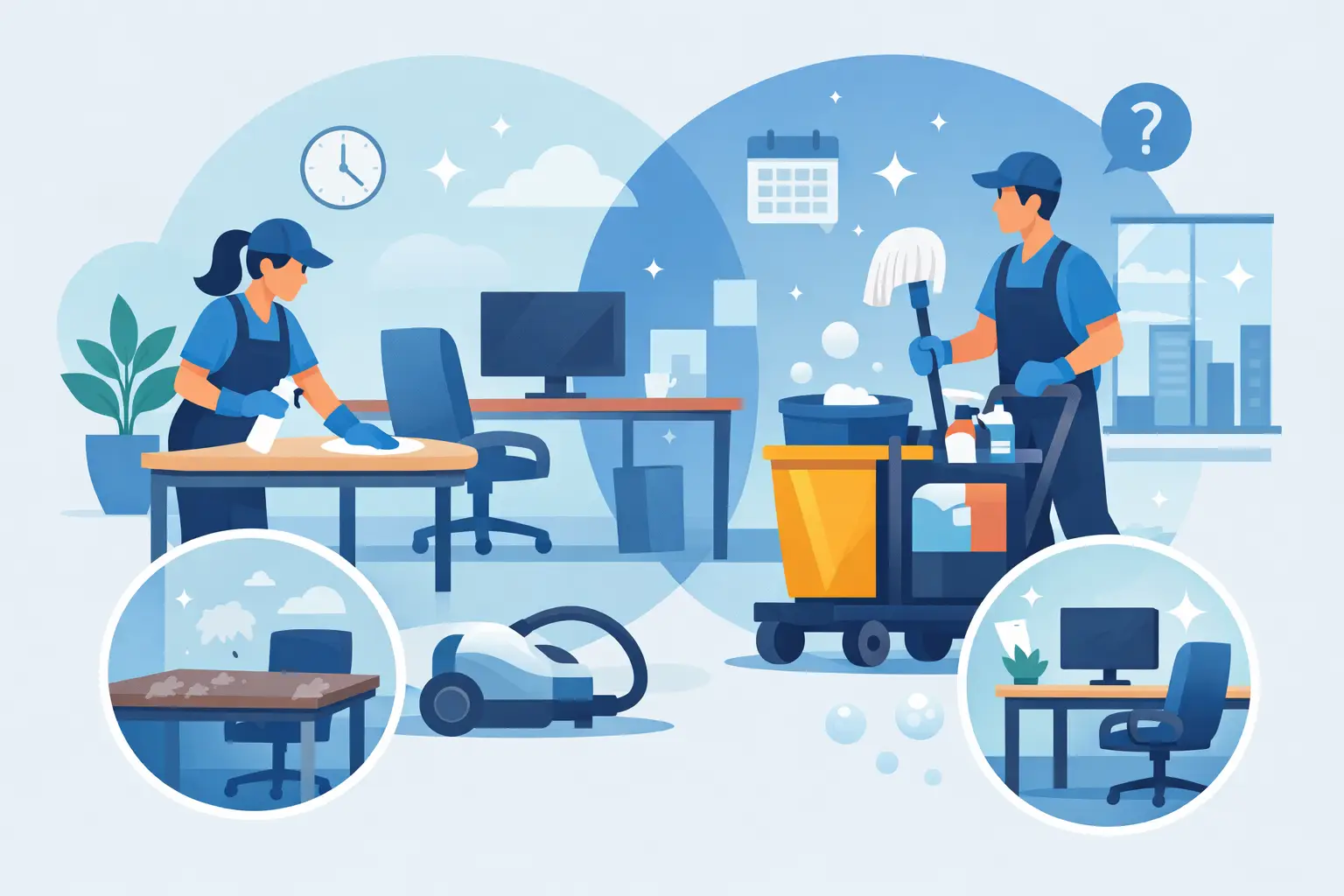
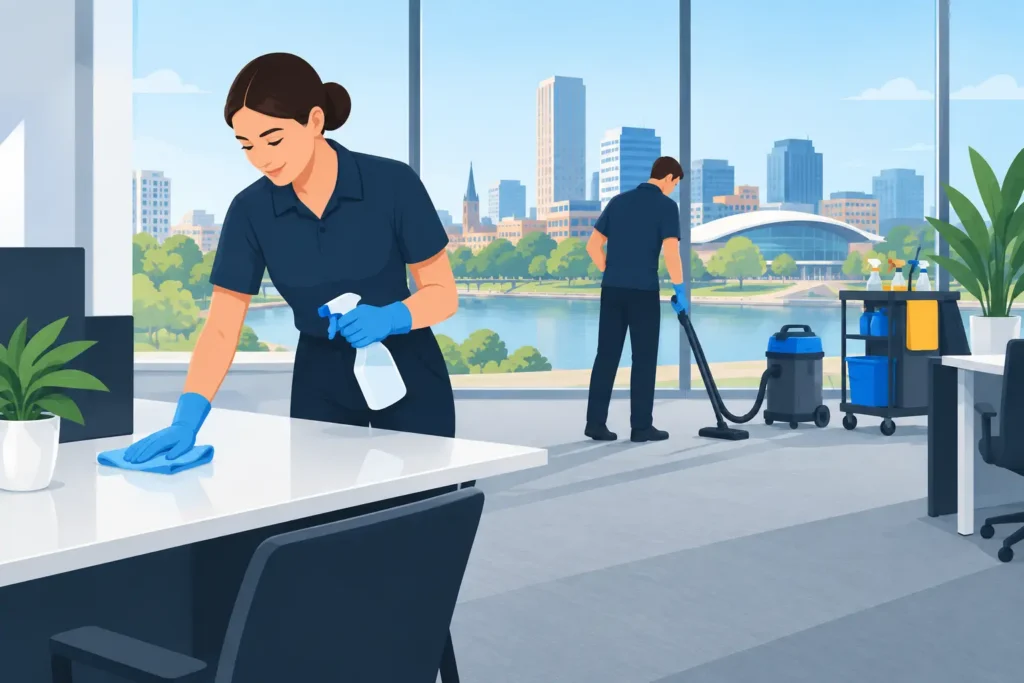
Office cleaning usually centres on presentation, washroom hygiene and maintaining shared amenities. Desks, meeting rooms, reception areas, kitchens and rubbish collection all need a reliable schedule. Busy hybrid workplaces can require closer attention to hot-desking areas, meeting room touchpoints and kitchenettes, particularly after high-attendance days.
A sensible office standard also considers the workday. Vacuuming, mopping and rubbish removal may be best completed after hours, while daytime cleaning can be useful for washrooms, spills and reception areas. The trade-off is budget versus responsiveness: an evening-only service may suit a low-traffic office, while a larger site may need a daytime attendant as well.
Medical clinics and healthcare settings
Clinical environments require a more structured approach. Cleaning should support infection prevention, with clear separation between general areas and treatment spaces, suitable disinfectants, colour-coded equipment where needed and careful handling of waste.
Medical cleaning is not a place for vague instructions such as “wipe surfaces”. The scope should identify surfaces, contact times for disinfectants, room turnaround requirements and any areas that need cleaning between patients. Clinical waste and sharps also require procedures that align with the facility’s own protocols. A cleaning provider should understand where their role ends and when a site-specific process or specialist waste contractor is required.
Retail, hospitality and customer-facing sites
For customer-facing businesses, standards need to protect the experience as well as hygiene. Glass, entryways, counters, bathrooms, floors and display areas are highly visible. A mark on a glass door or an unpleasant washroom odour can affect a customer’s confidence long before they speak to a team member.
These premises often benefit from cleaning timed around trade. Early-morning service can prepare the venue, while a mid-shift check can manage bins, washrooms and unexpected spills. The goal is not to interrupt customers, but to keep the environment consistently presentable when it matters most.
Warehouses, workshops and industrial sites
Warehouses need standards that account for dust, vehicle movement, loading areas, amenities and slip hazards. Cleaning teams must work around operational safety requirements, including restricted zones, high-visibility clothing, site inductions and machinery schedules.
A warehouse does not always need the same detailed finish as a reception area, but its safety standard may be higher in other ways. Clear walkways, spill response, dust management and clean staff facilities can make a meaningful difference to workplace safety and morale.
The difference between cleaning and disinfecting
Cleaning removes visible soil, dust and organic matter from a surface. Disinfecting uses an appropriate product to reduce microorganisms on a clean surface. Both have a role, but they are not interchangeable.
For example, a kitchen bench with food residue should be cleaned before it is disinfected. Applying disinfectant straight over grime may not achieve the intended result. Products also need to remain wet for the manufacturer’s stated contact time. A quick spray and immediate wipe can look thorough while providing limited hygiene benefit.
This is why product knowledge matters. Stronger is not always better. The wrong chemical can damage flooring, benchtops, electronics or painted finishes, and excessive fragrance can be unsuitable for people with sensitivities. Eco-friendly products can be a good fit for many workplaces, provided they are selected for the task and used correctly rather than treated as a marketing label.
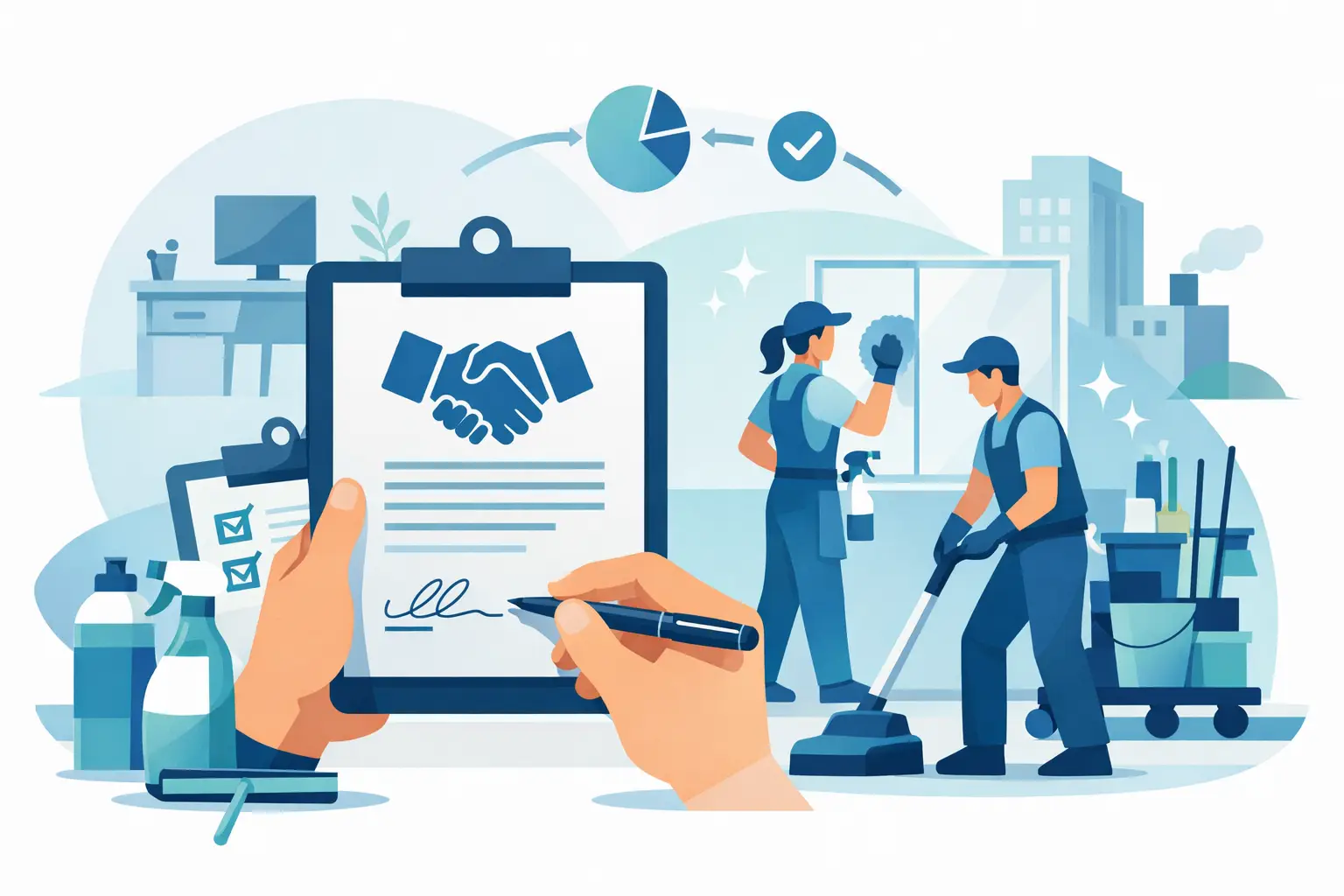
Building a cleaning scope that can be measured
The most reliable commercial cleaning arrangements start with a site assessment. A cleaner or manager should walk through the premises, identify high-traffic zones, note surface types, understand access requirements and ask how the business operates across the week.
A useful scope separates routine tasks from periodic work. Routine tasks may include vacuuming, mopping, cleaning washrooms, sanitising touchpoints and removing rubbish. Periodic work may include internal glass cleaning, detailed kitchen cleaning, upholstery care, high dusting, carpet cleaning or machine scrubbing hard floors. Without this distinction, deep-cleaning jobs are often assumed but never scheduled.
Frequency should be based on use, not guesswork. A washroom used by 40 people across a workday requires a different schedule from one used by four staff. Likewise, an entrance exposed to wet winter weather may need more frequent floor care than an internal corridor. Reviewing the scope after the first few weeks helps ensure the service reflects actual conditions rather than initial assumptions.
Quality checks are what make standards real
A checklist is useful, but it is not proof of quality on its own. Good quality control combines task records with regular inspections, clear feedback channels and fast action when something is missed.
Managers should be able to see what was completed, raise concerns easily and know who will respond. Photo records can assist for periodic work or vacant properties, while a communication book or digital log can be effective for ongoing sites. The right method depends on the premises, but accountability should never be unclear.
When comparing cleaning providers, ask how they train staff, how they supervise work and what happens if the result does not meet the agreed scope. Police-checked, trained cleaners and a genuine re-clean process offer practical reassurance, particularly where teams work after hours or have access to sensitive areas.
Safety and security belong in the cleaning standard
Commercial cleaning takes place in active workplaces, often outside ordinary business hours. A proper standard should address safe chemical storage, correct dilution, labelled bottles, wet-floor signage, manual-handling practices and the use of suitable personal protective equipment.
Security is equally relevant. Cleaners may hold keys, access codes or alarm instructions, so businesses should know who is attending their site and how access is managed. For buildings with confidential material, health records or valuable stock, cleaning staff need clear boundaries around restricted areas and incident reporting.
Businesses also need to communicate their own risks. A cleaning team cannot safely work around a known hazard, such as a damaged electrical outlet or unstable shelving, if it has not been identified. Cleaning works best as a partnership: the provider brings trained people and systems, while the site provides accurate information and safe access.
When a routine clean is not enough
Routine service maintains a workplace, but it cannot solve every problem. After renovations, water damage, a busy event period, an illness outbreak or months of neglected floor care, a one-off deep clean may be needed to reset the space.
This is also true when moving into a new commercial tenancy. Previous occupants can leave behind dust, adhesive residue, marks on glass and neglected amenities that standard recurring cleaning will not address quickly. Starting with a detailed clean gives the regular program a better foundation and creates a clear baseline for future quality checks.
For Adelaide businesses that want a dependable service partner, Spiffi Cleaning can tailor commercial cleaning around the site, operating hours and expected level of presentation. Clear quoting, trained staff and a satisfaction guarantee help remove the uncertainty from maintaining a professional space.
The best cleaning standard is one your team rarely has to think about. Floors are safe, washrooms are stocked, touchpoints are cared for and visitors walk in to a workplace that feels properly looked after – every day, not only before an inspection.