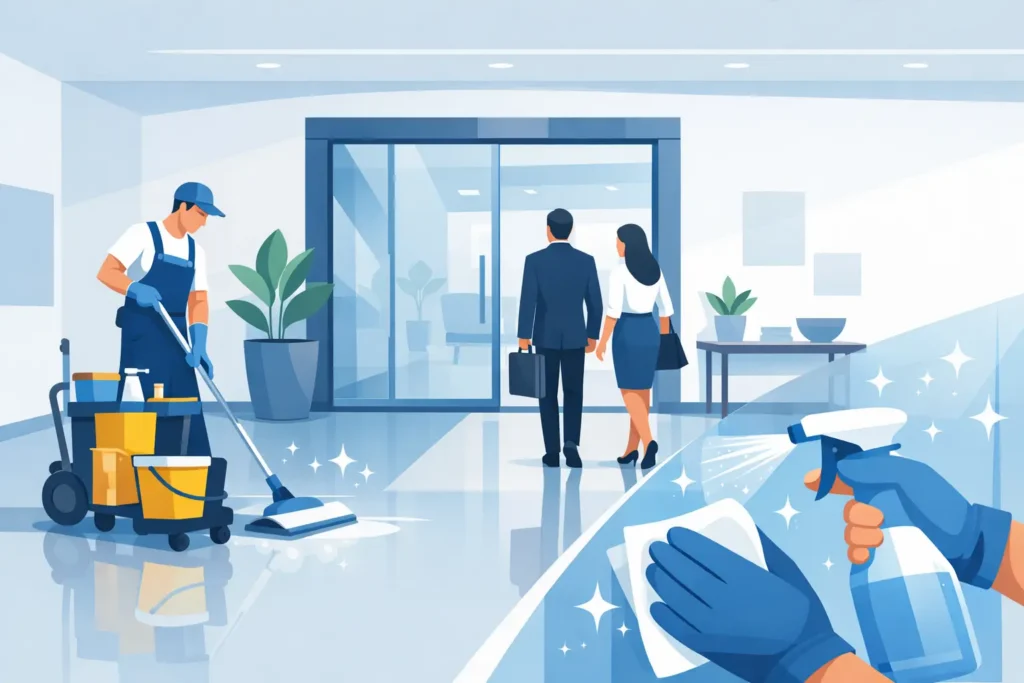
The best office entryway cleaning is not about making the foyer look good for ten minutes before a client arrives. It is a practical system that controls dirt, moisture and germs at the point where they enter your workplace. Done well, it protects floors, reduces slip risks and gives staff, visitors and customers confidence from the moment they walk through the door.
An office entryway works harder than almost any other area in the building. Foot traffic brings in grit from car parks and footpaths, wet soles in winter, dust in dry weather and debris carried on wheels, bags and shoes. If this build-up is not removed regularly, it quickly travels through reception areas, corridors, meeting rooms and workspaces.
Why office entryways need a different cleaning approach
A clean desk can wait until the end of the day. A wet or gritty entrance cannot. The entryway is both a presentation area and a safety zone, so cleaning needs to respond to what is happening on the floor rather than follow a one-size-fits-all schedule.
For a small office with limited visitors, a thorough daily clean and quick spot checks may be enough. A busy reception, medical practice, retail-facing office or shared commercial building may need attention several times a day, especially after rain or during peak arrival periods. The right frequency depends on foot traffic, floor type, weather exposure and whether people can enter directly from outside.
There is also a cost consideration. Leaving abrasive grit on vinyl, polished concrete, tiles or carpet can lead to premature wear, dull finishes and staining. A regular preventative routine is usually more economical than restoring damaged flooring or replacing worn entry mats earlier than expected.
Best office entryway cleaning starts at the door
The most effective cleaning happens before dirt reaches the internal floor. A suitable matting system is one of the simplest ways to reduce the cleaning load, but it needs to be sized, positioned and maintained properly.
A small mat placed just inside the door may look tidy, yet it often does little to capture moisture or grit. Where possible, use an exterior scraper mat to remove larger debris, followed by an absorbent internal mat that allows people to take several steps before reaching the main floor. The mat should sit flat without curled edges, be large enough for the doorway and be checked regularly for movement.
Mats are not a set-and-forget solution. Once they are saturated with water or packed with soil, they can transfer dirt back onto shoes and create a trip hazard. Vacuum them daily, shake out or remove loose debris as needed, and arrange washing or replacement when they no longer perform properly. During Adelaide’s wetter months, this may need to happen more often.
Keep outside areas clean too
The immediate exterior affects what comes inside. Sweeping the doorway, clearing leaves, removing loose gravel and keeping the path to the entrance tidy reduces the amount of debris staff and visitors carry indoors. It also makes the building feel cared for before anyone reaches reception.
Pay close attention to door tracks, thresholds and corners. These areas collect dust and grit quickly, can prevent doors from closing smoothly and are easy to overlook during a fast clean.
Match the cleaning method to the floor
Not every entryway floor should be cleaned in the same way. The wrong chemical, excessive water or an unsuitable machine can damage surfaces or leave them unsafe.
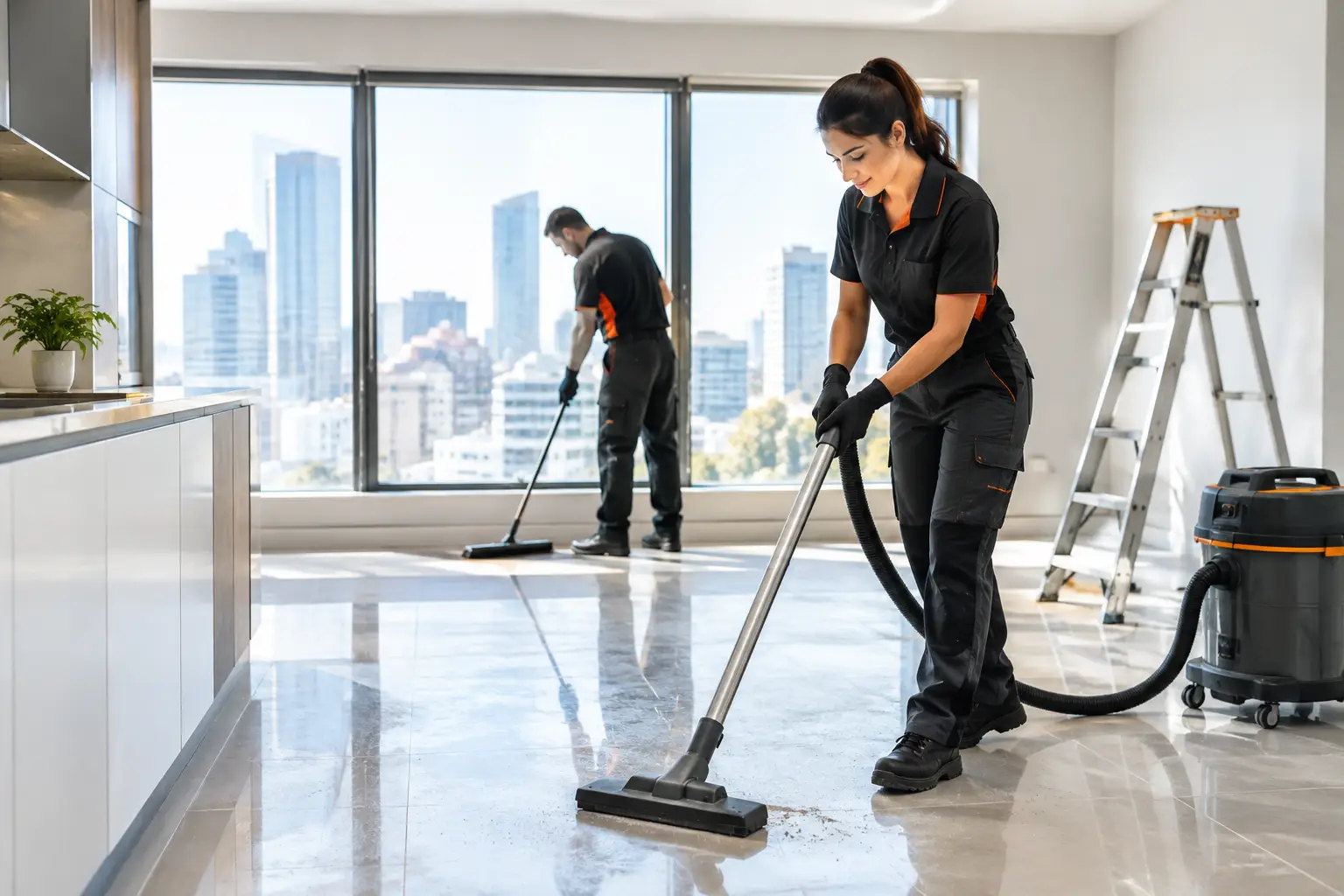
Hard floors such as tile, vinyl and sealed concrete should first be vacuumed or swept with equipment that captures fine grit rather than pushing it around. Follow with a damp mop or low-moisture machine clean using a product suited to the material. The aim is a clean, residue-free surface that dries quickly. Over-wetting is a common mistake, particularly near doorways where moisture can be tracked further into the office.
Carpeted entrances require regular vacuuming with attention to edges and mat boundaries, where dirt settles first. Spot treatment should happen promptly when there are muddy marks, drink spills or visible stains. Periodic professional extraction cleaning can help remove embedded soil, but it should be scheduled around occupancy because drying time varies with the carpet, ventilation and weather.
Natural stone, timber-look flooring and polished surfaces need extra care. Acidic products, harsh degreasers and abrasive pads can strip sealers or change the appearance of the finish. If you are unsure what the floor is made from, check the manufacturer’s guidance or use an experienced commercial cleaner who can identify the right process.
Build a routine that works through the day
Reliable entryway cleaning is usually a combination of planned servicing and responsive checks. A cleaner may complete the detailed work before staff arrive or after hours, while reception or facilities staff keep an eye on immediate issues during business hours.
A practical routine can include a morning reset, midday inspection and end-of-day clean. In the morning, remove loose debris, vacuum mats, clean glass doors and ensure the floor is dry. Around midday, inspect for tracked-in dirt, spills, overflowing bins or marks around door handles. At the end of the day, complete the fuller floor clean and deal with marks before they become harder to remove.
For high-traffic sites, record checks in a simple cleaning log. This is particularly useful in clinics, shared offices and managed properties, where several people may be responsible for reporting issues. It creates accountability and makes it easier to adjust service frequency when visitor numbers change.
Respond quickly to wet weather
Rain changes the priority from presentation to safety. Place wet-floor signs out as soon as conditions require them, not after someone has slipped. Increase mat checks, dry visible moisture promptly and inspect nearby areas where water may be tracked, including lift lobbies, hallways and reception queues.
Signs are only one part of the response. They do not make a wet floor safe on their own. The area still needs to be dried, the source of the moisture managed and the sign removed once the hazard is gone.
Do not overlook high-touch entry points
Floors take most of the visible punishment, but the entryway also contains some of the office’s most frequently touched surfaces. Door handles, push plates, intercom buttons, access keypads, lift buttons, reception counters and visitor sign-in devices should be cleaned and disinfected as appropriate for the workplace.
Use products that suit the surface and follow contact-time instructions where disinfection is required. Spraying a product and wiping it away immediately may leave the area looking clean without achieving the intended hygiene result. For shared touchscreen systems, use only approved methods to avoid damage.
Glass doors and partitions also deserve attention. Fingerprints, smears and dust around handles can make an otherwise tidy entrance feel neglected. Clean glass carefully with a streak-free method and inspect it from both inside and outside, as lighting can reveal marks that are not visible from one angle.
Choose cleaning support that protects your standards
Office entryways are a poor place for inconsistent cleaning. If a provider only visits occasionally or follows a generic checklist without considering your traffic patterns, staff may be left dealing with preventable mess and safety issues.
Look for a cleaning service that can work around office hours, uses trained and police-checked staff, provides clear scope and responds when conditions change. Premium equipment, suitable eco-friendly products and a defined quality process all matter, but communication matters just as much. Your cleaner should know which areas need extra attention after rain, during client events or at busy times of year.
For Adelaide businesses, Spiffi Cleaning can tailor commercial cleaning schedules around the way your office operates, from regular entryway maintenance to detailed floor and high-touch surface cleaning. Consistent care keeps the first few metres of your workplace working as hard as the rest of the team.
A well-kept entrance does more than create a good first impression. It quietly removes friction from the day: fewer dirty floors, fewer avoidable hazards and a workplace that feels ready before the first visitor arrives.