Walk into an office at 8.30 on a Monday and you can tell straight away whether cleaning has been handled properly. Desks might look tidy, but fingerprints on glass, bins left half full and kitchen benches with coffee rings send a different message. The best office cleaning checklist is not about making a space look passable for an hour. It is about keeping the whole workplace consistently clean, healthy and ready for staff, clients and visitors.
For office managers, business owners and facilities teams, the challenge is rarely knowing that cleaning matters. It is keeping standards steady when the week gets busy, staff numbers shift and shared spaces cop the most wear. A checklist works because it removes guesswork. It sets a clear standard, helps cleaners work methodically and makes it easier to spot what has been missed before it becomes a bigger hygiene issue.
What makes the best office cleaning checklist work
A good checklist is practical, not bloated. If it is too vague, standards drop. If it is too detailed, it becomes a document no one wants to use. The sweet spot is a checklist built around frequency, risk and visibility.
Frequency matters because not every job belongs on the same schedule. Toilets, bins and kitchen surfaces usually need daily attention. Internal glass, vents and skirting boards may only need a weekly or monthly pass. Risk matters because some areas affect health more than others. High-touch points, washrooms and food preparation areas deserve closer attention than a low-traffic archive room. Visibility matters because clients and staff notice reception desks, meeting rooms and entry glass long before they notice the top of a filing cabinet.
The best checklists also reflect how the office actually operates. A small professional suite with ten staff has different needs from a larger workplace with multiple meeting rooms, shared amenities and regular visitor traffic. That is why a one-size-fits-all checklist often falls short.
Best office cleaning checklist by area
The easiest way to build a reliable routine is to break the office into zones. This keeps the work organised and reduces the chance of common areas being cleaned while hidden problem spots are ignored.
Reception and entry areas
Reception sets the tone for the whole workplace. Floors should be vacuumed or mopped as needed, entry mats shaken out or cleaned, hard surfaces wiped and any smudges removed from doors and glass. Dust builds quickly on counters, display shelves and ledges, especially near entrances where air movement is higher.
If your office sees regular foot traffic, pay attention to door handles, intercoms and seating arms. These are easy to overlook and are touched constantly throughout the day.
Workstations and offices
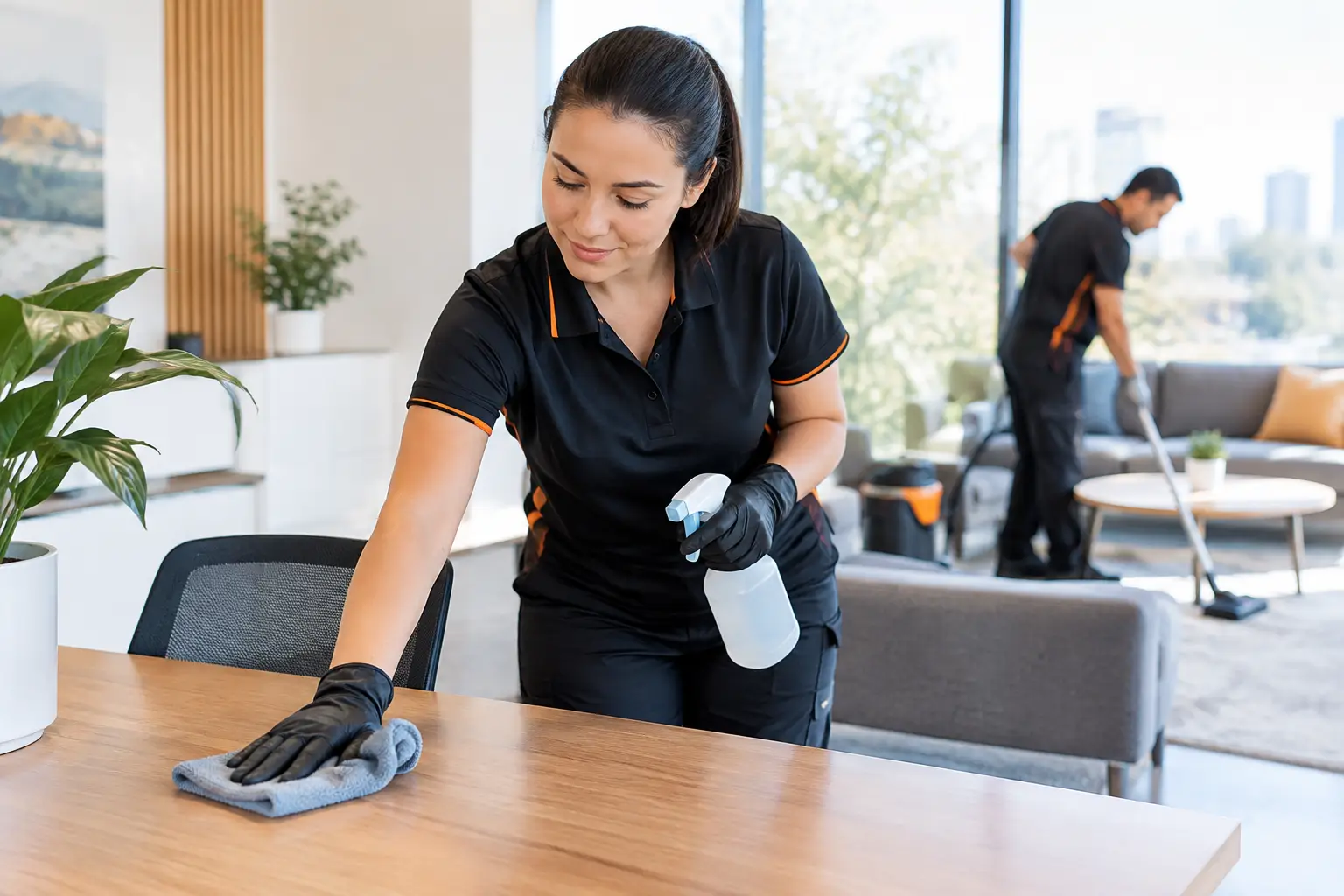
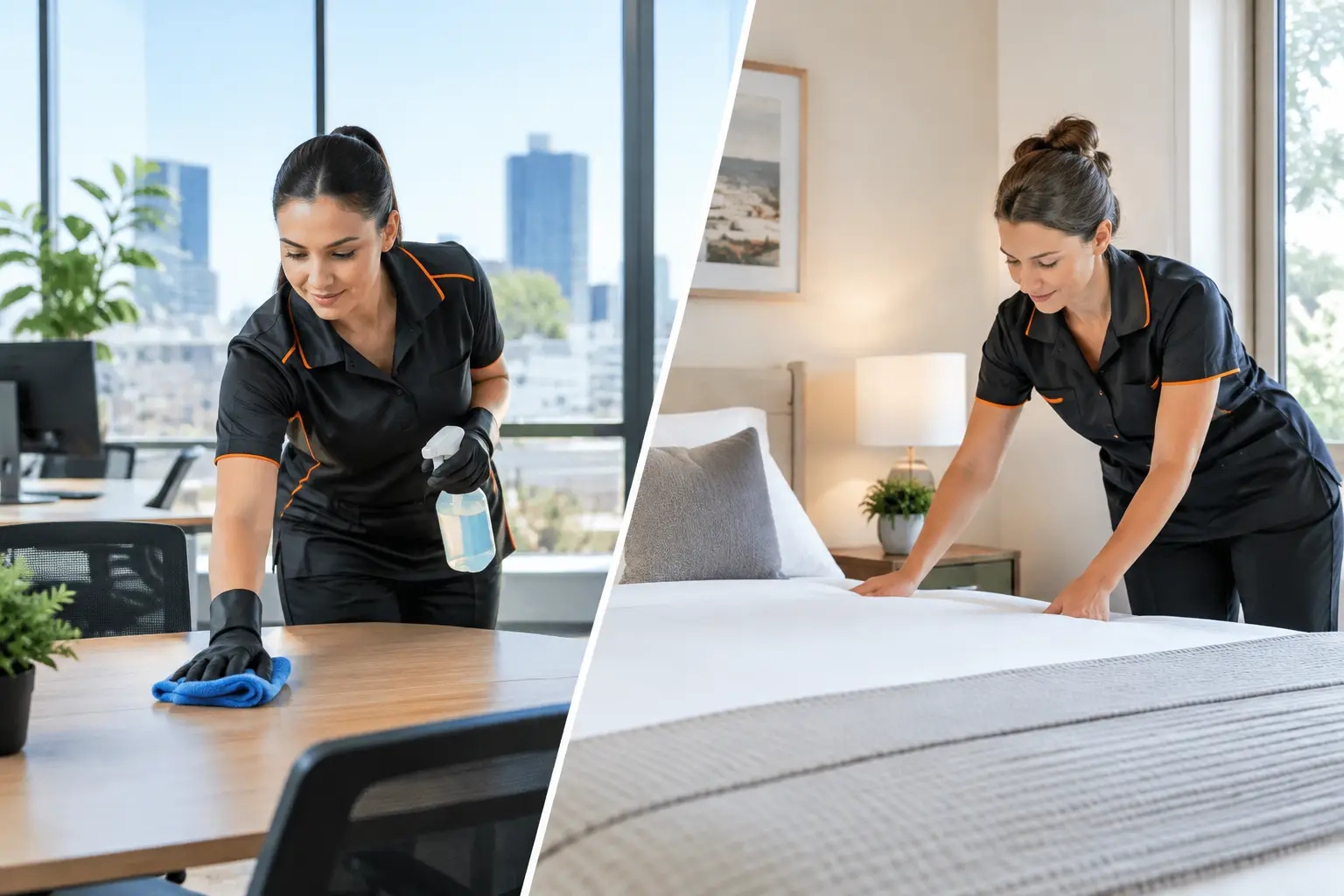
Desks often create a grey area. In many workplaces, staff prefer cleaners not to move personal items or paperwork, which is fair enough. The checklist should make that boundary clear. Usually, the right approach is to dust accessible desk surfaces, wipe telephones if approved, clean monitor stands and remove rubbish, while avoiding sensitive documents and personal drawers.
Chairs, partition tops, skirting boards and hard floor edges also need attention. They collect dust slowly, which means they are often skipped until the office starts looking tired overall.
Meeting rooms
Meeting rooms should be reset as well as cleaned. That means wiping tables, straightening chairs, removing marks from glass, emptying bins and checking floors for crumbs or dirt. If the room includes screens, remotes or shared presentation tools, these should be sanitised carefully with the right products.
This is a space where presentation matters as much as hygiene. A spotless meeting room gives people confidence before the first word is spoken.
Kitchen and breakout areas
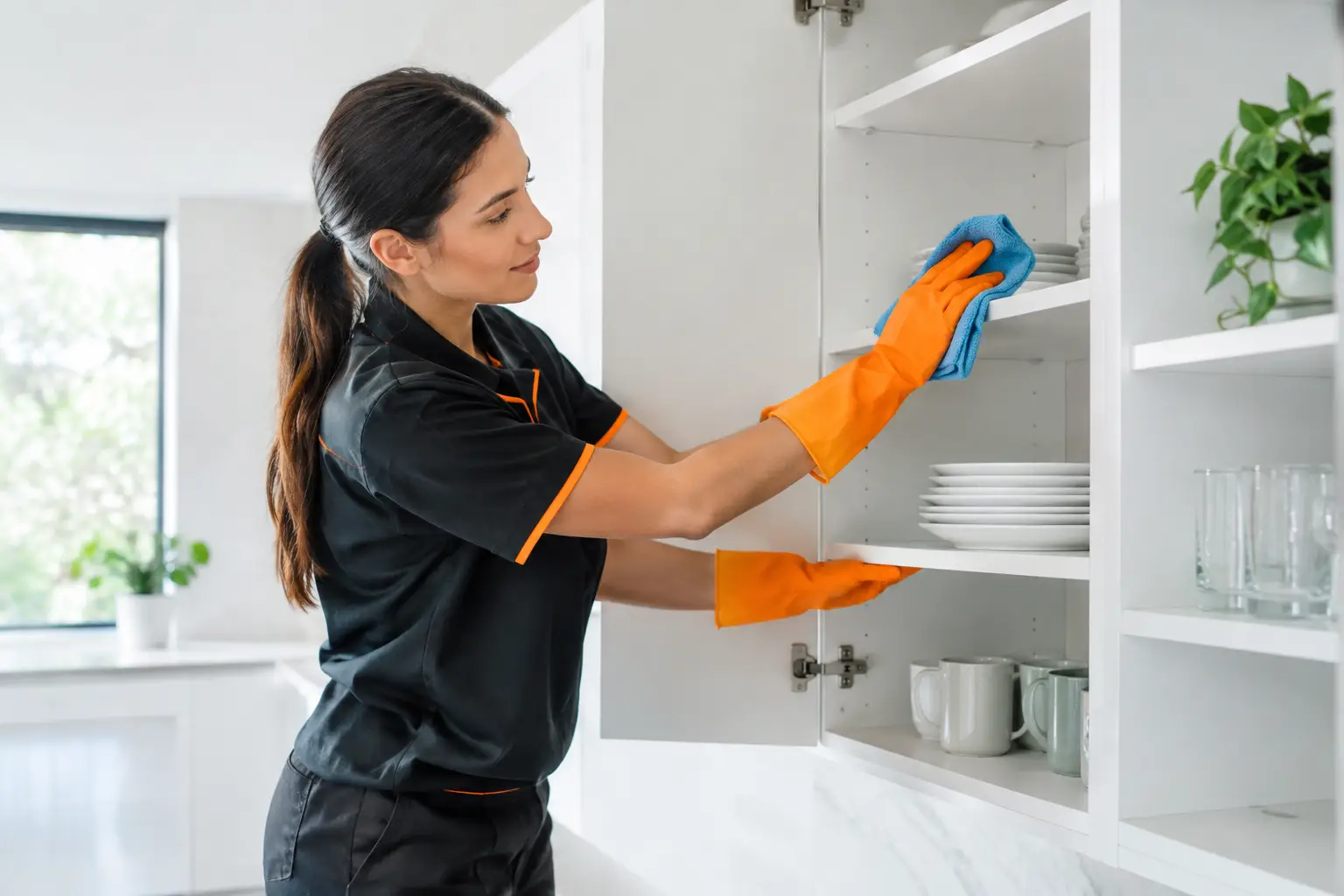
Office kitchens can unravel fast. Benches should be wiped and sanitised, sinks cleaned, taps polished, bins emptied and floors mopped. Microwaves and fridge handles are major touchpoints, and cupboard fronts often show spills long before anyone notices them.
The only real question here is how far the cleaner’s responsibility goes. Some workplaces expect dishes to be loaded into the dishwasher, others leave that to staff. Whatever the rule is, it should be written into the checklist. Ambiguity is where resentment starts.
Toilets and washrooms
This area needs the most disciplined routine. Toilets, urinals, sinks, mirrors, partitions and touchpoints should be cleaned and sanitised thoroughly. Consumables such as toilet paper, soap and paper towel need checking every visit, not only when they run out.
Odour control matters too, but it should never replace proper cleaning. If a washroom smells strongly perfumed, people often assume something is being covered up. Clean first, then use freshening products sparingly.
Floors and shared touchpoints
Floors carry the workload of the entire office. Carpet should be vacuumed properly, not just in open lanes. Hard floors should be swept and mopped with suitable products to avoid residue or slipperiness. Spot cleaning is essential around desks, kitchen entries and printer stations.
Shared touchpoints deserve their own line in the checklist. Light switches, door handles, lift buttons, stair rails, printer panels and shared keyboards are touched constantly and forgotten just as often.
Daily, weekly and monthly tasks
The best office cleaning checklist becomes easier to manage when tasks are grouped by timing rather than squeezed into one long document.
Daily cleaning usually covers bins, vacuuming or mopping of main traffic areas, wiping surfaces, sanitising washrooms, cleaning kitchens and disinfecting high-touch points. This keeps the office functional and presentable.
Weekly cleaning goes a step further. It may include internal glass, detailed dusting of ledges and skirtings, deeper attention to meeting rooms, spot cleaning walls and a more thorough kitchen clean. This is where the office starts to feel maintained rather than merely tidied.
Monthly tasks pick up the items that quietly collect grime over time, such as vents, blinds, upholstery, behind movable furniture and detailed floor edge work. Some offices also schedule periodic carpet cleaning, window cleaning or deep cleaning based on traffic levels and the type of business.
It depends on the workplace. A medical-adjacent office, for example, may need a stricter schedule than a small admin site with limited public access. The right checklist balances cost with hygiene, without pretending every office needs the same intensity.
Common checklist mistakes
A lot of office cleaning problems come back to poor scope, not poor effort. One common mistake is assuming cleaners will “just know” what is expected. If the kitchen bins are to be relined every visit, write it down. If desk cleaning excludes papers and personal devices, write that down too.
Another issue is failing to assign accountability. A checklist is only useful if someone checks it, updates it and raises issues early. Otherwise, missed tasks become normal.
There is also the problem of overloading the daily schedule. When too many low-priority jobs are packed into each visit, the essentials can suffer. A cleaner rushing to dust the top shelf in a back room may have less time for washroom sanitising and touchpoint disinfection. Priorities need to be realistic.
Should you customise your checklist?
Yes, and in most offices you should. The base structure stays the same, but details should match how the space is used. A law firm may need careful treatment around confidential documents. A creative studio may have more shared equipment and collaborative surfaces. A call centre may need stronger focus on headsets, desk phones and break areas.
If your office has after-hours cleaners, the checklist should also reflect site access, alarm procedures and any areas that must be locked after cleaning. Operational details are part of quality control, even if they are not technically cleaning tasks.
For Adelaide businesses managing multiple priorities, a customised checklist often saves time because it reduces back-and-forth, avoids missed expectations and keeps service consistent from visit to visit.
When professional support makes more sense
Some offices can manage with an internal routine for light upkeep, especially if staff are disciplined and the space is small. But once a workplace has regular client traffic, multiple amenities or stricter hygiene expectations, relying on ad hoc cleaning usually stops working. Standards slip first in the corners, then in the areas everyone notices.
That is where a professional cleaning team adds value. Trained cleaners work to a set scope, use appropriate equipment and products, and bring consistency that is hard to maintain informally. A provider such as Spiffi Cleaning can also help shape the checklist itself so it matches the site, frequency and expectations, rather than forcing your office into a generic plan.
A clean office should never feel like luck. When the checklist is clear, the schedule fits the space and the standard is checked regularly, the workplace stays presentable without constant chasing. That means fewer complaints, a better impression on visitors and one less operational problem on your desk.