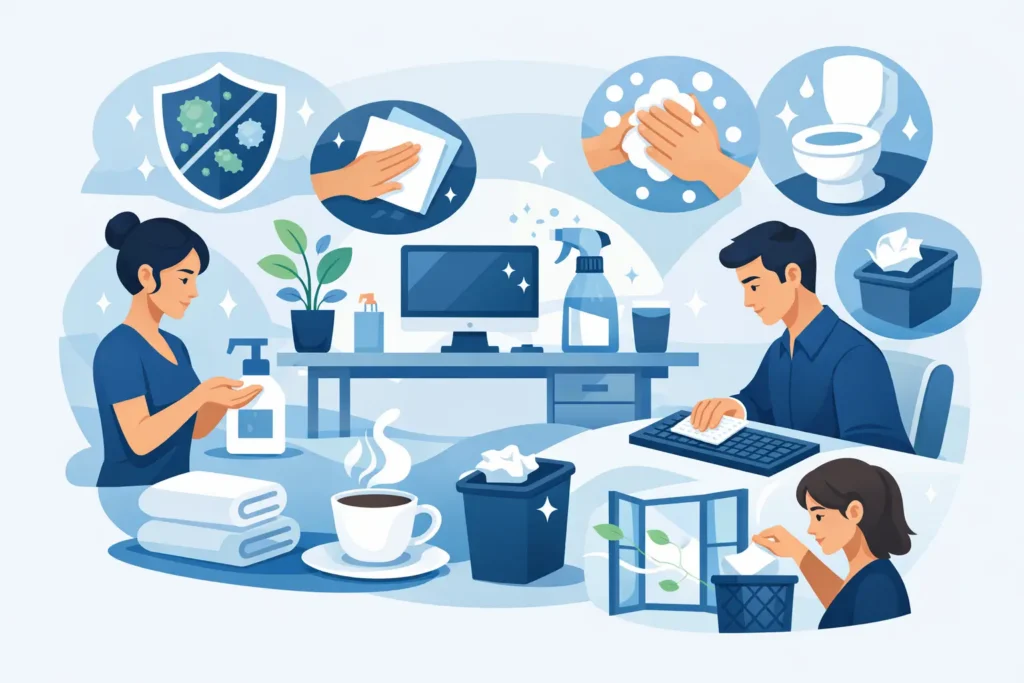
A shared keyboard can pass through several hands before morning tea. The fridge handle, meeting-room remote, lift button and kitchen tap are touched even more often. That is why the best office hygiene practices are not about making a workplace smell freshly cleaned for an hour. They are about creating simple, repeatable habits that reduce germ transfer, support staff wellbeing and keep your business looking professional.
For office managers and business owners, the goal is practical: a clean workplace that does not interrupt the working day or place the entire burden on one person. The right routine balances daily staff habits with scheduled professional cleaning, clear supplies and accountability.
1. Focus on high-touch surfaces first
Not every surface carries the same hygiene risk. A bookshelf in a quiet office may only need routine dusting, while shared touchpoints need frequent attention because they collect residue from many people throughout the day.
Prioritise door handles, light switches, handrails, shared keyboards and mice, printer panels, phone handsets, EFTPOS terminals, fridge and microwave handles, taps, toilet flush buttons, meeting-room controls and desk hot-spots. In larger workplaces, include lift buttons, reception counters and communal lockers.
Cleaning removes visible dirt and grime. Disinfecting uses a suitable product to reduce germs on a clean surface. Both have a place, but disinfectant is less effective when applied over dust, food residue or spills. Follow the product directions, including the required contact time, rather than spraying and immediately wiping it away.
2. Give hand hygiene an obvious place in the day
Hand hygiene works best when it is convenient. Place hand sanitiser at entrances, reception desks, shared workstations, kitchens and meeting rooms, then keep soap, running water and paper towels stocked in bathrooms. Empty dispensers and soggy hand towels send the opposite message to staff and visitors.
Encourage handwashing after using the bathroom, before eating, after handling shared equipment and after coughing, sneezing or blowing a nose. A short, clear reminder near sinks is usually more effective than a long policy that nobody reads.
Sanitiser is useful when a sink is not nearby, but it should not replace handwashing when hands are visibly dirty. For workplaces with customers, contractors or frequent visitors, make the sanitiser station easy to spot without turning the front desk into a cluttered display.
3. Keep desks personal, but set shared-desk rules
Personal desks need a reasonable standard, not military precision. Staff should be able to work comfortably, but food containers, overflowing bins, used tissues and dirty mugs create hygiene issues quickly. A clear-desk reset at the end of the day makes cleaning easier and helps the office start well the next morning.
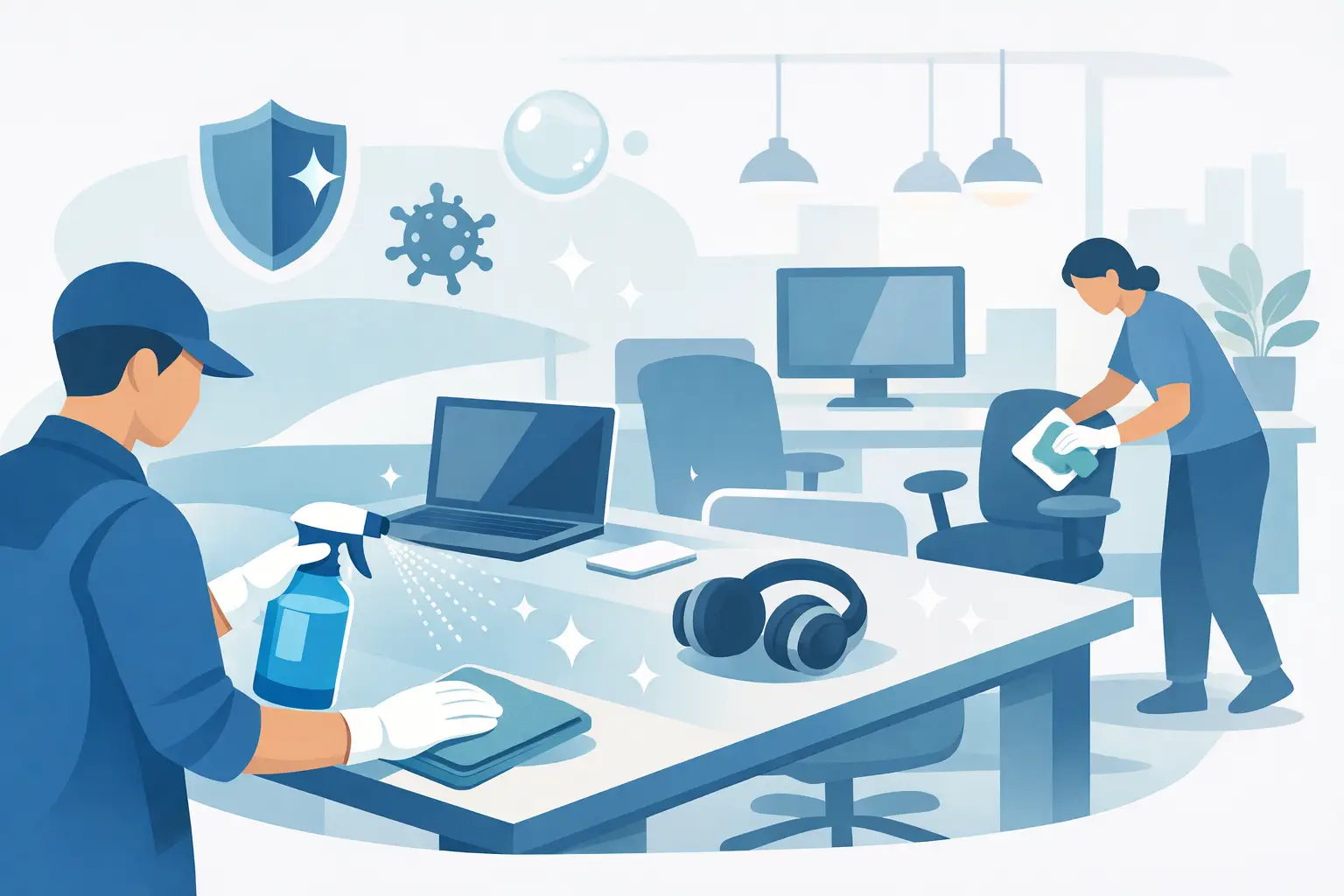
Hot-desking requires a more defined process. Ask each user to clear the station when finished and wipe shared keyboard, mouse, desk surface and headset before the next person uses them. Provide the right wipes or cleaning product nearby, along with instructions suitable for electronic equipment. Spraying liquid directly onto screens, keyboards or power points can cause damage.
This is one area where responsibility matters. Cleaning staff can service shared areas and complete scheduled workstation cleaning, but employees using a desk during the day are best placed to manage immediate spills and their own touchpoints.
4. Make the kitchen a managed shared space
Office kitchens can become a hygiene problem long before they look untidy. Crumbs in the toaster, food splashes in the microwave, old milk in the fridge and unwashed dishes can attract pests and cause unpleasant odours. They also leave a poor impression on staff and visitors.
Set simple expectations: label and date food, wipe spills straight away, wash and put away dishes after use, and remove expired food during a nominated weekly fridge clean. If your workplace provides tea, coffee or snacks, assign responsibility for checking supplies and cleaning appliances. Shared ownership often means no ownership.
Bins need the same attention. Use liners, empty rubbish before it overflows and provide separate options where your recycling or food-waste arrangements require them. In warm Adelaide weather, food waste should not be left sitting in an indoor bin over a long weekend.
5. Treat bathrooms as a service standard
Bathrooms shape how people judge the whole workplace. A clean reception area cannot compensate for an empty soap dispenser, stained basin or unpleasant toilet cubicle. Bathroom hygiene should be checked throughout the day in busy offices, not only after hours.
A reliable bathroom routine includes cleaning and disinfecting toilets, basins, taps, flush points, door handles and baby-change facilities where provided. Floors should be kept dry to reduce slip risks, while soap, toilet paper and paper towels should be replenished before they run out. Sanitary bins need appropriate servicing as well.
The required frequency depends on foot traffic. A small office with five staff has very different needs from a client-facing business, medical clinic or multi-tenant site. Review the schedule after busy periods rather than assuming one standard suits every workplace.
6. Improve air quality through everyday upkeep
Office hygiene is not limited to surfaces. Poor ventilation, dusty vents and neglected air-conditioning filters can make a space feel stale and uncomfortable. While specialist maintenance should be handled by qualified providers, office teams can support better indoor conditions by keeping vents unobstructed, reporting leaks or mould promptly and avoiding excessive fragrance products that may irritate sensitive staff.
Open windows when conditions allow, particularly after meetings in smaller rooms. Keep indoor plants maintained and remove any that develop mouldy soil or decaying leaves. If your office has an air-conditioning maintenance schedule, make sure it is followed and documented.
7. Build a cleaning schedule around real use
The best office hygiene practices are consistent because they are planned. A cleaning schedule should reflect how your workplace is used, not simply what fits into a generic checklist. Reception, bathrooms, kitchens and meeting rooms often need daily attention. High-traffic touchpoints may need cleaning more than once a day, especially during illness outbreaks or busy visitor periods.
Less frequently used areas can be scheduled weekly or monthly. This may include internal glass, skirting boards, upholstery, detailed dusting, high ledges and deep cleaning of kitchen appliances. Periodic carpet cleaning also helps manage embedded dirt, allergens and odours that routine vacuuming cannot fully remove.
Keep the schedule visible to the person responsible for facilities, whether that is an office manager, building manager or external cleaning provider. A checklist is useful only when somebody checks outcomes, reports issues and adjusts the service as the office changes.
8. Prepare for spills and illness without creating panic
Spills should be dealt with quickly and safely. Keep a clearly labelled kit with gloves, absorbent material, suitable surface cleaner, disposable cloths and rubbish bags. Staff should know who to contact if a spill involves bodily fluids, broken glass or a larger hazard that requires trained cleaning support.
For respiratory illness, a respectful approach protects both people and operations. Encourage staff who are unwell to follow your workplace policy, use good cough and sneeze etiquette, dispose of tissues promptly and avoid sharing cups, cutlery or devices. There is no need for alarmist messaging. Clear expectations and readily available supplies are usually more effective.
9. Choose products that suit the workplace
The cheapest product is not always the best value. Harsh chemicals may damage surfaces, leave strong odours or create avoidable risks if used incorrectly. On the other hand, a mild product may not be suitable for bathrooms, clinical settings or high-risk spill response.
Select products for the task, ensure safety data is available and store chemicals securely away from food areas. Use colour-coded cloths or cleaning equipment where practical to avoid cross-contamination between bathrooms, kitchens and desks. Eco-friendly options can be a sensible choice when they still meet the hygiene standard required for the space.
10. Use professional support for consistency
A dependable office cleaning service gives your team a defined standard, trained staff and a regular process for the areas that are easy to miss during a busy week. This is particularly valuable for offices with shared facilities, client-facing spaces, multiple shifts or strict presentation requirements.
Spiffi Cleaning can tailor office cleaning around your operating hours, site traffic and priorities, from routine touchpoint cleaning to detailed kitchen, bathroom and floor care. The right provider should communicate clearly, use appropriate equipment and respond quickly if your needs change.
A hygienic office is built through small actions done properly, day after day. When staff can see that their workplace is cared for, it supports confidence, comfort and the professional experience your business wants every visitor to remember.