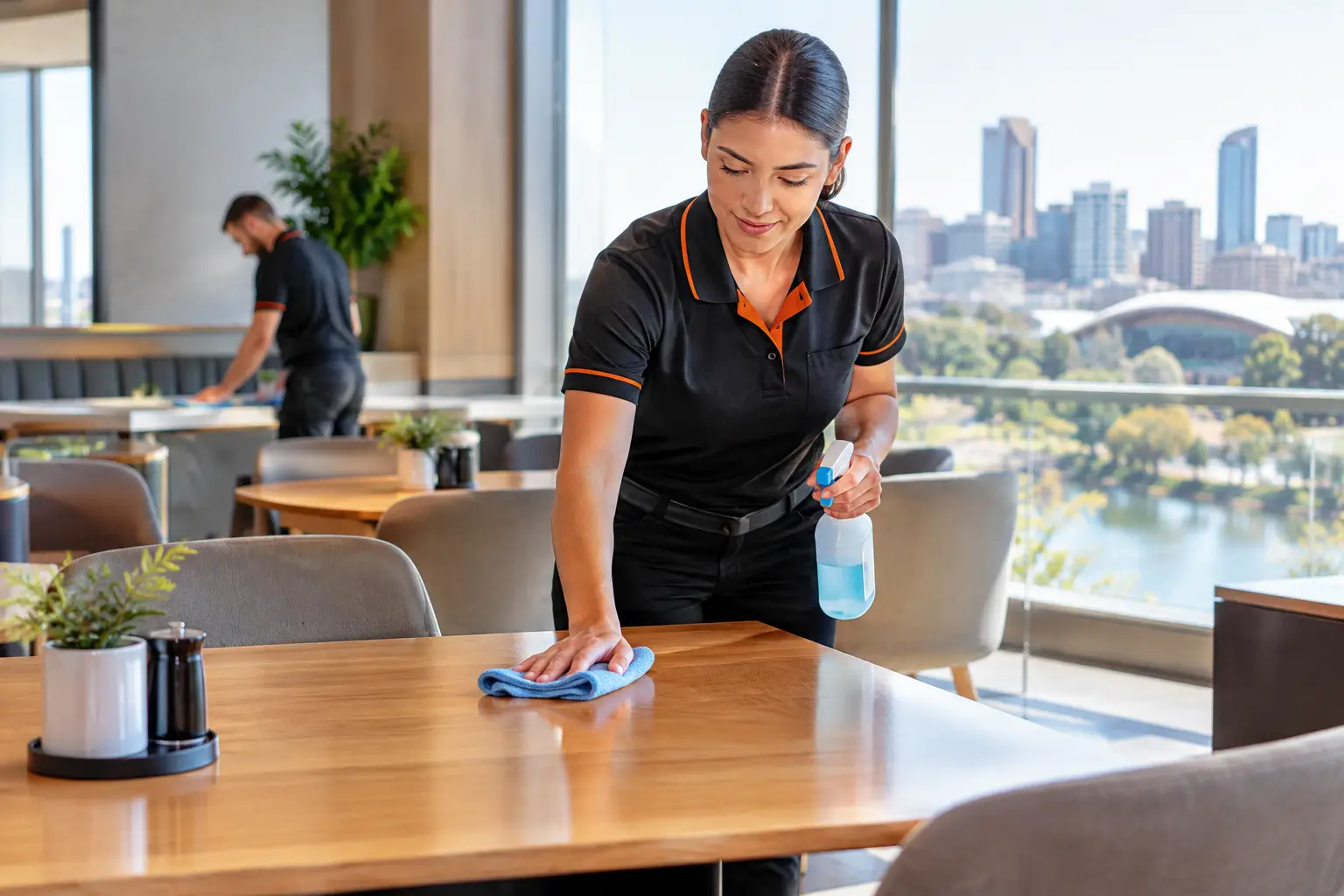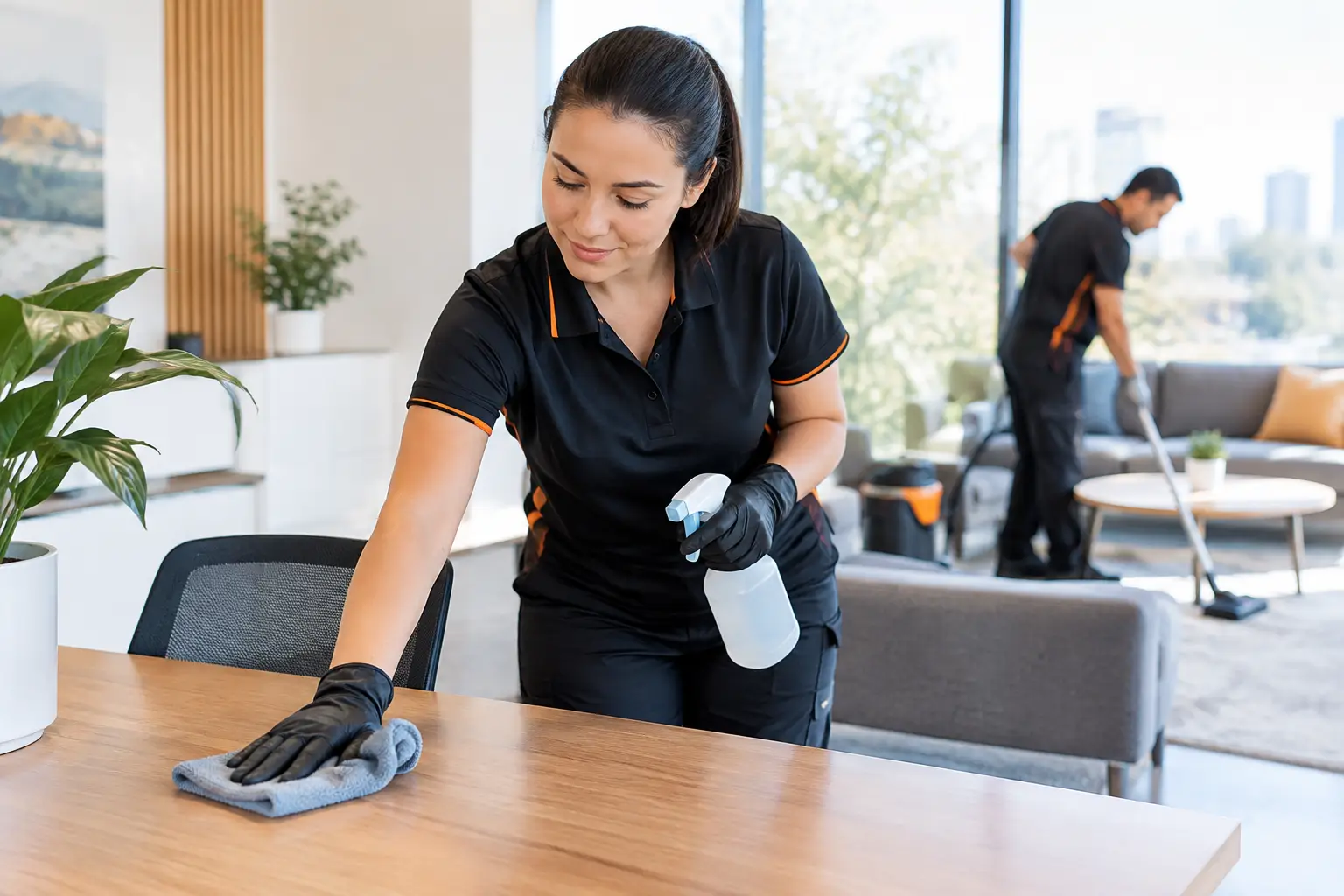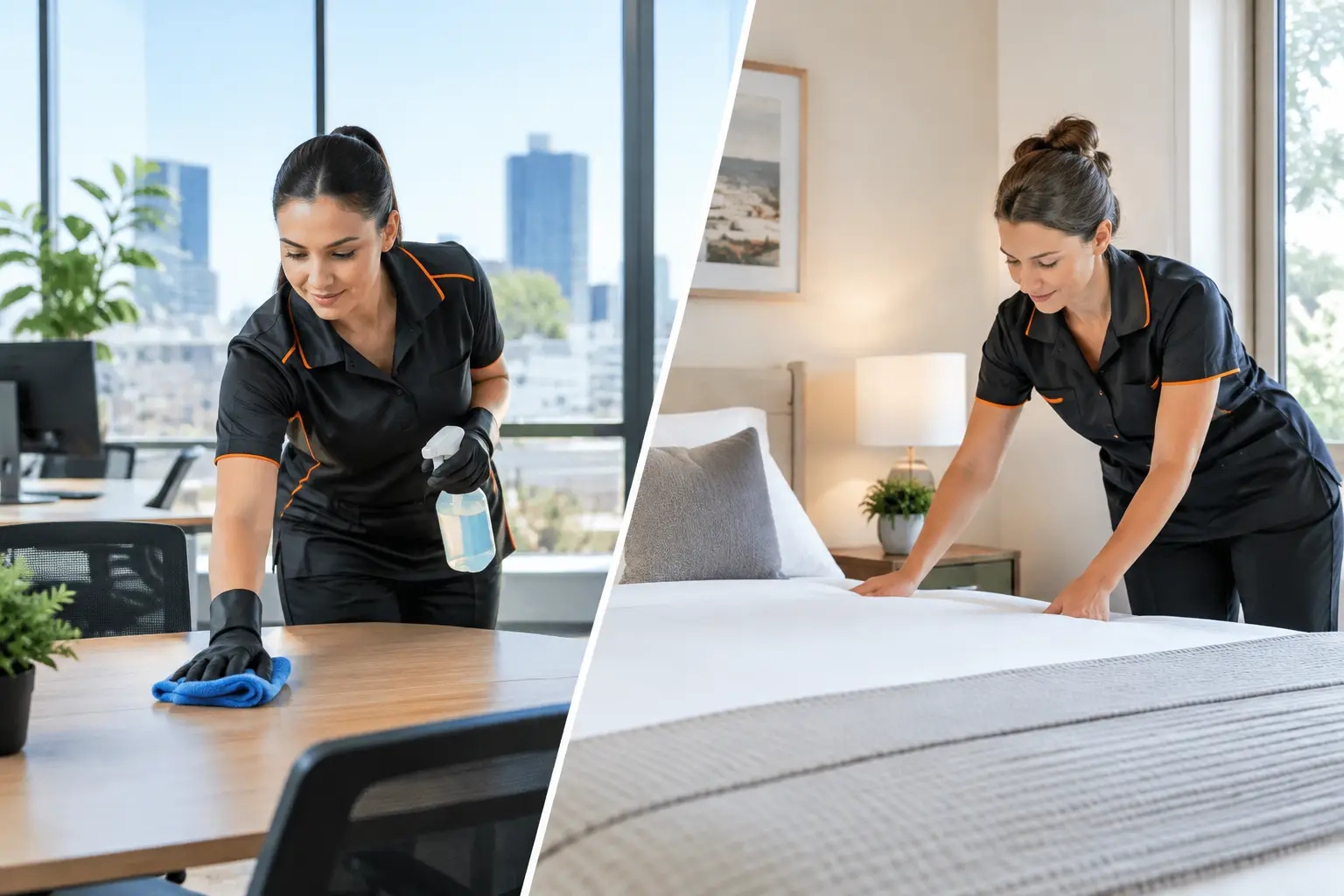
The kitchen bench may look clean after breakfast, but the fridge handle, tap lever and kettle button can still carry whatever has travelled in on hands. The same applies to office door handles, shared keyboards, reception counters and lift buttons. To sanitise high touch surfaces properly, you need more than a quick wipe when something looks dirty. You need a routine that targets the places people touch most, uses products correctly and suits how the space is actually used.
For homes, workplaces and customer-facing premises, this is one of the simplest ways to support a cleaner, more reassuring environment. It also protects the presentation of the space. Guests notice sticky switches, marked glass doors and smudged counters quickly, even when the rest of the room appears tidy.
Cleaning, sanitising and disinfecting are not the same
These terms are often used interchangeably, but they describe different jobs. Cleaning removes visible soil, crumbs, grease and grime from a surface. Sanitising reduces the number of germs to a safer level. Disinfecting is intended to kill or inactivate a broader range of germs when used according to the product directions.
The order matters. A sanitiser or disinfectant cannot work as intended if it is applied over a layer of grease, food residue or dust. Start by cleaning the surface with a suitable detergent and clean cloth, then apply the sanitising or disinfecting product where it is needed.
For most everyday settings, regular cleaning and targeted sanitising of frequently handled surfaces is a sensible approach. In medical clinics, aged care environments, bathrooms, food preparation areas or during an illness outbreak, a more structured disinfection process may be appropriate. The correct standard depends on the setting, the people using it and any industry or site-specific requirements.
Which surfaces need the most attention?
A high touch surface is any point that is handled repeatedly by multiple people or by the same person throughout the day. Some are obvious, while others are easy to overlook because they are small or not visibly dirty.
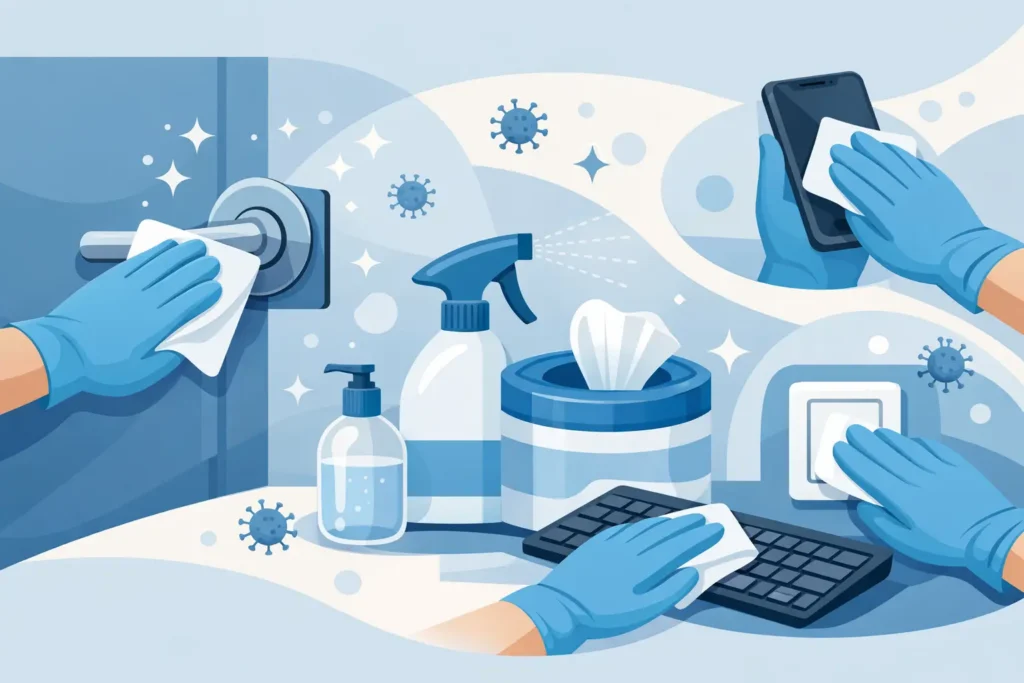
At home, focus on door handles, light switches, remote controls, mobile phones, appliance handles, taps, toilet flush buttons, stair rails and dining chairs. In a busy household, these surfaces can receive far more contact than the floor or a rarely used shelf.
In an office or commercial site, add reception desks, EFTPOS terminals, shared desks, keyboards, mice, printer controls, meeting room tables, kitchen equipment, lift panels, handrails and bathroom fixtures. Retail counters, gym equipment and shared tools also need a planned routine, particularly when they are used by customers throughout the day.
The practical test is simple: if several people touch it, or if people touch it immediately after coughing, eating, using the bathroom or coming in from outside, place it on the cleaning schedule.
When to sanitise high touch surfaces
Frequency should reflect foot traffic rather than a fixed rule for every property. A quiet home occupied by two adults has different needs from a childcare centre, a medical waiting room or a busy Adelaide office with staff and visitors coming and going.
For a typical household, sanitising key touch points once a day is usually a practical baseline, with extra attention after visitors, illness, food preparation or a busy family routine. Bathrooms and kitchen handles may need more frequent care.
In a workplace, high touch areas should generally be addressed at least daily. Reception counters, shared equipment, bathroom touch points and communal kitchen surfaces may require attention several times over the day when there is consistent use. A site that receives customers, contractors or delivery drivers should prioritise the contact points near entrances and service areas.
Rather than asking a cleaner or staff member to “give everything a wipe”, assign clear intervals and responsibilities. This improves consistency and makes it less likely that key points are missed during a busy shift.
How to sanitise high touch surfaces safely
The best method is straightforward, but the details make a difference. Start with clean hands and use fresh, colour-coded microfibre cloths where possible. Reusing the same cloth across a bathroom, kitchen and desk area can spread soil rather than remove it.
First, remove visible dirt with a detergent solution suitable for the material. Pay attention to grooves around buttons, handles and tap bases, where grime can build up. Drying may be necessary before the next step, depending on the product directions.
Next, apply a sanitiser or disinfectant that is appropriate for the surface and purpose. Follow the label instructions for dilution, application and contact time. Contact time is the period the surface needs to remain visibly wet for the product to work. Wiping it dry immediately may reduce its effectiveness.
Finally, allow the surface to air dry unless the product label says to rinse or wipe it off. Food-contact surfaces often need a final rinse with clean water, so check the directions carefully. This is especially relevant for kitchen benches, café tables and food preparation equipment.
Avoid mixing cleaning chemicals. Combining products, particularly bleach-based products with other cleaners, can create harmful fumes. Use good ventilation, wear suitable gloves where required and store chemicals securely away from children and food.
Match the product to the material
More product is not always better. Harsh chemicals can dull stainless steel, damage timber finishes, affect natural stone and leave residue on screens. For electronics, do not spray liquid directly onto a keyboard, phone or control panel. Apply the approved product lightly to a cloth first and follow the manufacturer’s care guidance.
Alcohol-based wipes can be useful for some hard, non-porous touch points, while detergent-based cleaning may be the better first step for dirty surfaces. Bleach products can be effective in suitable settings but may not be appropriate for every material or every routine. Fragrance is not a measure of cleanliness, and a heavily perfumed product does not automatically provide better sanitising results.
Eco-conscious choices can still support a high standard of hygiene. The priority is choosing a product that is fit for purpose, using it correctly and avoiding unnecessary waste from excessive chemicals or disposable wipes.
Build a routine people can follow
A routine only works if it fits the day. In a home, keep suitable supplies near the kitchen and bathroom so quick touch-point cleaning does not become a major task. For offices and commercial sites, create a simple schedule around natural breaks: before opening, after lunch, between appointments and at close.
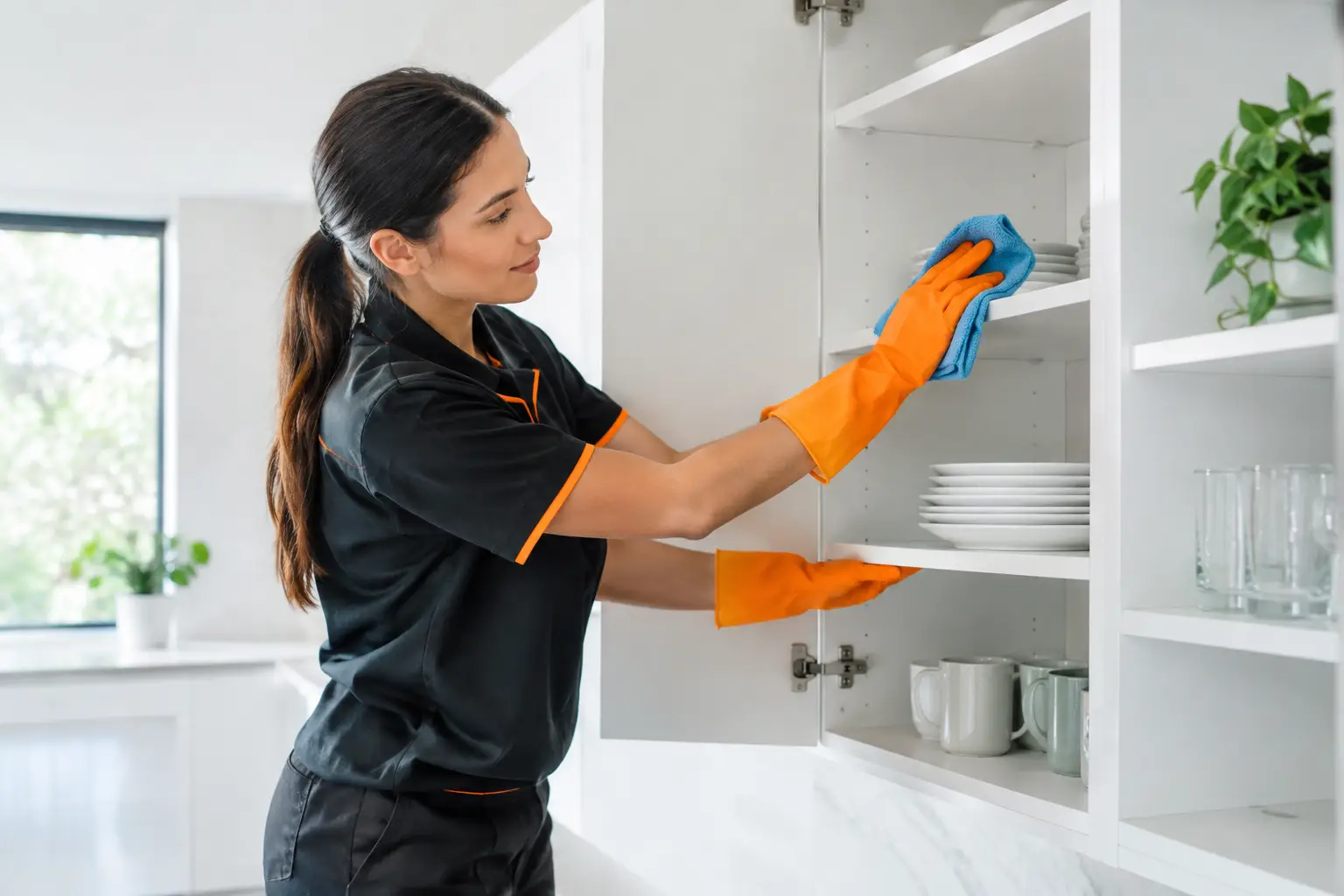
Professional cleaning support is particularly useful when a site has several shared zones, varying operating hours or a need for documented standards. A trained team can work through high touch points methodically while also maintaining floors, bathrooms, kitchens, glass and presentation areas. That means hygiene does not rely on an already busy employee remembering every handle and button.
At Spiffi Cleaning, this attention to detail is part of creating spaces that feel cared for, whether the work involves a family home, office, clinic or rental property. Reliable cleaning is not just about what looks good from the doorway. It is about the small, frequently handled places that shape how clean a space feels to everyone who uses it.
Common mistakes that reduce results
The most common mistake is treating sanitising as a substitute for cleaning. If a surface is visibly soiled, clean it first. Another is rushing the process by using too little product or not allowing enough contact time.
Using a single dirty cloth across the entire property is another avoidable problem. Change cloths between zones, wash reusable cloths thoroughly after use and replace damaged or heavily soiled materials. It is also easy to focus only on benches and forget items such as chair backs, drawer pulls, intercom buttons, shared stationery and the inside handle of the front door.
Consistency matters more than occasional over-cleaning. A short, well-planned routine carried out at the right frequency will usually deliver better results than a sporadic deep clean of only the obvious areas.
A clean space should be easy to use and easy to trust. Start with the touch points people rely on every day, use the right method for each surface, and make the routine realistic enough to keep going.