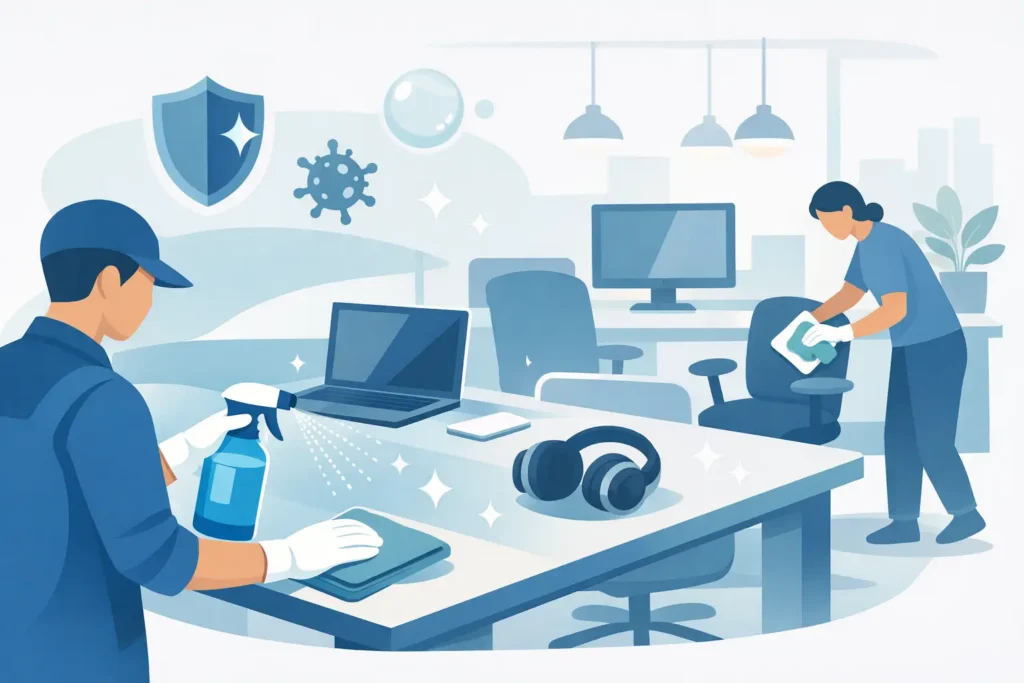
A shared desk can change hands three times in a day. The kitchen tap, fridge handle and meeting-room remote may be touched by dozens of people before lunch. Knowing how to sanitise shared workspaces properly is not about making an office smell freshly cleaned – it is about reducing the spread of germs while keeping the workplace safe, presentable and ready for work.
For Adelaide businesses, a clear cleaning routine also sends a practical message to staff, visitors and clients: this is a workplace that takes people seriously. The right approach is consistent, targeted and suited to how your space is actually used.
Start by separating cleaning, sanitising and disinfecting
These terms are often used interchangeably, but they are not the same job. Cleaning removes visible dirt, dust, crumbs and spills. Sanitising reduces germs on a surface to a safer level. Disinfecting uses a suitable product to kill a wider range of germs, provided it is used correctly.
In most offices, regular cleaning and sanitising of shared, high-touch areas is the sensible baseline. Disinfecting may be appropriate after an illness outbreak, in medical settings, or where the risk of contamination is higher. More chemical is not automatically better. Using the wrong product on a delicate surface, or applying it without first removing grime, can damage finishes and reduce the product’s effectiveness.
Always check the manufacturer’s instructions and safety information. A disinfectant needs its stated contact time – the period the surface must remain wet – to do its job. Wiping it away immediately is one of the most common mistakes in workplace cleaning.
Map the surfaces people actually touch
A good routine follows behaviour, not just what looks dirty. Walk through the workplace at a busy time and note the shared touchpoints. Reception counters, door handles, lift buttons, light switches and handrails are obvious starting points. Then consider the items staff use without thinking: printer controls, shared keyboards, EFTPOS terminals, stationery cupboards, whiteboard markers and appliance buttons.
In kitchens and breakout areas, focus on taps, kettle handles, microwave panels, fridge doors, coffee-machine controls, dining tables and chair backs. In meeting rooms, include the table, remote controls, shared screens, cables and touch panels. Bathrooms require a separate, more thorough process for taps, flush buttons, locks, dispensers and door handles.
Not every item needs the same frequency. A boardroom used once a week can be sanitised after meetings and as part of the regular schedule. A busy kitchen bench may need attention several times a day. This is where a site-specific cleaning plan is more useful than a generic checklist.
Use the right method for each surface
Start with clean hands and fresh equipment. Use colour-coded microfibre cloths where possible, particularly to keep bathroom cloths and kitchen cloths completely separate. Microfibre picks up soil effectively, but it must be laundered between uses. Reusing a dirty cloth across desks can spread contamination rather than remove it.
For hard, non-porous surfaces, first remove debris and visible marks with a suitable cleaner. Apply the sanitiser or disinfectant according to the label, making sure the whole surface is covered. Allow the required dwell time, then wipe if the product instructions call for it.
Electronics need a lighter touch. Never spray liquid directly onto keyboards, monitors, phones or control panels. Apply an electronics-safe cleaner or sanitising solution to a cloth first, then wipe carefully. Avoid over-wetting ports, seams and screens. If equipment is shared heavily, provide wipes nearby so users can clean it before and after use without disrupting the workday.
For upholstered chairs, fabric screens and carpeted areas, surface wipes are not enough. Regular vacuuming, prompt spill treatment and periodic professional deep cleaning help manage dust, odours and embedded soil. If there has been a bodily-fluid spill, isolate the area and use an appropriate trained-cleaning response rather than asking staff to improvise.
Build sanitising into the working day
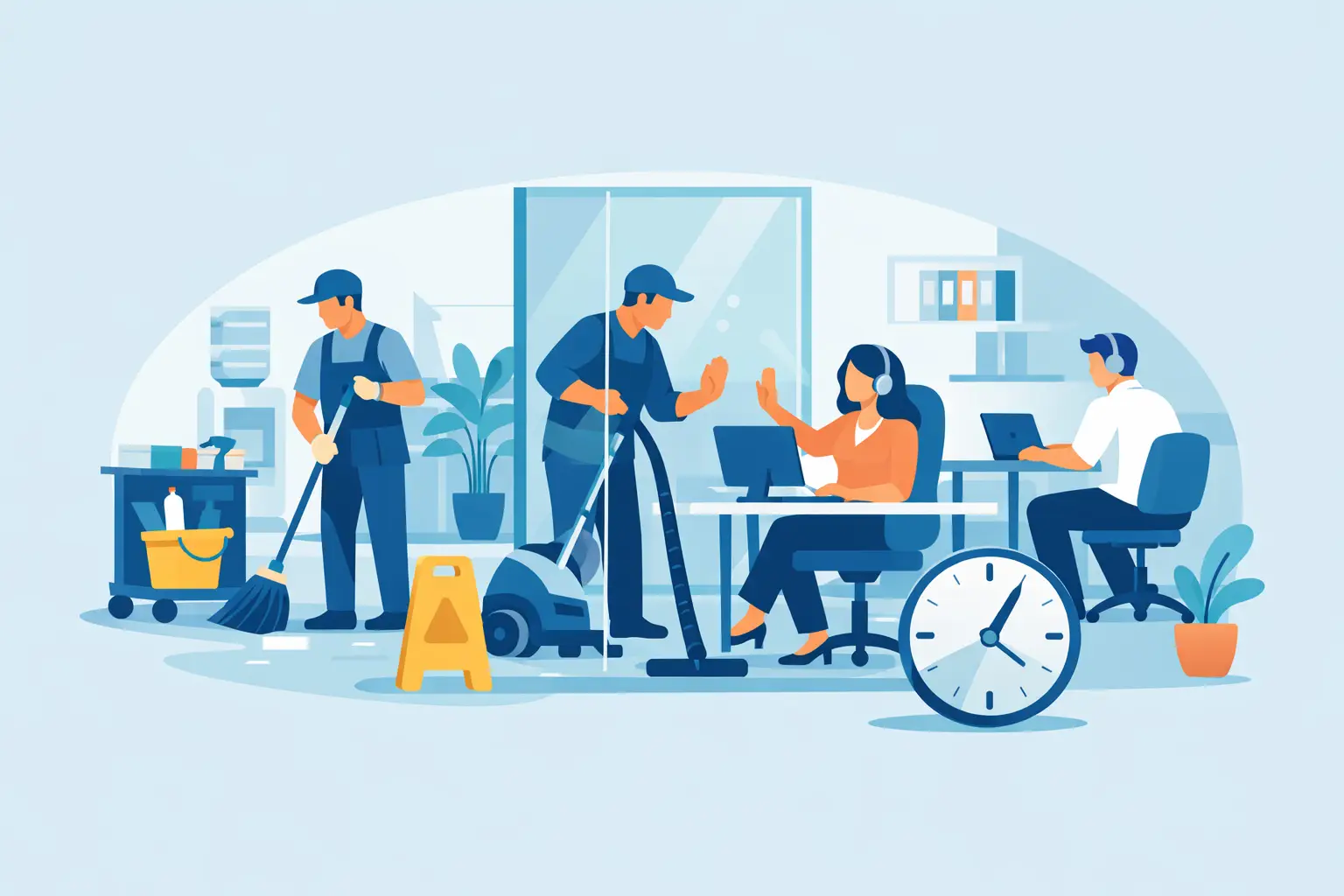
The most reliable system combines professional scheduled cleaning with small actions staff can complete between services. A cleaner can reset the workplace at the end of the day, but high-use shared surfaces should not wait until tomorrow if they are being handled constantly.
A practical rhythm may look like this:
- Before opening: sanitise entry points, reception surfaces, shared kitchens and bathrooms.
- During the day: check high-touch areas, empty rubbish, replenish soap and paper products, and respond to spills.
- After meetings: wipe shared tables, remotes, touch screens and equipment.
- At close: clean desks where required, sanitise common touchpoints, vacuum or mop floors, and reset amenities.
The exact schedule depends on staff numbers, visitor traffic, shift patterns and the nature of the work. A small professional office may need one detailed daily service and simple daytime touch-ups. A gym, clinic, school or hospitality venue will usually need more frequent attention and tighter records.
Make hand hygiene easy, not performative
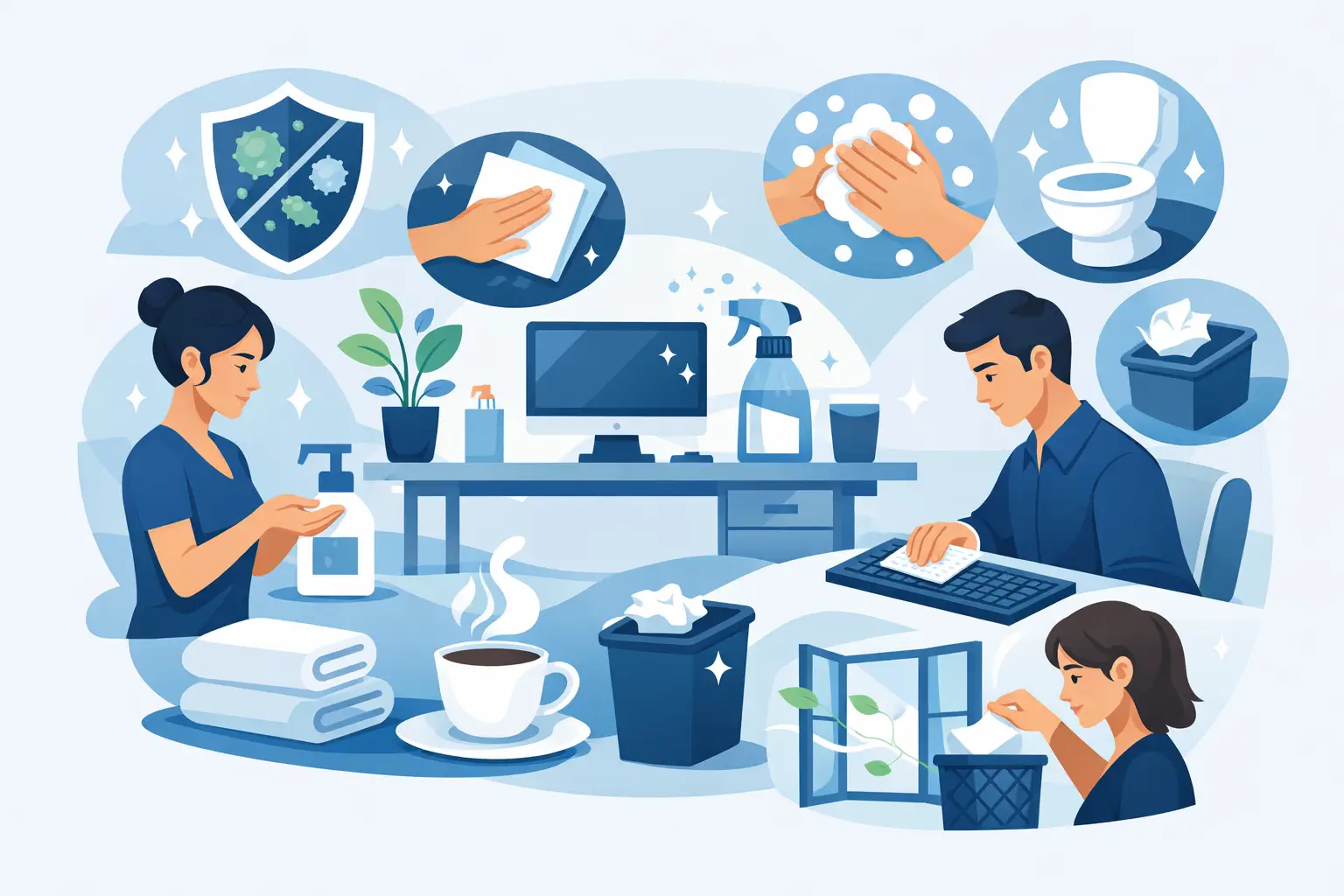
Surface sanitising works best alongside good hand hygiene. Place soap, paper towels and hand sanitiser where people naturally need them: at entry points, near shared printers, in kitchens and outside meeting rooms. Keep dispensers filled and easy to reach. An empty dispenser does not support hygiene, no matter how many signs are on the wall.
Clear, respectful reminders are more effective than rules that staff ignore. Encourage people to wipe down a shared desk after use, wash hands before preparing food and report spills or empty supplies quickly. Keep cleaning materials visible but stored safely, away from food and out of reach of children where relevant.
Avoid putting the whole responsibility on staff. People are more likely to follow simple habits when the workplace provides the products, time and support to do so. A structured cleaning service gives those small daily efforts a dependable foundation.
Prevent cross-contamination during cleaning
The order of work matters. Clean from cleaner areas to dirtier areas, and from higher surfaces down to floors. For example, address desks and meeting rooms before bathrooms, and keep separate tools for each zone. Finish with floors so dirt is not tracked back onto freshly cleaned surfaces.
Gloves can be useful for bathrooms, chemical handling and certain spill responses, but they are not a substitute for handwashing. Change gloves between tasks and never use the same pair to clean a toilet area and then wipe a kitchen bench. Cleaning staff should also understand chemical dilution, safe storage and which products must never be mixed.
Ventilation deserves attention too. Opening windows where practical and maintaining air-conditioning systems can improve comfort and help reduce lingering odours. It does not replace surface cleaning, but a fresh, well-maintained environment is easier for people to use responsibly.
Keep the routine visible and accountable
A sanitising plan only works when it happens consistently. For larger workplaces, use a simple log that records the area cleaned, the time, the task completed and any issues found. This is particularly useful for medical clinics, childcare settings, aged care facilities and other environments where hygiene standards need clear accountability.
For offices and retail spaces, a shorter checklist can still help. It highlights recurring issues such as overflowing bins, leaking soap dispensers or a kitchen appliance that is never wiped down. These details affect staff morale and client impressions as much as they affect hygiene.
When you engage a professional cleaner, ask how the team manages quality checks, staff vetting, products, site instructions and re-cleans if something has been missed. Reliable cleaning is not just a person arriving with a mop. It is a repeatable system that protects your premises and gives you confidence that the same standard will be delivered each visit.
Know when to bring in professional support
An internal routine is often enough for day-to-day touch-ups, but it may not cover detailed bathrooms, floor care, high windows, post-illness cleaning or the deep clean a workplace needs after renovations or a busy season. Professional support is especially valuable when staff are already stretched or when your premises must meet industry-specific hygiene expectations.
Spiffi Cleaning supports Adelaide workplaces with trained, police-checked cleaners, transparent communication and flexible service scheduling. Whether you need a regular office clean or a detailed reset of shared areas, the aim is the same: a cleaner workplace without adding another job to your team’s day.
The best shared-workspace routine is one people barely have to think about. When supplies are ready, touchpoints are maintained and cleaning is done properly, staff can get on with their work in a space that feels cared for.