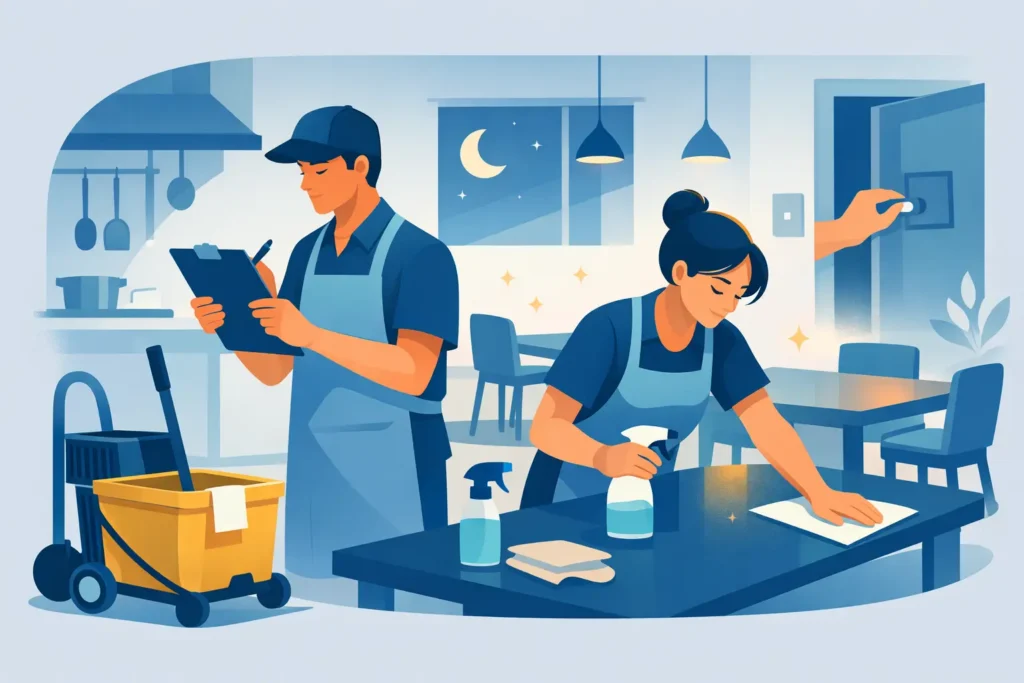
The last table might be gone, but the job is not finished. A strong restaurant cleaning closing checklist is what separates a smooth next-day open from sticky floors, questionable odours, and a rushed morning scramble before the first customers walk in.
For restaurant owners, venue managers, and shift supervisors, closing clean-down is not just about appearance. It protects food safety, extends the life of equipment, keeps pests away, and gives your team a repeatable standard to follow even on busy nights. The trick is keeping it practical. If a checklist is too vague, corners get cut. If it is too long or unrealistic, staff stop taking it seriously.
Why a restaurant cleaning closing checklist matters
A proper close sets the tone for the next shift. When benches are sanitised, floors are degreased, bins are emptied, and high-touch points are cleaned, the morning team can focus on prep and service instead of fixing avoidable issues.
There is also a compliance and risk angle. Hospitality venues deal with food residue, grease, moisture, and heavy foot traffic every day. Miss one or two tasks once, and that may not seem like a major problem. Miss them repeatedly, and you create the kind of environment where odours build up, drains become an issue, pests find a reason to stay, and equipment starts failing earlier than it should.
A good checklist creates accountability without making close impossible. It gives every team member a clear finish line and helps managers spot recurring problems before they become expensive ones.
What a strong closing checklist should cover
The most effective restaurant cleaning closing checklist follows the way a venue actually operates. Front of house, kitchen, bathrooms, rubbish areas, and back-of-house storage all have different cleaning needs. Grouping tasks by area usually works better than assigning one giant list at the end of service.
It also helps to separate daily closing tasks from periodic deep-clean items. For example, wiping down benches and mopping floors belong on the nightly close. Pulling out every appliance, detailing exhaust areas, or descaling certain equipment may be better scheduled weekly or monthly. If everything sits on the same nightly list, staff either rush it or ignore parts of it.
The aim is consistency. You want a standard that can be completed well on a quiet Tuesday and still be realistic after a packed Friday dinner service.
Front of house cleaning at close
The dining area is often the first thing customers notice, but at close it is easy for staff to focus only on resetting tables and forget the hidden grime that builds up through service.
Start with tables, chairs, booths, and any partitions. These should be cleared, wiped, and sanitised, with attention paid to chair backs, edges, and undersides where hands often land. Menus, condiment bottles, EFTPOS machines, and host stands should also be sanitised, especially in busy venues where many people touch the same surfaces throughout the night.
Floors deserve more than a quick pass. A proper close means sweeping under tables, around skirting, and beneath service stations before mopping. If drinks were spilled during service, sticky residue can remain even when the area looks clean from a distance. Entryways should also be checked, as they collect dirt quickly and can affect first impressions the next day.
If your venue has glass at the entrance, display windows, or internal partitions, spot-cleaning these at close can make a noticeable difference. Full window cleaning may not be a nightly task, but fingerprints and smudges around handles and eye level should not be left to build up.
Kitchen closing tasks that cannot be skipped
Back of house is where the closing checklist matters most. Food prep areas, cooking lines, and wash-up zones need a disciplined process, not a rushed tidy-up.
All food-contact surfaces should be washed and sanitised after service. That includes benches, chopping areas, splashbacks, pass counters, and any prep sinks used during the shift. Staff should also empty and sanitise containers where needed, rather than simply wiping around them.
Cooking equipment needs daily attention, but the exact level depends on the item. Flat tops, grills, fryers, stovetops, salamanders, and microwave interiors should be cleaned according to use and manufacturer guidance. The goal is to remove grease, carbon build-up, and food residue before they harden overnight. This is where shortcuts often cost more later. A few minutes saved at close can turn into costly maintenance or lengthy downtime.
Refrigeration areas should be checked for spills, unsecured food, and expired items. Not every shelf needs a full scrub every night, but obvious mess, uncovered ingredients, and leaks should never wait until tomorrow. Floor areas under prep benches and cool room entrances also need attention, because crumbs and moisture are exactly what attract pests.
Dishwashing stations should be left fully reset. Sinks should be cleaned, filters checked, dish racks stored neatly, and floors degreased. Leaving a dirty wash-up area overnight affects hygiene and makes the next shift harder from the moment they arrive.
Floors, drains, and bins are where standards show
A venue can look clean at a glance while still failing in the places that matter most. Floors, drains, and rubbish areas are often the best indicator of whether a closing clean is genuinely thorough.
Kitchen floors should be swept first, then scrubbed or mopped with a suitable degreaser where needed. Grease near cooklines, fryers, and dishwashing areas usually needs more than standard detergent. If the floor still feels slick after cleaning, the job is not done properly.
Drains should be checked and cleared of visible debris. This is not glamorous work, but it matters. Food residue and grease around drains lead to odours, blockages, and pest issues quickly, especially in warm conditions.
Bins should be emptied, liners replaced, and bin interiors cleaned if there has been leakage or food contamination. The surrounding area matters too. A clean bin with rubbish residue left on the floor beside it still creates hygiene risks.
Bathrooms and staff areas still count
Customer bathrooms are part of the dining experience, even at the end of the night. Toilets, sinks, taps, mirrors, dispensers, and door handles should be cleaned and restocked before staff leave. Floors should be mopped, and any signs of odour should be dealt with rather than masked.
Staff break areas, lockers, and office corners can easily become blind spots. They may not face customers, but they still affect hygiene, morale, and workplace standards. If your team uses a staff kitchenette or meal area, add that to the close rather than assuming someone will handle it later.
How to make the checklist work in real life
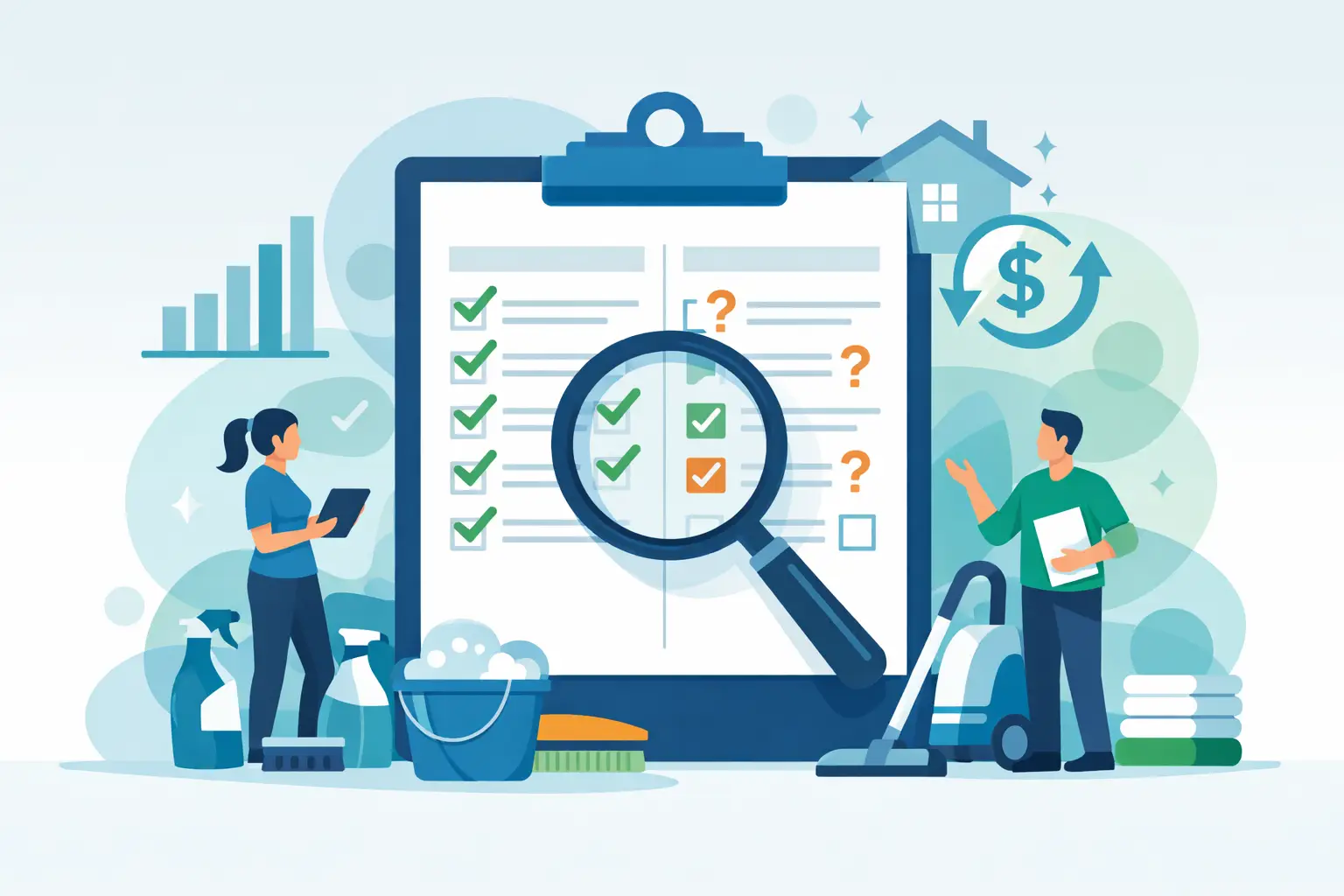
A checklist only helps if people actually use it. The most reliable approach is to assign responsibility by station or zone, then have a supervisor complete a final walk-through. That avoids the common problem where everyone assumes someone else cleaned a particular area.
Keep the wording clear. Instead of saying clean kitchen, break it into actions such as sanitise prep benches, scrape and clean grill, empty bin, mop cookline floor, and check drains. Specific tasks are easier to verify and harder to skip.
It also helps to build timing into the shift. Some jobs can start before the last customer leaves, while others need to wait until service ends. When everything is left until the final 20 minutes, quality usually drops. A staged close is more efficient and more realistic.
There is a trade-off here. A very detailed checklist gives stronger control, but it can slow staff down if it is poorly designed. A short checklist is quicker, but it may miss risk areas. The right balance depends on your venue size, menu, equipment, and staffing. A small cafe does not need the same level of close as a high-volume restaurant with a full commercial kitchen.
When professional support makes sense
Some restaurants manage daily close internally but still benefit from scheduled professional cleaning for deeper tasks. This can include detailed floor scrubbing, high-level dusting, cool room cleaning, glass cleaning, and treatment of hard-to-reach grease build-up that nightly staff simply do not have time to tackle properly.
That approach often works well because it protects the daily routine without overloading the team. Your staff maintain nightly standards, while specialist cleaners handle periodic tasks that need extra equipment, more time, or a sharper eye for detail. For busy venues, that can be the difference between staying on top of hygiene and constantly playing catch-up.
For Adelaide hospitality operators, working with a professional team such as Spiffi Cleaning can also add consistency when staffing is stretched or standards need tightening across multiple areas.
A practical closing standard your team can follow
If you are building or reviewing your restaurant cleaning closing checklist, keep it simple enough to use and detailed enough to matter. Cover front of house, kitchen surfaces, equipment, floors, drains, bins, bathrooms, and staff areas. Assign responsibility clearly, inspect the result, and adjust the checklist when you notice repeat issues.
The best checklist is not the longest one. It is the one your team can follow properly, every shift, without guesswork. When the venue closes clean, the next day starts calmer, faster, and with fewer surprises.