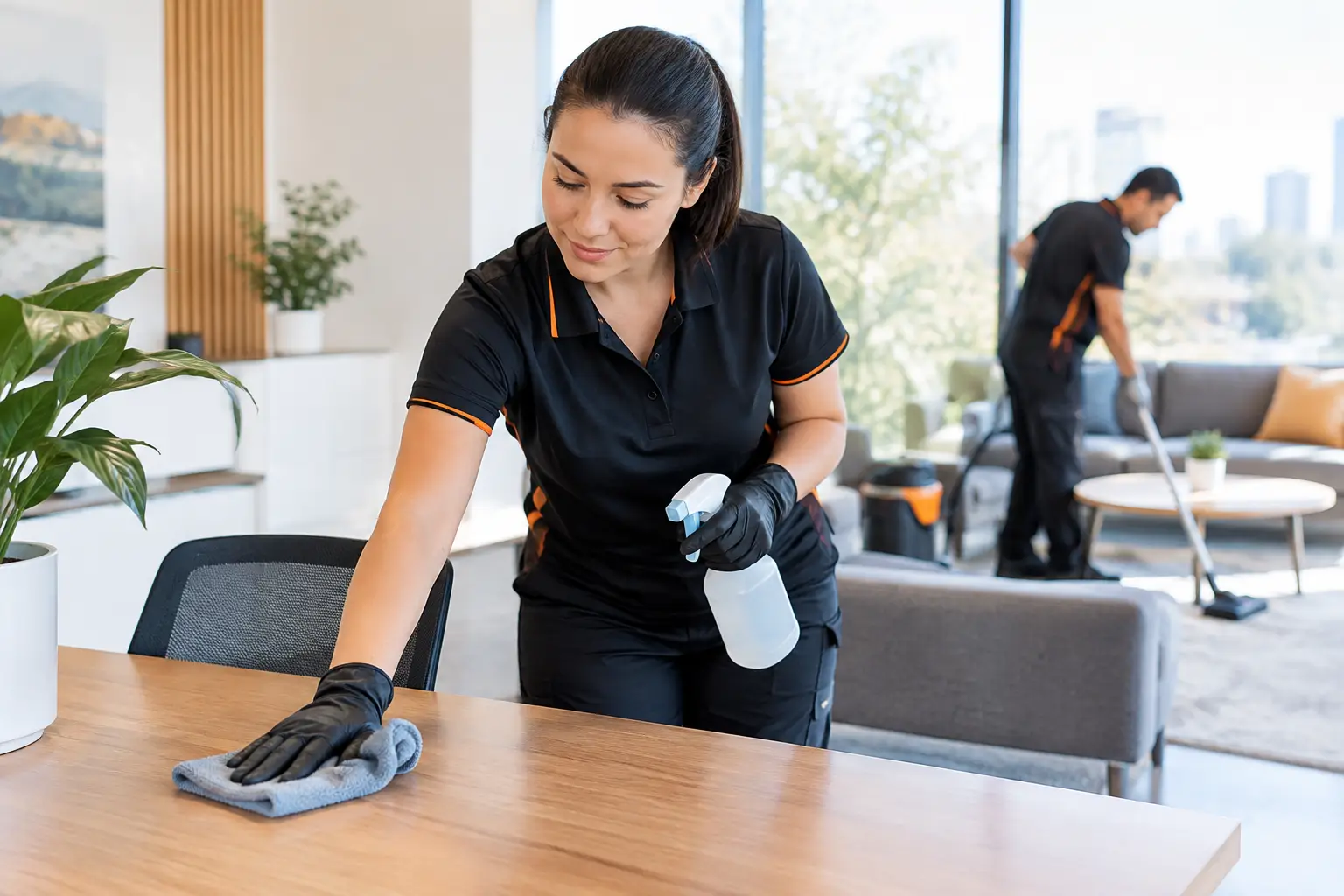
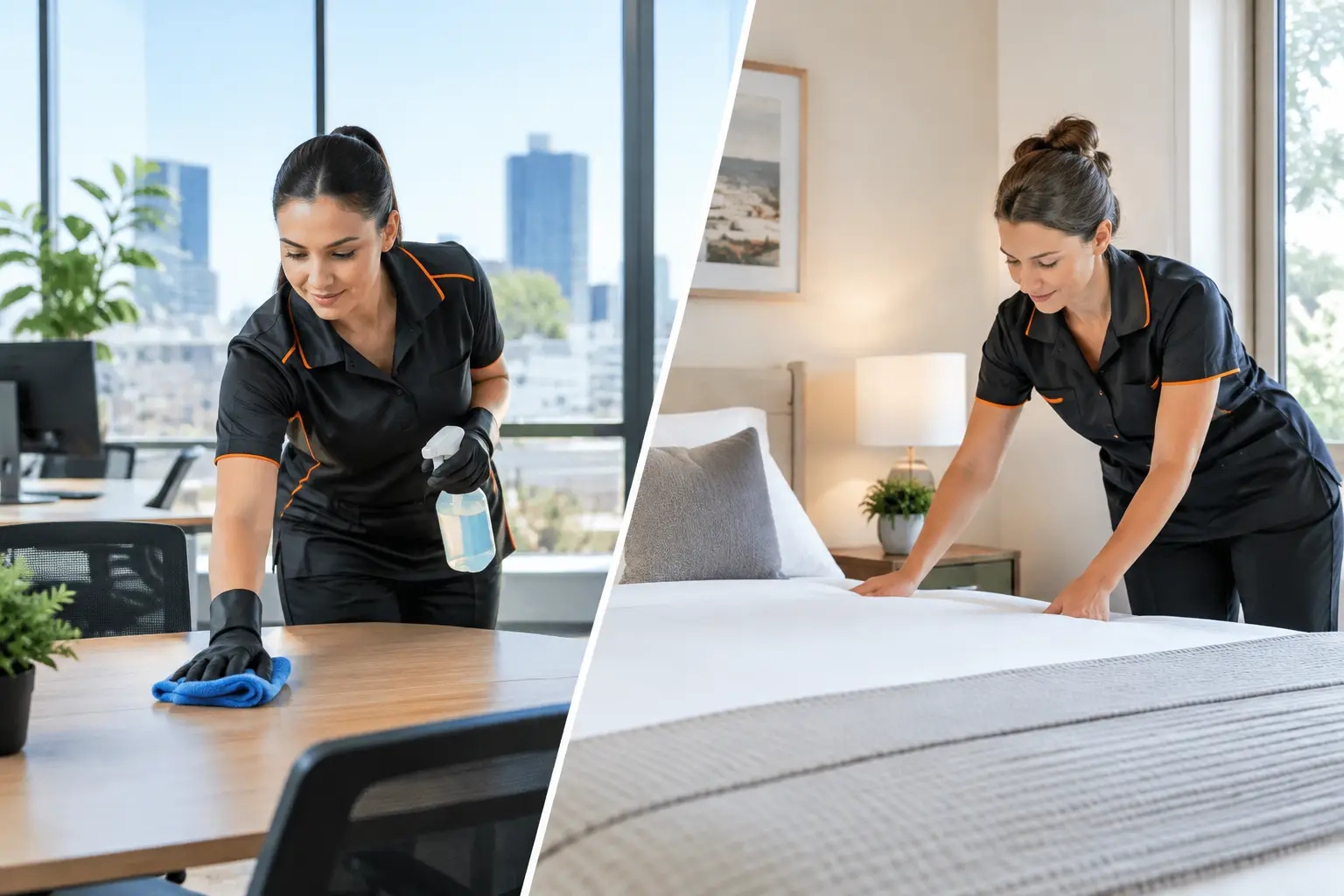
A messy office rarely looks like a major business problem at first. It shows up in smaller ways – a staff member wasting ten minutes clearing a meeting room, dusty desks triggering complaints, bins overflowing by lunch, or bathrooms needing attention before the day is half done. A practical office cleaning productivity example helps put numbers and structure around those issues, so cleaning is managed as an operational support function rather than an afterthought.
For office managers, business owners and facility teams, productivity in cleaning is not just about speed. It is about getting the right work done, at the right frequency, to a standard that supports staff, visitors and the wider business. Move too slowly and standards slip. Push too hard and quality drops. The balance matters.
What productivity means in office cleaning
In office cleaning, productivity is usually measured by the amount of work completed within a set time while still meeting quality expectations. That might mean square metres cleaned per hour, desks sanitised per shift, bathrooms serviced per visit, or a full evening clean completed by a set finish time.
But the raw number only tells part of the story. An office with open-plan workstations, minimal partitioning and tidy staff habits will be cleaned faster than one with multiple kitchens, frequent client traffic and cluttered private offices. That is why a fair productivity measure always needs context.
A good benchmark accounts for layout, surfaces, traffic, compliance needs and the condition of the site before cleaning starts. It should also reflect what the client actually expects. Some offices want a presentable space for the next morning. Others need a much tighter hygiene standard, especially in shared amenities and high-touch areas.
An office cleaning productivity example in practice
Imagine a professional office in Adelaide with 1,200 square metres of floor space, 55 staff, two meeting rooms, one reception area, a kitchen, and two bathroom blocks. The cleaning scope is a standard weekday evening service five times per week.
The agreed tasks include vacuuming carpeted areas, mopping hard floors, wiping desks and touchpoints, emptying rubbish and recycling, cleaning kitchens, sanitising bathrooms, spot-cleaning glass, and checking reception presentation. The office wants a clean, consistent finish every morning without disrupting staff during business hours.
In this example, a cleaning team of two is allocated 2.5 hours each per visit. That gives a total of 5 labour hours per clean. Over that time, the team completes the full scheduled scope to an agreed standard, with a short buffer for unexpected issues such as extra kitchen mess or heavier bathroom use.
From a simple productivity point of view, the site is being serviced at 240 square metres per labour hour. That figure is useful, but it becomes more useful when paired with task detail. If the cleaners are consistently finishing on time, quality checks are positive, and complaints are low, that rate is productive. If corners are being cut to maintain that pace, it is not.
This is where many businesses get caught. They focus on the speed of the clean rather than the result of the clean. A productive service is one that holds up over weeks and months, not just one shift.
Why this office cleaning productivity example matters
The reason this office cleaning productivity example matters is that it shows cleaning can be planned, measured and improved. Without that, businesses tend to rely on guesswork. They book a number of hours, hope it is enough, and only revisit the arrangement when standards slip.
A structured approach makes it easier to answer practical questions. Is the site under-resourced? Are cleaners spending too much time on low-value tasks? Does the office layout create delays? Are some areas being over-cleaned while others are being missed?
Once those questions are visible, decisions get easier. You can adjust frequencies, staffing levels or workflow before complaints start building.
The variables that change productivity
No honest cleaning provider should pretend one benchmark fits every office. Productivity depends on several moving parts, and a small change in one area can affect the entire service.
Office layout is one of the biggest. Open-plan spaces are generally faster to clean than offices with many enclosed rooms, glass partitions and awkward furniture placement. The more obstacles a cleaner works around, the slower the job becomes.
The condition of the workplace also matters. A tidy team that clears desks, stacks dishes and disposes of rubbish properly creates a much more efficient clean than one that leaves food containers, paper piles and personal items across workstations.
Timing plays a role too. After-hours cleaning is often more productive because cleaners can work continuously without navigating meetings, phone calls or occupied amenities. Daytime cleaning can still work well, but it usually needs a more flexible approach and clear zoning.
Then there is the question of scope. A basic maintenance clean moves at a different pace from a detailed hygiene-focused service. If a site needs regular disinfecting of shared touchpoints, internal glass polishing, or close attention to kitchens and bathrooms, productivity in square metres per hour will naturally drop. That is not inefficiency. It is a reflection of the work required.
How better systems improve output without cutting corners
The most reliable gains in cleaning productivity usually come from better systems, not from asking staff to rush. Well-trained cleaners who follow a consistent sequence tend to perform faster and better than those improvising their way through each visit.
For example, colour-coded cloths reduce cross-contamination risk and eliminate hesitation about where each item should be used. Logical zone planning avoids doubling back across the office. Equipment that is properly maintained saves time and improves results. Clear site checklists prevent missed tasks and reduce the need for re-cleans.
Communication with the client matters as well. If an office manager flags changes in room usage, staff numbers or event schedules, the cleaning plan can be adjusted before those changes affect outcomes. That kind of coordination protects both quality and efficiency.
This is where a professional service partner stands apart from a low-cost operator. Reliable productivity is rarely about doing the least amount of work. It is about doing the work properly, with enough structure to repeat the result consistently.
Signs your current setup is not productive
Poor cleaning productivity is not always obvious from the invoice. Sometimes the warning signs show up elsewhere in the business.
If staff are doing unofficial tidy-up jobs each morning, the cleaning arrangement may not be covering the real workload. If bathrooms are clean on some days and below standard on others, the issue may be inconsistent task timing or unrealistic labour allocation. If the service regularly runs over time, the original quote may have underestimated the site.
There is also the opposite problem: over-servicing. Some offices pay for daily tasks in low-use zones that would be better handled weekly, while high-traffic areas need more frequent attention. A more productive schedule does not always mean more hours. Sometimes it means using the existing hours more intelligently.
What businesses should ask when reviewing cleaning productivity
If you are reviewing your current service, start with the basics. What exact tasks are included? How long should they take? Which areas are priority zones? How is quality checked? What happens if standards drop?
It is also worth asking whether your office has changed since the cleaning plan was first set up. Headcount growth, hybrid work patterns, shared desk arrangements and increased kitchen use can all affect cleaning demand. A plan that worked a year ago may no longer fit the site.
For businesses that need dependable presentation and hygiene, transparency is a major advantage. Clear quoting, defined scope, realistic labour planning and regular feedback create a much stronger result than vague promises about a quick clean.
At Spiffi Cleaning, that detail matters because it is what keeps service consistent. A polished office is not the product of guesswork. It comes from trained staff, a sensible workflow and standards that are built to hold up over time.
Productivity should support the workplace, not dominate it
There is a temptation to reduce office cleaning to one number, usually hours or square metres. That can help with planning, but it should never become the whole story. The real goal is a workplace that feels professional, hygienic and ready for the day ahead.
A strong office cleaning setup gives your team fewer distractions, your visitors a better first impression, and your business one less operational headache to manage. If your current arrangement looks fine on paper but causes friction in practice, the numbers probably need a closer look.
The best productivity example is not the fastest clean. It is the one that gets done properly, every time, with no surprises the next morning.