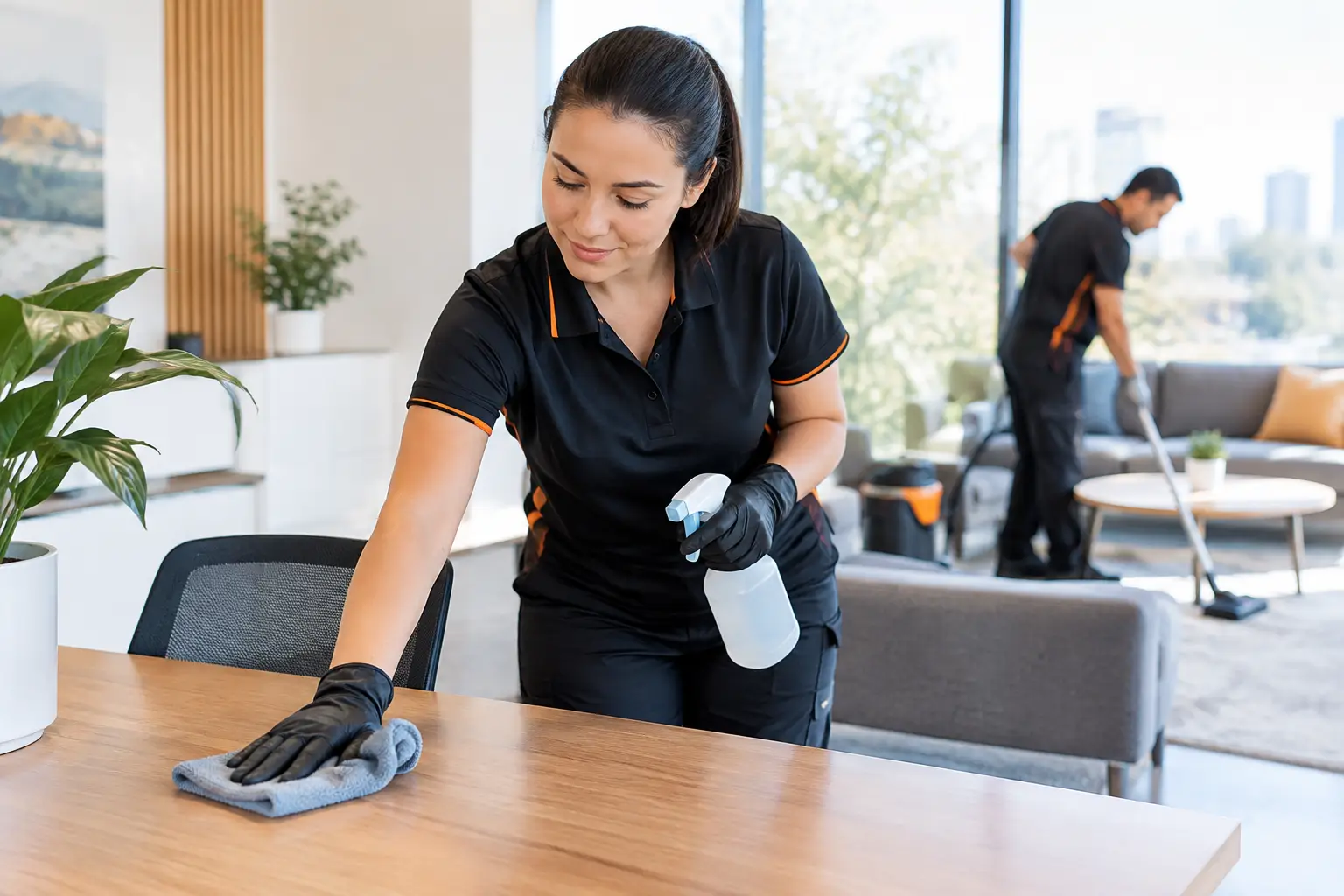
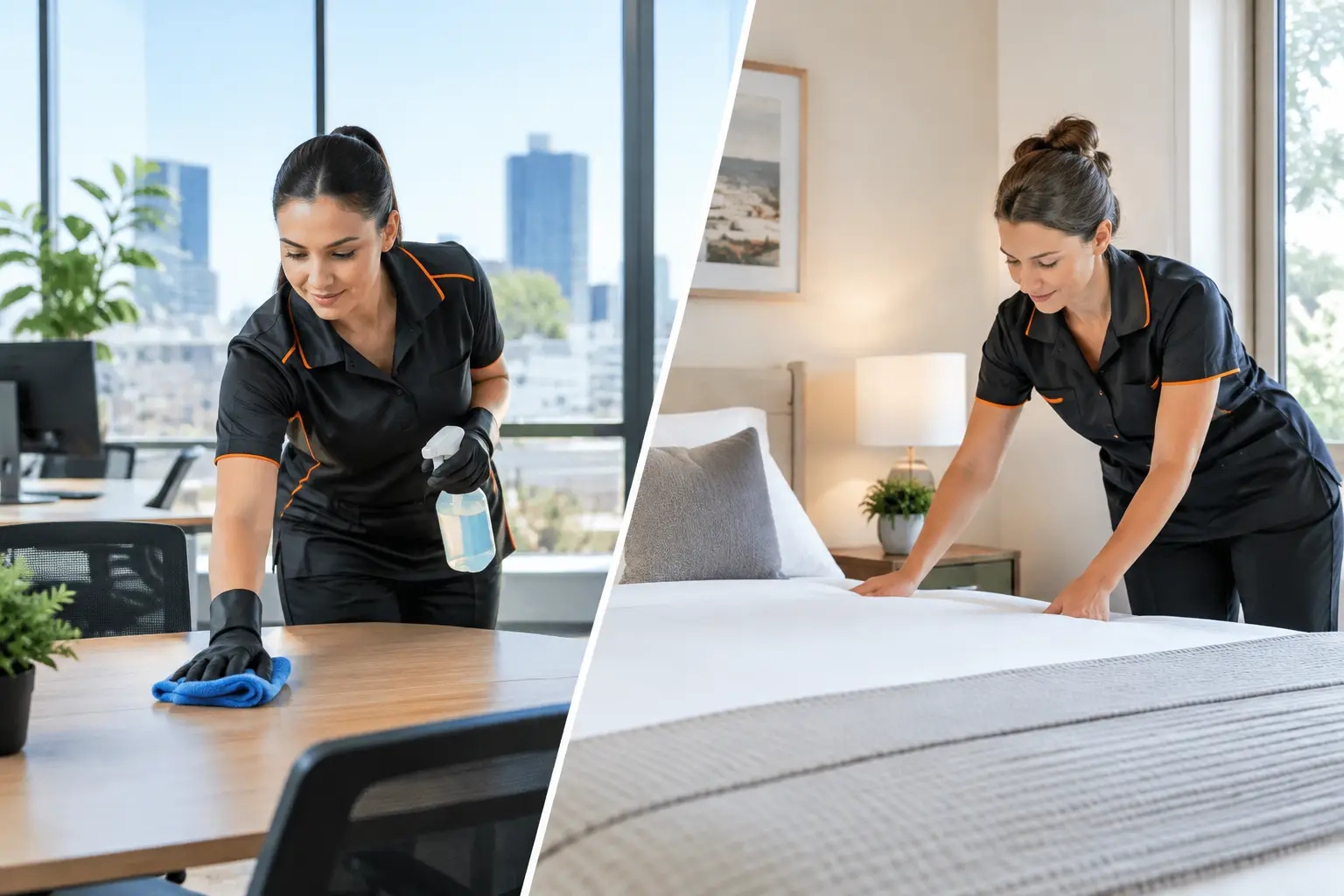
A benchtop can look spotless at first glance, yet still have grease tucked behind appliances, dust built up on skirting boards, and grime settling into grout. That is the real difference in deep cleaning vs regular cleaning. One keeps a space presentable and under control. The other targets the hidden build-up that routine wiping and vacuuming do not fully remove.
If you are deciding what your home, office, clinic or rental property actually needs, the answer is not always one or the other. Most spaces benefit from both, at different times and for different reasons. The key is understanding what each service is designed to do so you can book the right level of cleaning without overpaying or expecting the wrong outcome.
What regular cleaning is designed for
Regular cleaning is about maintaining a clean, workable environment. It focuses on the visible, high-use areas that need attention weekly, fortnightly or on another recurring schedule. In a home, that usually means vacuuming and mopping floors, wiping kitchen surfaces, cleaning bathrooms, dusting accessible areas and taking care of general tidiness. In a workplace, it often includes bins, amenities, desks, common areas and floor care.
The goal is consistency. Regular cleaning helps stop mess from building up, keeps hygiene at a practical day-to-day standard, and makes the space easier to live or work in. For busy households and commercial sites, this is often the service that keeps everything ticking along without disruption.
That said, regular cleaning has limits. It is not usually intended to tackle built-up soap scum inside shower screens, detailed blind cleaning, marks on walls, grime behind furniture, heavy oven cleaning or deep attention to neglected corners. Those tasks take more time, more equipment and a more detailed scope.
What deep cleaning is meant to cover
Deep cleaning goes beyond surface presentation. It is a more intensive service that targets the detail areas people notice once dirt has had time to settle in. Think of it as a reset rather than a routine tidy-up.
A deep clean often includes everything covered in a regular clean, plus more detailed work in hard-to-reach, high-touch or heavily used zones. That can mean scrubbing grout, removing scale and soap residue, cleaning skirting boards, wiping doors and frames, detailing light switches, cleaning inside cupboards or appliances if included, and addressing areas behind or under movable furniture where practical.
In commercial settings, deep cleaning may also involve more detailed sanitisation, machine cleaning for certain floor types, high-dust removal, and focused cleaning of shared touchpoints or problem areas that are affecting presentation or hygiene standards.
This is why deep cleaning takes longer and generally costs more. You are paying for extra labour, a broader checklist and a level of detail that cannot be achieved in a quick maintenance visit.
Deep cleaning vs regular cleaning: the biggest difference
The simplest way to think about deep cleaning vs regular cleaning is maintenance versus restoration. Regular cleaning maintains a space that is already in reasonable condition. Deep cleaning restores a space that needs extra attention.
If your property is cleaned often and stays on top of everyday mess, a regular service may be enough. If cleaning has slipped for a while, there has been renovation work, tenants have moved out, guests are rotating through a short-stay property, or you need a stronger hygiene baseline, a deep clean is usually the better fit.
The difference is not just how much is cleaned. It is also about the standard you need to reach. A family home with young kids and pets may need a deep clean seasonally, then regular cleaning to maintain it. An office receiving daily traffic might need routine janitorial support plus occasional detailed cleaning to keep carpets, kitchens and amenities in top condition. A medical setting may require a stricter, more structured approach again.
When regular cleaning is the right choice
Regular cleaning makes sense when your space is already fairly well maintained and you want to keep it that way. This is the most practical option for households that want time back each week, offices that need a professional appearance, and businesses that cannot afford hygiene standards to drift.
It is also the better choice when predictability matters. A scheduled recurring clean helps spread the workload, keeps surfaces under control and reduces the chance of dirt turning into a much bigger task later.
For many clients, regular cleaning is less about reacting to a problem and more about preventing one. That applies just as much to a busy family home as it does to a reception area, staff kitchen or shared bathroom.
When deep cleaning is worth it
Deep cleaning is worth booking when a standard service will not go far enough. That often happens before an inspection, after a move, following building or renovation work, at the start of a recurring cleaning plan, or when a space simply has not had detailed attention for some time.
It is also useful when presentation carries extra weight. Airbnb hosts, property managers and commercial operators often need more than a basic tidy. They need the kind of finish that helps a property feel cared for, hygienic and guest-ready.
There is also a health and hygiene angle. Dust build-up, bathroom residue, greasy kitchen surfaces and neglected touchpoints do not just affect appearance. They can affect odour, air quality and how comfortable people feel in the space. Deep cleaning helps remove what routine upkeep often leaves behind.
Why people sometimes book the wrong service
A common issue is expecting regular cleaning to fix long-term build-up in a single visit. That is frustrating for the customer and unfair on the cleaner. If a space has months of accumulated grime, a standard maintenance booking usually will not allow enough time to bring it up to the expected result.
The opposite can happen too. Some people assume they need a deep clean when what they really need is a reliable recurring schedule. If the home or workplace is already in decent condition, a regular service can be the more cost-effective and practical solution.
This is where clear quoting matters. A professional cleaning provider should ask the right questions about the size of the space, its current condition, the type of property and the outcome you need. That helps avoid mismatched expectations and gives you a service scope that fits.
Homes, rentals and workplaces all have different triggers
In residential homes, deep cleaning is often driven by life events – new baby preparations, seasonal resets, hosting visitors, spring cleaning, or simply catching up after a hectic stretch. Regular cleaning is about preserving order once that baseline has been restored.
For rental properties, end-of-lease and move-in situations often call for deeper attention. Property managers and tenants usually need a more thorough result, especially in kitchens, bathrooms, window tracks and other detail-heavy areas that inspections tend to focus on.
In workplaces, the trigger is often operational rather than personal. A regular clean supports staff wellbeing, client presentation and routine hygiene. A deep clean is more likely to be booked after fit-outs, before audits, during quieter periods, or when detailed sanitation and presentation become a priority.
How to choose without overcomplicating it
Start with the condition of the property, not the label of the service. If the space looks fine on the surface but still feels dusty, grimy or stale in the details, that points towards a deep clean. If it already feels under control and you simply need help staying on top of it, regular cleaning is probably the better match.
Then think about timing. If there is an inspection, handover, event, guest arrival or return-to-work deadline, the safest option is usually the more detailed service. If your goal is long-term upkeep, recurring regular cleaning offers better value over time.
It also helps to be realistic about frequency. Deep cleaning is not usually something most homes or businesses need every week. Regular cleaning is not meant to replace detailed resets forever. Used together, they create a more efficient cleaning plan: deep clean first, maintain afterwards.
For many Adelaide homes and businesses, that combination is the sweet spot. A detailed initial clean gets everything back to standard, then recurring visits keep it there without the stress of starting from scratch every time.
A clean space should not leave you guessing whether the important areas were actually done. The right service gives you confidence – whether that means steady weekly upkeep or a top-to-bottom reset when standards need to be lifted.