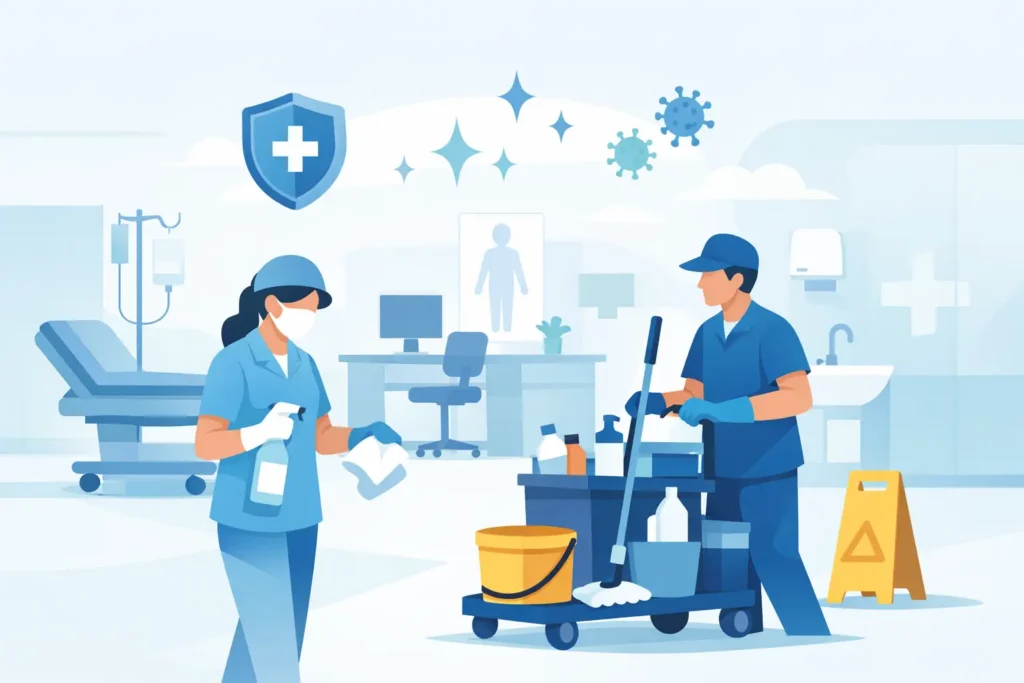
A waiting room can look spotless and still fall short on hygiene. In a medical setting, that gap matters. A strong medical clinic cleaning guide is not about making rooms presentable – it is about reducing risk, supporting staff, protecting patients and keeping the clinic running without avoidable disruptions.
For practice managers, owners and facility teams, the challenge is rarely whether cleaning should happen. It is whether the standard is consistent, documented and suited to the reality of a busy clinic. The right approach balances infection control, patient flow, privacy, product safety and practical scheduling.
What a medical clinic cleaning guide should actually cover
A useful medical clinic cleaning guide goes beyond a generic checklist. Clinics are not standard commercial sites. Different rooms carry different risks, and the cleaning method needs to reflect that. A reception desk, treatment room, staff kitchenette and accessible toilet may all be cleaned on the same day, but they should not be treated as if they carry the same exposure profile.
That means cleaning plans should be built around room function, touch frequency and the people using the space. Areas with direct patient contact need tighter controls than back-office zones. Shared surfaces need more frequent attention than low-use fittings. If the clinic provides procedures, wound care or allied health services, the detail matters even more.
A sound guide also defines responsibility. In many clinics, some tasks sit with internal staff while others are handled by a professional cleaning team. That split can work well, but only if it is clear. When nobody owns a task, it gets missed.
Start with risk, not appearances
The biggest mistake in clinic cleaning is treating hygiene like a visual standard. Shiny floors and empty bins are part of the picture, but they are not the whole picture. The places most likely to spread contaminants are often the least obvious – door handles, EFTPOS machines, chair arms, tapware, light switches, pens, clipboards and reception counters.
High-touch areas should be identified first and cleaned on a schedule that matches how the clinic operates. A quiet specialist suite has different needs from a high-turnover general practice. A clinic that sees children may need more frequent spot cleaning in waiting areas. A skin clinic or treatment-based practice may need closer attention to procedure rooms and product residue.
This is where a documented scope helps. Rather than relying on broad instructions such as clean reception or sanitise bathrooms, the guide should spell out what is included, how often it is done and which products or methods apply.
Daily clinic cleaning priorities
Most clinics need daily attention across patient-facing spaces, staff amenities and shared touchpoints. Reception and waiting areas are usually the first impression, but they are also one of the highest-contact zones in the building. Seating, counters, glass entry points and shared devices should be cleaned with a method appropriate to the surface and level of use.
Consult rooms and treatment spaces need a more controlled routine. That usually includes wiping and disinfecting touch surfaces, cleaning floors, emptying bins, addressing sinks and tapware, and checking for splash points or residue that can be missed in a rush. If a room is turned over quickly between patients, day staff may manage immediate disinfection while scheduled cleaners complete the broader environmental clean.
Bathrooms should never be treated as a once-over task in a clinic. They need methodical cleaning, replenishment and close attention to contact points. Staff rooms matter too. They may not be patient-facing, but hygiene lapses in back-of-house spaces still affect the workplace.
The difference between cleaning and disinfecting
This is where many clinic routines become vague. Cleaning removes visible soil, dust and organic matter. Disinfecting reduces microorganisms on a surface using the right chemical and dwell time. One does not automatically replace the other.
If a surface is dirty, disinfectant alone may not do the job properly. On the other hand, using heavy disinfectants everywhere, all the time, is not always necessary and can create its own problems, including residue, odour issues or damage to finishes. The right sequence and product choice depend on the area, the surface and the level of clinical risk.
For clinic operators, the practical takeaway is simple. Your cleaning guide should specify where standard cleaning is sufficient, where disinfecting is required and how products are used safely. That includes storage, dilution where relevant, compatibility with surfaces and staff access to safety information.
High-touch points that are often missed
Some clinic surfaces are cleaned because they are obvious. Others are missed because they blend into the room. Over time, those small omissions can undermine an otherwise solid routine.
The usual trouble spots include switch plates, door frames near handles, chair levers, sharps container surrounds, privacy curtain touch zones, wall-mounted dispensers, payment terminals and the edges of diagnostic equipment trolleys. In bathrooms, it is often the flush area, cubicle latch and baby change fittings that slip through. In staff areas, fridge handles, microwave buttons and kettle switches are common weak points.
This is where detail-driven cleaning makes a real difference. It is not about making the scope longer for the sake of it. It is about focusing effort where cross-contact is most likely.
Building a schedule that works in real life
A clinic cleaning plan has to suit how the practice runs. After-hours cleaning is often the cleanest option from an operational point of view, especially for reception, consulting rooms and amenities. It avoids foot traffic and gives cleaners proper access. But some clinics also need daytime support for touchpoint disinfection, consumable restocking or rapid response cleaning.
There is no single perfect schedule. It depends on patient volume, room turnover, opening hours and the type of care provided. A smaller allied health practice may only need one main clean daily with periodic touchpoint attention. A multi-room medical clinic may require a more layered plan with opening, daytime and closing tasks.
Consistency matters more than complexity. A simple schedule that is actually followed is better than an ambitious one that only works on paper.
Staff training and site access matter as much as the checklist
Even the best written guide will fail if the people delivering it are not properly trained. In a medical environment, cleaners need to understand more than presentation standards. They need to work carefully around sensitive areas, respect privacy, follow site procedures and know how to prevent cross-contamination between rooms.
Colour-coded cloths and mop systems, correct waste handling and disciplined product use are basic requirements, not extras. So is professional conduct. Clinics need staff who are reliable, vetted and able to work with minimal disruption. That is one reason many practices choose experienced specialist providers rather than treating clinic cleaning as a standard office job.
For Adelaide clinics managing tight schedules and high patient expectations, that operational reliability is often just as valuable as the clean itself.
Quality control is what turns cleaning into a dependable system
If you cannot verify the standard, you are relying on trust alone. In a clinic, that is risky. Quality control does not need to be bureaucratic, but it does need to be visible. Site checklists, periodic inspections, documented scopes and a clear reporting process all help prevent drift over time.
It also helps to review the cleaning plan when the clinic changes. New services, extra treatment rooms, seasonal illness spikes or staffing changes can all shift the site’s needs. What worked six months ago may no longer be enough.
This is also where a responsive service partner adds value. If an issue is raised, it should be addressed quickly, clearly and without argument. A satisfaction guarantee only means something when it is backed by action.
Choosing the right clinic cleaning support
If you are outsourcing, look for a provider that understands regulated environments and does not offer vague promises. Ask how scopes are built, how staff are vetted, how quality is checked and what happens if a clean falls short. Ask whether they can handle regular cleaning as well as deeper periodic work, such as detailed floor care, window cleaning or post-renovation cleaning after fit-out changes.
The cheapest quote is rarely the best value in a medical setting. Missed touchpoints, poor communication or inconsistent attendance can cost more than they save. A dependable provider should make the clinic easier to run, not harder to manage.
Spiffi Cleaning approaches medical sites with that mindset – clear scopes, trained staff, reliable attendance and practical communication that gives clinic teams confidence in the standard being delivered.
A clean clinic should never feel like a guessing game. When the routine is built around risk, delivered consistently and checked properly, cleanliness stops being another thing to worry about and becomes part of how the whole practice runs well.