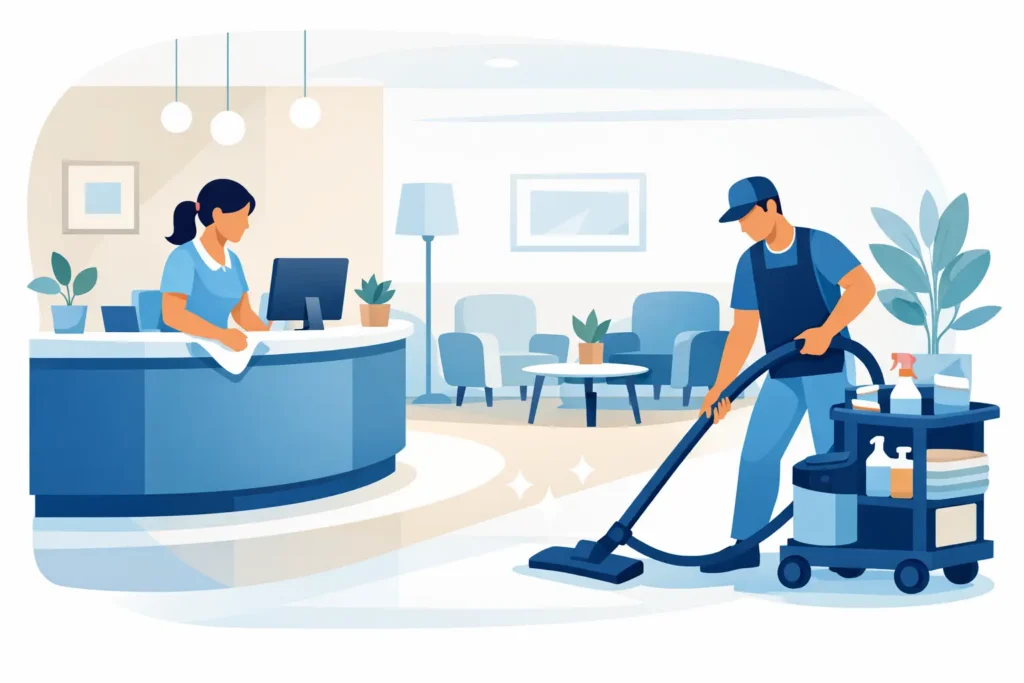
A reception area starts communicating before anyone says hello. A marked glass door, dusty counter or overflowing bin can make a capable business feel overlooked. To maintain clean reception areas, businesses need more than an occasional tidy-up – they need a practical routine that accounts for people, touchpoints and the pace of the day.
For offices, clinics, retail spaces and shared buildings, reception is often the busiest part of the premises. Visitors wait there, staff pass through it, parcels arrive and wet shoes bring in dirt from outside. Keeping it presentation-ready protects your professional image while supporting a more hygienic environment for employees and guests.
Why reception cleaning deserves extra attention
Unlike a back office or staff room, the reception area is on display all day. It is also one of the few spaces where clients form an impression of the wider business without seeing how your team works. A clean, organised entry suggests care, reliability and attention to detail. In a medical practice, it can also reassure patients who are understandably alert to hygiene.
The challenge is that reception areas become untidy quickly. Fingerprints build up on glass, dust settles on brochures and charging cables, and bins fill sooner than expected. A clean completed at 6 am may not look clean by mid-afternoon if there is no plan for light maintenance between visits.
The right standard will depend on your premises. A quiet professional office may only need a short midday reset, while a clinic, gym, school or high-traffic retail site may require several checks throughout the day. The key is matching the routine to actual use rather than relying on a one-size-fits-all schedule.
Set a clear standard to maintain clean reception areas
Cleaning works best when everyone knows what “clean” looks like. Avoid vague instructions such as “keep the front tidy”. Define the visible outcomes instead: floors are free from debris, the counter is clear, glass is free from obvious marks, seating is orderly, and bins do not overflow.
A simple opening and closing check gives staff a repeatable benchmark. The opening check prepares the space for the first visitor, while the closing check prevents rubbish, spills and clutter from being left overnight. If a professional cleaner attends after hours, this also makes handover expectations much clearer.
Reception staff should not be expected to carry out deep cleaning during a busy shift. Their role is usually better limited to quick presentation tasks, such as putting magazines back in place, reporting a spill and removing obvious rubbish. Detailed work such as vacuuming, disinfecting high-touch surfaces and cleaning internal glass is best built into a professional cleaning scope.
Focus on the surfaces visitors notice and touch
Prioritising the right surfaces makes a noticeable difference without creating unnecessary disruption. Reception counters, door handles, EFTPOS terminals, sign-in screens, lift buttons and shared pens are frequently touched. These need regular cleaning and, where appropriate, disinfection using products suitable for the material and setting.
Cleaning and disinfecting are not identical tasks. Cleaning removes soil, dust and residue, while disinfecting is intended to reduce germs on a cleaned surface. In healthcare and other higher-risk environments, product choice, contact time and cleaning records may be particularly important. Always follow site procedures and manufacturer directions rather than spraying products indiscriminately.
Glass doors and partitions deserve attention too. Sunlight can reveal fingerprints and streaks that are invisible at other times of day. A clean, lint-free cloth and the correct glass product will produce a better result than repeatedly applying too much spray, which often leaves smears behind.
Do not overlook the less obvious details around the desk. Dust can gather around monitor stands, display holders, skirting boards and indoor plants. These small areas are easy to miss, yet visitors notice them when they are seated and waiting.
Build short resets into the day
A well-maintained reception does not need constant intensive cleaning. It needs timely, light resets before untidiness becomes visible. For many workplaces, a quick check after the morning rush, around lunchtime and late afternoon is enough. High-traffic sites may need more frequent attention, particularly during wet Adelaide weather or busy appointment periods.
A useful reception reset usually covers five actions:
- Empty rubbish and replace liners before bins become full.
- Remove marks from glass, counters and entry doors.
- Return chairs, brochures and display items to their intended positions.
- Spot-clean spills, leaves and tracked-in dirt from floors.
- Refill hand sanitiser, tissues or visitor stationery where provided.
Keep supplies close enough to be useful but out of sight. A labelled cupboard or discreet cleaning station allows staff to respond quickly to a spill without leaving equipment in public view. In a polished reception area, convenience should never create clutter.
Keep floors safe as well as clean
Floors carry much of the visible workload in a reception area. Grit near entry mats, muddy footprints and drink spills can quickly affect appearance and create a slip risk. Entry mats are particularly valuable because they capture moisture and dirt before it reaches hard floors or carpet, but they only work when they are regularly vacuumed, shaken out or professionally cleaned.
Vacuuming may be enough for carpeted spaces, while tiled or vinyl floors may need sweeping, mopping and periodic machine cleaning. The method depends on the flooring type, amount of traffic and whether the area can be safely closed off while wet. Mopping at a busy time without clear signage may solve one problem while creating another.
Spot-cleaning is essential between scheduled services. However, if a floor is consistently dull, sticky or marked, it usually needs more than daily maintenance. Periodic deep cleaning can restore its finish and prevent a reception from looking tired even when it is otherwise tidy.
Reduce clutter at the source
A reception counter often becomes a holding area for deliveries, paperwork, promotional material and personal items. This is understandable during a busy day, but it quickly makes the space feel chaotic. Decide what belongs on display and give everything else a designated storage place.
Keep visitor-facing items intentional. A small, current selection of brochures looks more professional than stacks of outdated flyers. If beverages are offered, clear used cups promptly and make sure any refreshment station is cleaned often enough to avoid drips, crumbs and sticky surfaces.
Cables, chargers and office equipment also affect the appearance of the front desk. Where possible, route cables behind the counter and store spare items out of view. The goal is not to make reception look empty – it is to make it look calm, functional and ready to help.
Use a cleaning schedule that reflects your business
Daily cleaning should cover the visible presentation of reception, but weekly and periodic tasks protect the standard over time. Upholstered seating may need vacuuming and stain treatment. Internal windows, air vents, light fittings and high ledges need attention less often, but neglect in these areas eventually shows.
A written schedule creates accountability. It should state what is cleaned, how often, who is responsible and how issues are reported. For facility managers, this is especially helpful when several shifts, contractors or building occupants use the same space.
Professional cleaners can add value by bringing trained staff, suitable equipment and a consistent checklist to work completed outside peak business hours. At Spiffi Cleaning, this means tailoring commercial cleaning around the site’s traffic, operating times and hygiene needs rather than treating every reception like a standard office lobby.
Respond quickly when something goes wrong
Even the best routine cannot prevent every spill, rainy-day footprint or unexpected rush of visitors. What matters is how quickly the issue is handled. A clear process for reporting and responding to mess keeps small problems from becoming lasting impressions.
For spills, protect people first by marking the area and cleaning it promptly. For damage, persistent odours or stains, record the issue and arrange the appropriate treatment rather than repeatedly covering it up. Fast action is usually more cost-effective than allowing a minor problem to set into carpet, furniture or flooring.
The most welcoming reception areas are not those that look staged. They are the ones that stay calm, clean and cared for while real work is happening around them. A dependable routine gives every visitor the confidence that the same care continues beyond the front door.