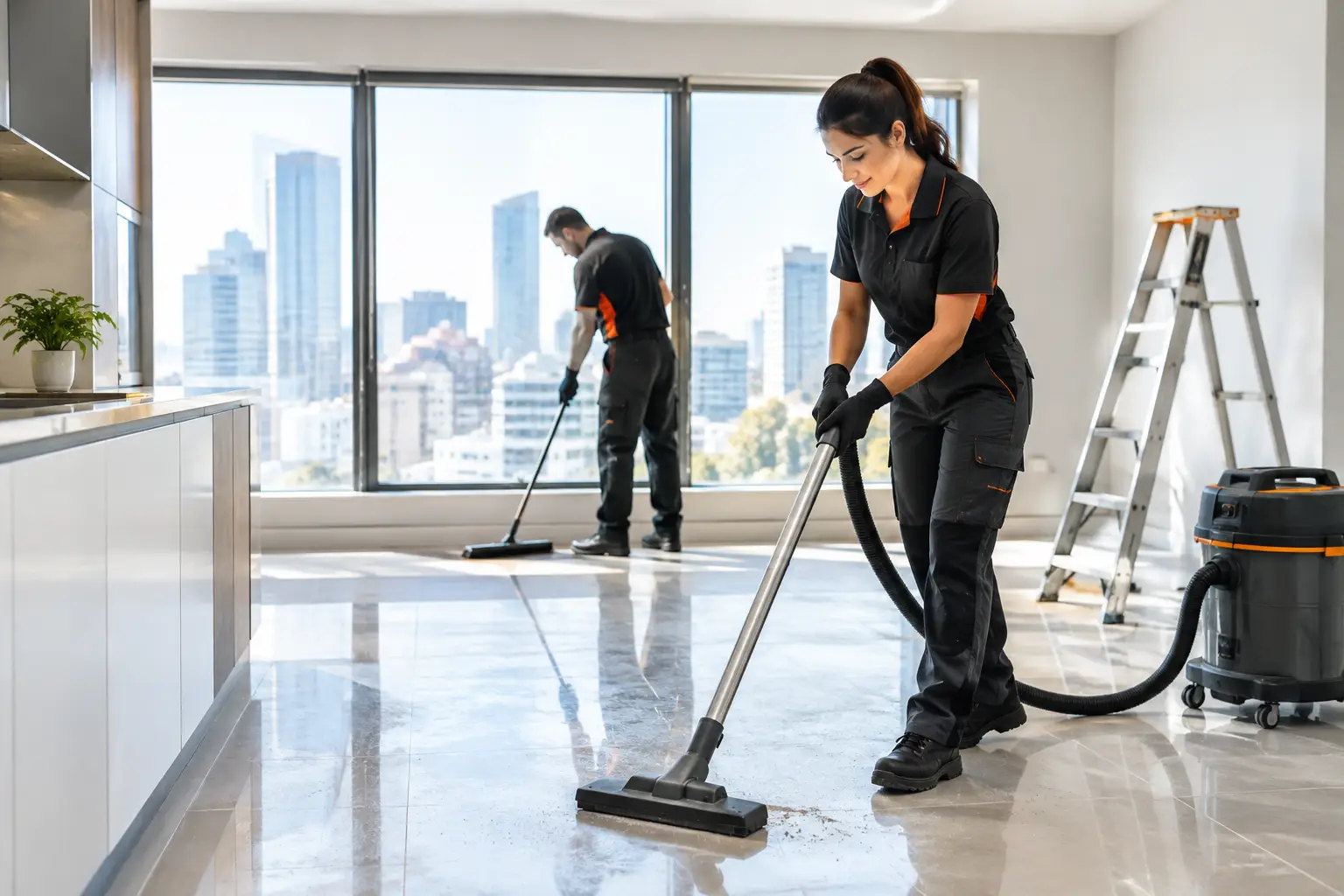
Fresh paint can look perfect while fine plaster dust settles inside cupboards, along skirting boards and over every windowsill. That is why the best tools for post builders cleaning are chosen for control as much as cleaning power. The wrong tool can scratch new glass, spread silica-containing dust or damage a freshly finished surface at the final hurdle.
Post-build cleaning is different from a standard deep clean. It involves construction residue, adhesive marks, grout haze, sawdust, paint splatters and dust that has travelled through vents and into hard-to-reach spaces. A careful process and the right equipment protect the finish the builder, owner or property manager has paid for.
Start with a HEPA vacuum, not a broom
A commercial-grade vacuum with HEPA filtration is the foundation of a post-build clean. Fine construction dust is easily disturbed. Sweeping it with a broom sends it back into the air, where it can settle again on benchtops, window tracks and freshly painted walls.
A HEPA vacuum captures very fine particles and is particularly useful for floors, carpets, joinery, ledges, vents and soft furnishings. Choose a machine with strong suction, sealed filtration and suitable attachments: a crevice tool for tracks and corners, a soft brush for delicate surfaces, and a wider head for open flooring.
For substantial renovation debris, the vacuum must also be rated for the material being collected. Fine dust created by cutting engineered stone or concrete can present serious health risks. It should never be treated as ordinary household dust. Follow site safety requirements, use the correct rated extraction equipment and arrange specialist support where necessary.
The best tools for post builders cleaning by surface
There is no single product that safely handles every post-construction mess. New homes and renovated spaces often combine glass, stone, stainless steel, timber, tiles and painted plasterboard in the same room. Matching the tool to the surface prevents costly rework.
Microfibre cloths and flat mops
Professional microfibre cloths lift fine dust rather than simply pushing it around. Keep cloths colour-coded by task where possible – for example, separate cloths for bathrooms, kitchens, glass and general dusting. This reduces cross-contamination and avoids transferring greasy residue onto glass or polished metal.
A flat microfibre mop with washable pads is ideal for hard floors after vacuuming. Use minimal moisture on timber, laminate and newly installed flooring unless the manufacturer confirms otherwise. Saturating a floor can drive moisture into joins or leave streaks that spoil handover presentation.
Non-scratch scrapers and plastic blades
A scraper is useful for removing paint flecks, stickers, silicone smears and dried residue from glass and smooth tiles. It is also one of the easiest tools to misuse. A metal blade can permanently score glass if used dry, at the wrong angle or on glass affected by fabrication debris.
For uncertain surfaces, begin with a plastic blade or non-scratch scraper. Test in a discreet area, soften residue with an appropriate cleaner and work patiently. Never assume a tougher blade will produce a better result. On expensive finishes, caution is faster than rectifying damage.
Glass squeegees, washers and extension poles
Windows often reveal the last trace of construction dust. A professional squeegee, quality rubber blade and glass washer deliver a clearer result than paper towel, which can leave lint behind. Extension poles help reach high internal glazing, external windows and glass balustrades without overreaching from a ladder.
Before washing, vacuum dry tracks, frames and sill channels. Otherwise, wet dust forms a gritty paste that can smear across frames and clog drainage points. For exterior glass, check whether cement dust, render or overspray is present before selecting a cleaning solution.
Detail brushes and crevice attachments
The finish of a post-build clean is often decided in places people do not notice until an inspection. Detail brushes, soft paintbrushes and narrow vacuum attachments remove dust from door hinges, power point edges, cabinet runners, window tracks, air vents and textured surfaces.
Use soft bristles around new cabinetry, tapware and painted walls. Stiff brushes have a role on resilient grout lines and outdoor masonry, but they can dull delicate finishes. A small toolkit of different brush types gives the cleaner more control than one all-purpose brush.
Neutral cleaners and targeted removers
A pH-neutral cleaner is a sensible everyday choice for many sealed hard surfaces. It removes general soil without being overly aggressive on new paint, stone, stainless steel or laminate. However, post-build residue is not all the same. Adhesive, grout haze, silicone and paint require different treatment.
Use a targeted remover only after confirming it is suitable for the substrate. Acidic products can damage natural stone and some metals. Strong solvents can affect coatings, plastics and painted finishes. Read the product directions, ventilate the area and patch-test first. When in doubt, identify the material and residue before cleaning rather than experimenting in a visible area.
Equipment that improves speed without cutting corners
The goal is not to bring the most equipment to every job. It is to bring equipment that makes the process safer, more consistent and easier to inspect. On larger sites, a commercial wet-and-dry vacuum can manage heavier debris, while a backpack vacuum can speed up work through multi-room properties and stairwells.
For tiled bathrooms, a grout brush and hand-held steamer may help lift light grout haze and residue in corners. Steam is not a universal answer, though. High heat and moisture may be unsuitable for some timber finishes, sealants, laminated surfaces and freshly installed materials. Always check curing times and manufacturer guidance.
A sturdy step platform is often safer and more practical than stretching to reach tops of doors, cabinetry and internal glazing. It should be used only on stable, level ground and within its rated capacity. Where high-access work is required, the correct access equipment and trained operators matter more than speed.
Lighting is another practical tool that is frequently overlooked. A portable inspection light exposes dust on dark cabinetry, fingerprints on glass, streaks on stainless steel and paint marks on floors. Natural daylight can hide these issues until handover, when they become someone else’s problem.
Personal protective equipment belongs in the kit
Post-build cleaning can involve airborne dust, sharp fragments, chemical residue and confined spaces with limited ventilation. Gloves, protective eyewear and suitable respiratory protection are part of a professional setup, not an optional extra.
The appropriate PPE depends on the task and site assessment. Disposable gloves may be adequate for light wiping, while cut-resistant gloves may be needed where broken tile, glass or metal offcuts are present. A properly fitted respirator may be required when fine dust is present. Good cleaning results should never come at the expense of a cleaner’s health and safety.
A better order of work saves repeat cleaning
Even the best equipment will struggle if the cleaning sequence is wrong. Start high and dry: vacuum ceilings where required, vents, ledges, walls, cabinetry interiors and window tracks before tackling floors. Clean dry dust before introducing water, then move to residue removal, wet cleaning, glass polishing and final floor work.
A final room-by-room inspection should include both eye level and low-level surfaces. Open cupboards and drawers, check behind doors, run a clean cloth along ledges and view glass from different angles. For rental handovers, property managers and new owners will notice these details immediately.
For busy builders, property managers and homeowners in Adelaide, professional post-construction cleaning also removes the burden of sourcing specialist equipment and coordinating the final clean around trades. Spiffi Cleaning uses trained, police-checked staff, premium equipment and clear quality checks to help bring a site to presentation-ready standard.
The right tool is only valuable when it is used with restraint, surface knowledge and a reliable process. Before booking handover or inviting tenants, guests or clients into the space, allow time for a careful final inspection. It is the simplest way to ensure the finished build looks as good as the work behind it.