A patient may spend only ten minutes in your waiting room, but that time shapes their impression of the whole clinic. Smudged glass, full bins, dusty chairs or a sticky reception counter can undermine confidence before an appointment even begins. This medical waiting room hygiene guide sets out a practical approach to keeping public areas visibly clean, hygienic and ready for the next patient.
Waiting rooms are high-traffic spaces where people arrive with different health concerns, mobility needs and expectations. The goal is not simply to make the area look tidy. It is to reduce avoidable contamination on shared surfaces while maintaining a calm, professional environment for patients, visitors and staff.
Why waiting room hygiene needs a planned approach
A clinic waiting room has a different cleaning profile from a standard office reception. Patients touch door handles, counter screens, EFTPOS terminals, chairs, clipboards and bathroom fixtures throughout the day. Children may play on the floor or use shared toys, while unwell patients can spend extended periods in the same enclosed space.
Cleaning only at closing time leaves long gaps when high-touch areas receive little attention. On the other hand, excessive or poorly timed cleaning can disrupt reception staff and make patients feel uncomfortable. A good system balances presentation, infection-control requirements and the practical rhythm of the clinic.
The right frequency depends on patient volume, the type of services provided, room layout and the presence of vulnerable patients. A busy GP practice, pathology collection centre or allied health clinic will usually need more frequent touchpoint attention than a low-traffic specialist suite. Your internal infection-control procedures should always guide the final schedule.
Medical waiting room hygiene guide: start with touchpoints
High-touch surfaces deserve priority because they are handled repeatedly by many different people. Build a documented checklist around the areas patients and staff use most often, then make responsibility and timing clear.
Key touchpoints generally include:
- Entry doors, push plates, handles and intercom buttons
- Reception counters, pens, clipboards, payment terminals and patient buzzers
- Chair arms, tables, light switches and lift buttons where relevant
- Shared screens, tablets, toys and water dispensers
- Bathroom door handles, taps, flush buttons, soap dispensers and hand dryers
A visible surface can look clean while still requiring disinfection. First remove soil and spills using an appropriate cleaning method, then apply a healthcare-suitable disinfectant according to its label directions. This includes using the correct dilution, allowing the required contact time and avoiding products that may damage screens, upholstery or sensitive equipment.
Reception counters and payment terminals often need attention several times a day. Seating may be cleaned and disinfected between sessions, during quieter periods or more frequently when patient turnover is high. The schedule should be realistic enough that staff can follow it consistently, rather than an impressive-looking document that is never completed.
Do not overlook the surfaces people notice first
Some surfaces carry lower hand-contact risk but still influence patient confidence. Glass entry doors, skirting boards, corners, window sills, indoor plants and signage quickly show dust and fingerprints. Rubbish bins should be emptied before they overflow, with liners replaced cleanly and lids wiped down.
Floors also need more than a quick pass with a vacuum. Wet weather, prams, wheelchairs and foot traffic bring in dirt from outside, particularly around entry points. Clean floors reduce slip risks and help prevent debris from travelling into consulting rooms. Spot-clean spills immediately, then complete regular vacuuming and mopping with equipment that is clean and suited to the flooring type.
Make hand hygiene easy for patients
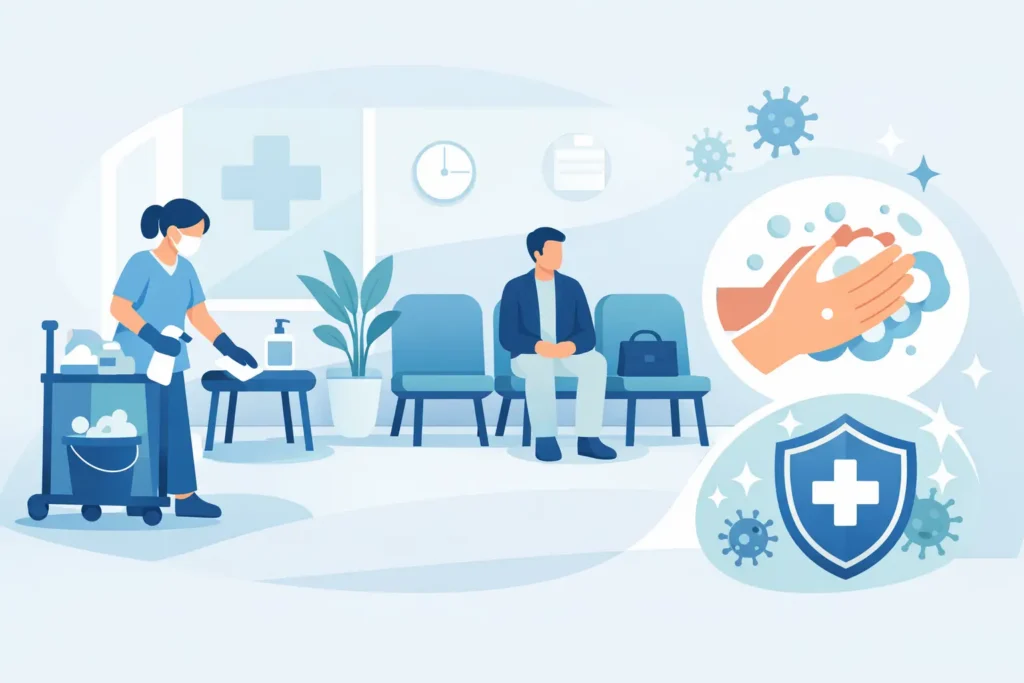
Clear, convenient hand hygiene supports every other cleaning measure. Place hand sanitiser where people naturally pause, such as near the entrance, at reception and outside bathrooms. Check dispensers throughout the day, not just at opening and close, so patients are not greeted by an empty bottle.
Location matters. A dispenser tucked behind a brochure stand or positioned only behind the reception desk is unlikely to be used. Keep signs brief, respectful and easy to read. Patients should feel supported, not reprimanded.
For clinics with young children or patients who may require assistance, choose placements that minimise spills and are accessible without creating a safety concern. Any sanitiser residue on counters, floors or chair arms should be removed promptly.
Reduce clutter and simplify cleaning
Every unnecessary item in a waiting room creates another surface to dust, wipe or disinfect. Review what is genuinely useful to patients. Old magazines, overloaded brochure racks, fabric decorations and rarely used display items can make daily hygiene harder without adding much value.
This does not mean a waiting room must feel bare. Comfortable, wipeable seating, current information and a few well-maintained elements can still create a welcoming space. The practical trade-off is between warmth and cleanability. Materials with smooth, durable finishes are generally easier to maintain than heavily textured, damaged or absorbent surfaces.
If you provide children’s activities, establish a clear process for cleaning toys and rotating them when needed. Shared toys with many small parts are difficult to clean thoroughly. In some settings, individual activity sheets or easily wipeable options may be the more manageable choice.
Separate routine cleaning from response cleaning
Routine cleaning covers the planned work completed at set intervals: floors, bins, bathrooms, dusting, touchpoints and general presentation. Response cleaning is what happens when there is a spill, visible contamination, a patient becomes unwell or a bathroom needs urgent attention.
Staff should know who to contact and what areas should be temporarily restricted if a response clean is required. Keep suitable supplies available, but do not expect reception staff to manage tasks outside their training or workplace procedures. Clear escalation reduces confusion at the moment it matters most.
Cleaning cloths, mop heads and equipment can spread contamination if they are reused across areas without proper laundering or replacement. Use colour-coded systems where appropriate, keep cleaning tools maintained and store chemicals securely away from patient areas. A professional medical cleaning provider should also work to a defined scope, follow site-specific instructions and record any issues found during service.
Bathrooms require frequent checks
A clean waiting room loses credibility quickly if the patient bathroom is neglected. Bathrooms should be checked regularly for soap, paper products, bin capacity, odour, spills and the condition of high-touch fixtures. The frequency should increase during peak appointment periods.
Pay attention to details that patients notice immediately: water marks on mirrors, empty dispensers, wet floors and damaged fittings. These are not merely presentation issues. They can affect safety, accessibility and the patient’s perception of the care provided.
Build accountability into the daily routine
A checklist is useful only when it is specific. Instead of writing “clean reception”, identify the task, frequency, responsible person and method. For example, the checklist might distinguish between wiping the counter after a spill, disinfecting the EFTPOS terminal at scheduled intervals and completing a full end-of-day reception clean.
Regular checks also help identify patterns. If bins are routinely full by midday, the collection schedule needs adjusting. If chairs are showing wear that prevents effective cleaning, replacement may be more cost-effective than repeated spot treatment. If appointments run back-to-back, arrange cleaning around quieter periods rather than expecting staff to find time that does not exist.
For Adelaide clinics managing busy schedules, outsourced medical cleaning can provide reliable after-hours support while internal staff handle immediate touchpoint checks during opening hours. Spiffi Cleaning can tailor a medical and clinic cleaning plan around patient flow, site access and the areas that need the closest attention.
Keep patients informed without creating alarm
Visible cleaning can reassure patients, particularly when counters and shared surfaces are attended to quietly and professionally. However, avoid placing overly alarming notices throughout the room. Clear hygiene cues, stocked sanitiser and consistently clean facilities communicate care more effectively than excessive signage.
Review the waiting room from a patient’s perspective at different times of day. Sit in the chairs, look at the entry glass in natural light and check the bathroom as a visitor would. Small issues are often easiest to resolve before they become a complaint.
A hygienic waiting room is part of the patient experience, not an afterthought behind it. When cleaning routines are practical, documented and carried out consistently, your clinic gives every patient a cleaner, calmer start to their care.