At 6:00 am, a gym can go from spotless to heavily used in under ten minutes. Sweat hits benches, mirrors fog, changerooms fill up, and high-touch points start building grime before the morning rush has even peaked. That is why commercial cleaning for gyms is not just about appearance. It is about hygiene, safety, member confidence, and keeping your facility ready for every session.
Gym environments are harder to maintain than many other commercial spaces. Members expect a fresh, clean space every time they walk in, but the site itself is under constant pressure. Rubber flooring traps dust, moisture builds up quickly, and equipment is handled by dozens or hundreds of people each day. If cleaning slips, members notice fast.
Why gyms need a different cleaning standard
A gym is part fitness space, part shared amenities area, and part high-traffic workplace. That mix creates cleaning demands you do not usually see in a standard office or retail setting. It is not enough to run a quick vacuum and wipe down a few surfaces after hours.
The real issue is contact frequency. Free weights, treadmill rails, bike handles, locker doors, taps, toilets, shower screens, EFTPOS terminals, reception counters, and water fountains all get touched repeatedly throughout the day. Add body oils, sweat, moisture, dust, and occasional spills, and you have a setting that needs a structured, repeatable cleaning plan.
There is also a business impact. Members may not comment on a clean gym, but they absolutely notice an unclean one. Smells in changerooms, dust gathering under machines, sticky floors, or soap residue in showers can quickly affect reviews and retention. Cleanliness shapes how professional your brand feels.
What commercial cleaning for gyms should include
Commercial cleaning for gyms should be built around the way the facility is actually used. A small 24-hour studio will need a different routine from a full-service fitness centre with group rooms, showers, crèche facilities, and a smoothie bar. The best approach is site-specific, but the core areas are consistent.
Equipment and high-touch surfaces
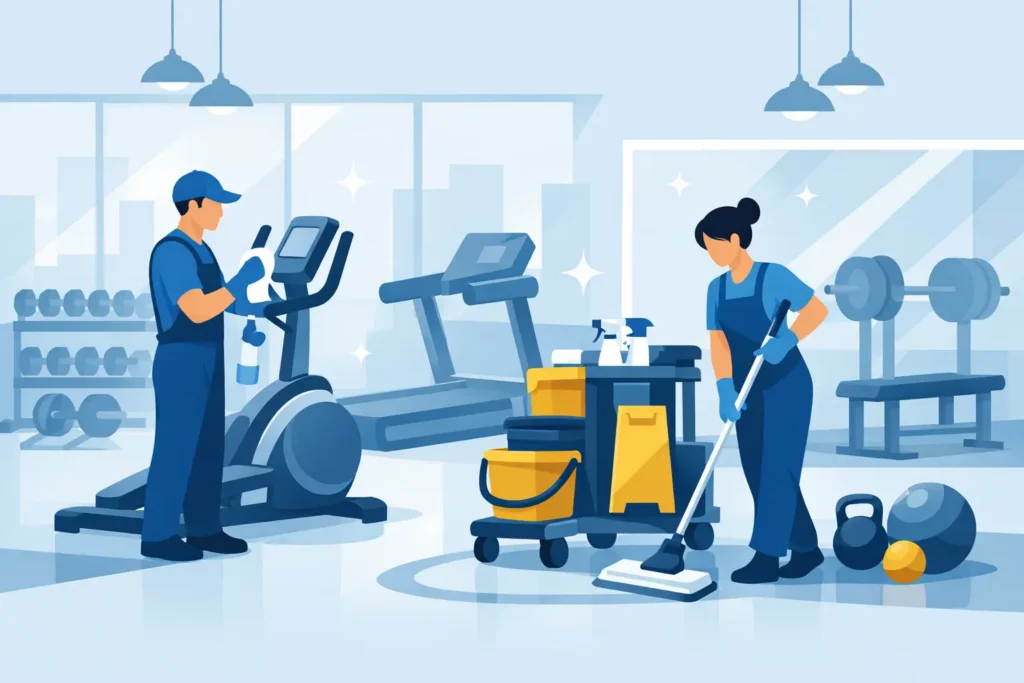
Cardio and strength equipment need careful, frequent cleaning. That includes handles, seats, rails, touchscreens, adjustment pins, and machine frames. The goal is not only to remove visible marks, but to reduce residue build-up and maintain a hygienic surface without damaging finishes.
This is where product choice matters. Harsh chemicals can shorten the life of equipment upholstery, plastics, and electronic interfaces. A professional cleaner should understand what can be safely used on different surfaces and where a gentler product is the better option.
Floors and training zones
Gym floors take a beating. Rubber mats collect dust and fine debris, studio floors pick up scuffs, and entrance areas often bring in dirt from outside. If not maintained properly, floors can become slippery, worn-looking, or unpleasant underfoot.
Different surfaces need different treatment. Rubber flooring may need low-moisture cleaning methods, while tiled wet areas need more intensive sanitising and grime removal. The right process keeps the floor clean without creating safety issues or leaving residue behind.
Changerooms, toilets, and showers
These spaces often shape the strongest member impressions. People are usually more sensitive to cleanliness in wet areas than anywhere else in the gym. Soap scum, odours, blocked drains, water staining, and damp corners can make a facility feel neglected even if the training floor looks fine.
A proper routine should cover toilets, urinals, sinks, taps, dispensers, mirrors, partitions, shower walls, floors, drains, and touchpoints. Restocking paper products, soap, and sanitiser may also be part of the service, depending on the agreement.
Reception and shared spaces
The front desk, waiting area, entry doors, and vending or refreshment zones all contribute to first impressions. These spaces are also touched constantly. Cleaning here should be neat, consistent, and timed to suit traffic, especially if the site has peak sign-in periods.
The biggest cleaning risks gym operators face
Not every gym needs the same schedule, but most face the same core risks when cleaning is inconsistent.
The first is hygiene drift. This happens when surfaces are cleaned visually rather than systematically. The space may look acceptable at a glance, yet high-contact points, hidden dust, and wet-area grime keep building up over time.
The second is member dissatisfaction. People may not raise every issue at reception, but they remember it. If a gym starts feeling unclean, members may use the facility less often or cancel altogether.
The third is operational disruption. Once neglected areas become a bigger problem, the fix often requires deeper, more expensive cleaning, equipment downtime, or urgent works that are harder to schedule around business hours.
How often should a gym be cleaned?
It depends on your foot traffic, opening hours, services, and staffing model. A boutique studio with limited amenities may only need scheduled after-hours cleaning plus periodic deep cleans. A larger facility with showers, group training, and extended trading hours may need daily service, touchpoint attention during the day, and regular detailed cleaning on top.
For many gyms, the sweet spot is a recurring cleaning program with a clear scope. That might include daily work for amenities and high-use zones, with weekly or fortnightly attention to edges, vents, skirting, under equipment, glass, and less visible build-up points. Periodic deep cleaning is still important because day-to-day maintenance alone rarely addresses everything.
The right provider should be honest about that. More frequent cleaning improves presentation and hygiene, but it also needs to align with your budget and operating pattern. Over-servicing wastes money. Under-servicing usually costs more later.
What to look for in a gym cleaning provider
Trust matters when cleaners are working around member areas, access systems, and expensive equipment. Reliability matters just as much. Missed cleans, inconsistent staff, or vague scopes create headaches for managers and quickly show up on the gym floor.
Look for a provider that offers clear quoting, vetted staff, and a defined service plan. You should know what is being cleaned, how often, and what happens if standards slip. In a gym setting, consistency is usually more valuable than a flashy sales pitch.
It also helps to work with a team that can schedule around your operations. Early mornings, overnight cleans, and low-traffic windows are often the best fit. If the gym is open 24 hours, access, alarm procedures, and reporting become even more important.
Professional equipment and eco-friendly products are another advantage, especially in enclosed workout spaces where strong chemical odours can be unpleasant for staff and members. A well-run service should leave the facility fresh, not overpowering.
Why detail makes the difference
Anyone can wipe a surface. The difference is whether the cleaner notices the corners, the touchpoints behind the obvious ones, and the areas members see when they slow down. Dust under spin bikes, fingerprints on glass, marks around drink stations, and grime on skirting boards all affect how clean the gym feels.
That is where a detail-driven approach pays off. A quality commercial cleaning service is not only reacting to mess. It is maintaining standards before small issues turn into visible ones. For gym owners and facility managers, that means fewer complaints, better presentation, and one less operational problem to chase.
For Adelaide operators, working with a local team such as Spiffi Cleaning can also make communication easier. When schedules change, access needs updating, or a one-off deep clean is required before an inspection or relaunch, responsiveness matters.
A clean gym supports more than hygiene
Cleaning is often treated as a background task until something goes wrong. In reality, it supports member experience, staff confidence, equipment presentation, and the overall reputation of the business. A gym that smells fresh, looks cared for, and feels consistently clean gives people one less reason to second-guess their membership.
If your current cleaning setup is reactive, inconsistent, or too light for the volume of use your facility sees, it is worth reviewing the standard. The right cleaning plan should fit your gym, your traffic, and your hours – and once it is in place, the whole operation tends to run with less friction.
When members walk in and everything feels clean without having to think about it, that is usually a sign the job is being done properly.