A dusty reception desk or meeting-room table can undermine an otherwise professional workplace in minutes. If you are working out how to reduce office dust, the answer is not simply cleaning more often. It is about stopping dust from entering, reducing the places it collects, and using a cleaning routine that removes it rather than moving it around.
Office dust is a mixture of fibres, skin cells, paper particles, soil carried in on shoes, pollen and outdoor pollutants. In busy Adelaide workplaces, it can also build up quickly during dry weather, near construction activity or when doors are frequently opened. A consistent approach keeps the office looking cared for, helps protect equipment and creates a more comfortable environment for staff and visitors.
Find Out Where the Dust Is Coming From
Dust settles where airflow slows down and where surfaces are rarely touched during day-to-day tidying. Before changing your cleaning routine, walk through the office early in the morning or after a weekend. You will often see the problem areas more clearly before the day begins.
Common sources include:
- entryways, foyers and shared corridors where dirt is tracked in on footwear
- carpeted areas, fabric chairs and soft furnishings that hold fibres and grit
- paper-heavy workstations, filing areas and printer stations
- air-conditioning vents, window sills, blinds and high ledges that are easily missed
A dusty office does not always mean cleaning standards are poor. It may mean the current routine is focused on visible surfaces while the real sources are left untreated. For example, wiping a desk every day will only deliver short-term results if the carpet beneath it has not been vacuumed properly or the nearby vent is circulating settled dust.
How to Reduce Office Dust at the Entry Point
The most effective dust control begins before dirt reaches work areas. A quality entry mat is one of the simplest and most practical tools available. It should be large enough for people to take several steps across it, rather than a small mat that is bypassed in one stride.
Vacuum or shake out entry mats regularly, and arrange professional cleaning when they become heavily soiled. In wet conditions, replace saturated mats promptly. A damp, dirty mat does not trap soil effectively and can create a slip risk.
For offices with customer traffic, consider a two-stage approach: a coarse mat outside to catch larger debris and a finer mat inside to collect smaller particles. Keep external paths, door tracks and entrance glass clean as well. Dust and grit on the footpath or in a doorway are easily carried straight into reception.
Where possible, ask staff to avoid bringing heavily soiled footwear into carpeted office areas after site visits or outdoor work. This is particularly relevant for warehouses, construction offices and businesses with field-based teams. The right expectation is not perfection – it is preventing avoidable dirt from becoming an indoor cleaning problem.
Clean Surfaces in the Right Order
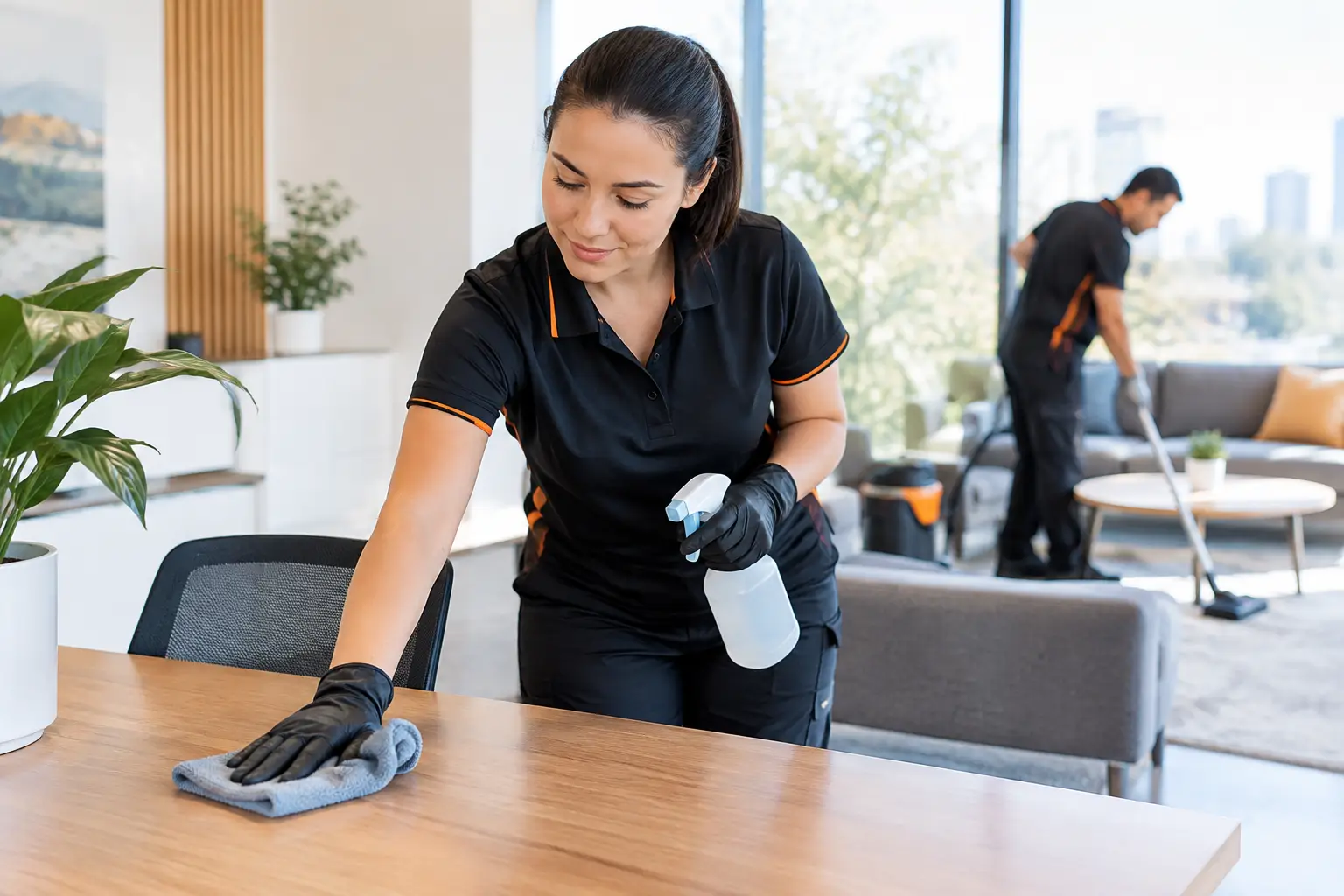
Dusting technique matters. Dry dusters, feathers and low-quality cloths can lift particles into the air, only for them to settle elsewhere a short time later. Use clean microfibre cloths that hold dust within the fibres, lightly dampened when suitable for the surface.
Always work from high areas to low areas. Start with vents, ceiling-adjacent ledges, shelving and window sills, then clean desks, cabinets and furniture before vacuuming or mopping the floor. This order captures what falls during cleaning instead of leaving it behind.
Desks deserve particular attention because they are both highly visible and used all day. Remove loose papers and items before wiping rather than cleaning around them. Encourage staff to keep a manageable workstation setup, as crowded desks create sheltered corners where dust accumulates. A clear-desk policy is not necessary for every business, but regular desk resets can make a noticeable difference.
Pay attention to less obvious surfaces: monitor stands, telephone bases, power boards, chair legs, indoor plants, picture frames and the tops of cupboards. These areas may not be part of a quick daily clean, but leaving them for months can affect how clean the whole office feels.
Improve Carpet, Upholstery and Floor Care
Carpets are one of the biggest dust reservoirs in an office. Walking across them releases fine particles back into the air, particularly in busy walkways and beneath desks. Regular vacuuming with well-maintained commercial equipment is essential, but frequency should reflect foot traffic rather than a fixed rule.
A lightly used office may only need a thorough vacuum once or twice a week, while a busy reception area or open-plan workspace may need daily attention. Vacuum slowly enough for the machine to lift embedded debris, especially along edges, under desks and around chair bases. A quick pass over open areas is rarely enough.
Hard floors also require more than a hurried mop. Sweep or vacuum first to remove loose dirt, then mop using clean water and appropriate products. Mopping over dust without first collecting it can leave a film that attracts more soil.
Fabric office chairs, curtains and soft seating gradually store dust, even when they look clean. Vacuum upholstery with the right attachment as part of the routine and schedule deeper cleaning when marks, odours or visible dust appear. If allergies are a concern among staff, this maintenance becomes more valuable, although individual sensitivities will vary.
Check Airflow, Filters and Ventilation
When dust returns quickly after cleaning, inspect the air-conditioning system and ventilation points. A blocked or overdue filter can reduce air quality and circulate fine particles through the office. Filter replacement should follow the manufacturer’s advice, the building manager’s requirements and the level of use.
Do not cover vents with furniture, storage boxes or paperwork. Restricted airflow can create dust-heavy corners and make the system work harder. Vents themselves should be wiped carefully as part of periodic detailed cleaning, while internal duct work should be assessed by an appropriately qualified provider if there are persistent concerns.
Opening windows can help in some offices, but it depends on the location. Fresh air may be useful on a calm day, yet windows facing a busy road, building site or dusty car park can introduce more particles than they remove. Look at the result in your particular space rather than relying on a one-size-fits-all rule.
Indoor plants can improve the feel of a workplace, but their leaves and pots collect dust. Wipe leaves gently and keep potting mix tidy. Avoid placing plants where falling leaves or soil will create extra mess around workstations.
Set a Cleaning Schedule People Can Follow
The best cleaning plan is one that fits the office’s actual use. Reception, kitchens, bathrooms and shared meeting spaces generally need daily attention. Desks and high-touch surfaces may need daily or several-times-weekly cleaning, depending on staffing and visitor volume. High ledges, blinds, internal glass, upholstery and behind-furniture areas can be scheduled less often, but should not be forgotten.
Assign clear responsibility for everyday habits such as clearing dishes, disposing of rubbish and keeping printer areas tidy. At the same time, avoid relying on staff to perform the deep, detailed work that keeps dust under control. Staff-led tidying supports a clean workplace, but it is not a substitute for a structured commercial cleaning service.
A professional cleaner can provide the consistency that is difficult to maintain internally, particularly outside office hours. Spiffi Cleaning can tailor an office cleaning schedule around your operating times, foot traffic and priority areas, with trained staff and clear standards for ongoing presentation.
Protect Computers and Office Equipment
Dust inside keyboards, monitors, printers and computer towers can affect appearance, comfort and equipment performance. Turn devices off before cleaning and follow the manufacturer’s care guidance. Use a clean microfibre cloth on screens where appropriate, and avoid spraying liquid directly onto electronics.
Keyboard gaps, cable runs and the space behind monitors are easily overlooked. These spots should be included in regular desk cleaning, while printers and shared equipment deserve extra attention because they often sit near paper dust and high traffic. For internal computer cleaning, particularly where equipment is expensive or specialised, use qualified IT support rather than taking risks with compressed air or liquids.
Keep Dust Control Consistent
A dust-free office is not realistic, nor is it necessary. The goal is to prevent visible build-up, reduce particles that affect comfort and ensure your workplace consistently looks ready for staff, clients and visitors. Small measures such as better entry mats, proper microfibre cleaning and regular vacuuming work best when they are part of a reliable routine.
When dust is handled at its source and detailed cleaning is planned rather than postponed, the office stays fresher between services. That gives your team one less operational detail to chase and helps every visitor see the professional standard your business intends to deliver.